- Hinting at military action if negotiations break down or fail... restraining from overt aggressive threats.
- "Iran Sanctions Relief Funds to U.S. Farmers"...Signing Executive Order to Accelerate Quantum Computing Development
 President Trump [EPA=Yonhap News]
U.S. President Donald Trump stated on the 22nd (local time) that negotiations with Iran are progressing well, while reiterating that an attack could occur if Iran does not keep its promises.
Speaking to reporters at the White House, President Trump said regarding the negotiations with Iran, "We are doing very well in terms of reaching a fair and reasonable agreement."
He added, "If Iran does not keep its promises or does not behave properly, I will do what I have to do."
This suggests that military action could be taken against Iran if negotiations falter or break down. However, by using the relatively softened expression "what I have to do," he refrained from explicitly threatening an attack on Iran.
President Trump said, "As long as Iran respects us, there will be no problem." This can be interpreted as an indirect warning for Iran not to make unreasonable demands or engage in irregular actions during negotiations.
He added, "Negotiations are underway, and we will see how everything unfolds. But there are two principles: open straits and a country that cannot possess nuclear weapons."
President Trump also claimed that the Strait of Hormuz is completely open. However, ship passage through the Strait of Hormuz remains restricted.
He praised Vice President JD Vance, who led the U.S. negotiation team, saying, "He did a great job."
President Trump emphasized that even if sanctions on Iran are eased, funds will flow back to the United States.
He said, "All the money will come back in the form of food purchases. Iran cannot feed its 91 million people. The released funds will return to our farmers."
The intention is for Iran to purchase U.S. agricultural products with the released frozen funds. The U.S. negotiation team has made this proposal to Iran to prevent concerns that the released frozen funds could be diverted to support terrorism.
President Trump also reiterated his claim that he does not want to be like Herbert Hoover, the president during the Great Depression, and that the signing of the ceasefire MOU was to prevent an economic recession.
He argued, "A recession is truly bad. Nuclear weapons can cause a recession much faster."
The United States and Iran held their first high-level follow-up talks since signing the ceasefire Memorandum of Understanding (MOU) in Switzerland on the 21st and agreed to continue working-level negotiations.
President Trump also signed an executive order on the same day to accelerate research in quantum computing and have federal agencies adopt the technology.
The U.S. goal is to develop quantum computers by 2028. Quantum computing, which performs complex scientific calculations, is a field with significant national security implications, and the U.S. and China are fiercely competing for leadership.
What do you think of this article?

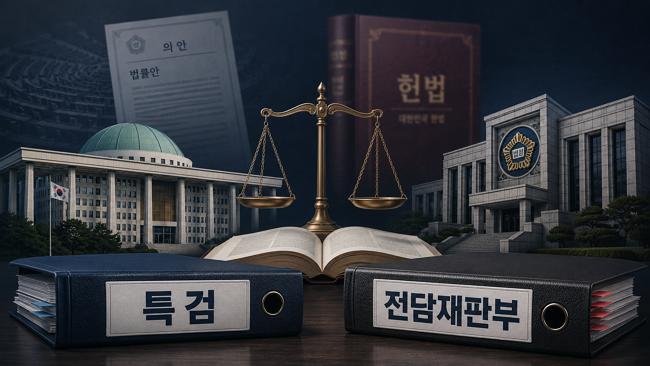 [Special Feature - Disenfranchisement National Assembly Investigation ③] Constitutional Amendment is a Long-term Task, the Law on the Special Court for Insurrection Should Be Applied
Image symbolizing the need for a special prosecutor and dedicated court panels within the existing judicial system to investigate the criminal responsibility for the June 3rd disenfranchisement incide
[Special Feature - Disenfranchisement National Assembly Investigation ③] Constitutional Amendment is a Long-term Task, the Law on the Special Court for Insurrection Should Be Applied
Image symbolizing the need for a special prosecutor and dedicated court panels within the existing judicial system to investigate the criminal responsibility for the June 3rd disenfranchisement incide
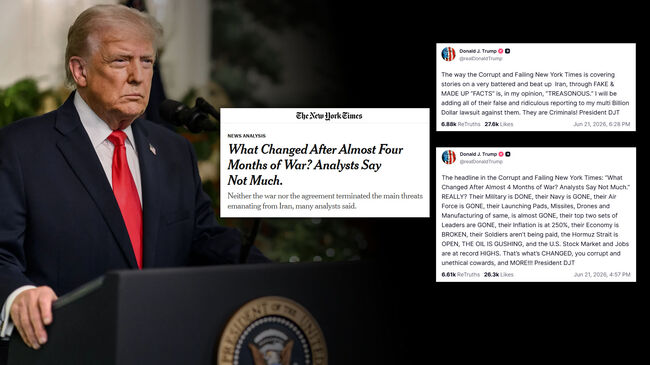 Trump rebuts NYT analysis on Iran MOU, calling it "treasonous"
President Donald Trump on Sunday pushed back against a New York Times analysis that questioned what had changed after nearly four months of conflict with Iran.The president asserted that the dispute h
Trump rebuts NYT analysis on Iran MOU, calling it "treasonous"
President Donald Trump on Sunday pushed back against a New York Times analysis that questioned what had changed after nearly four months of conflict with Iran.The president asserted that the dispute h
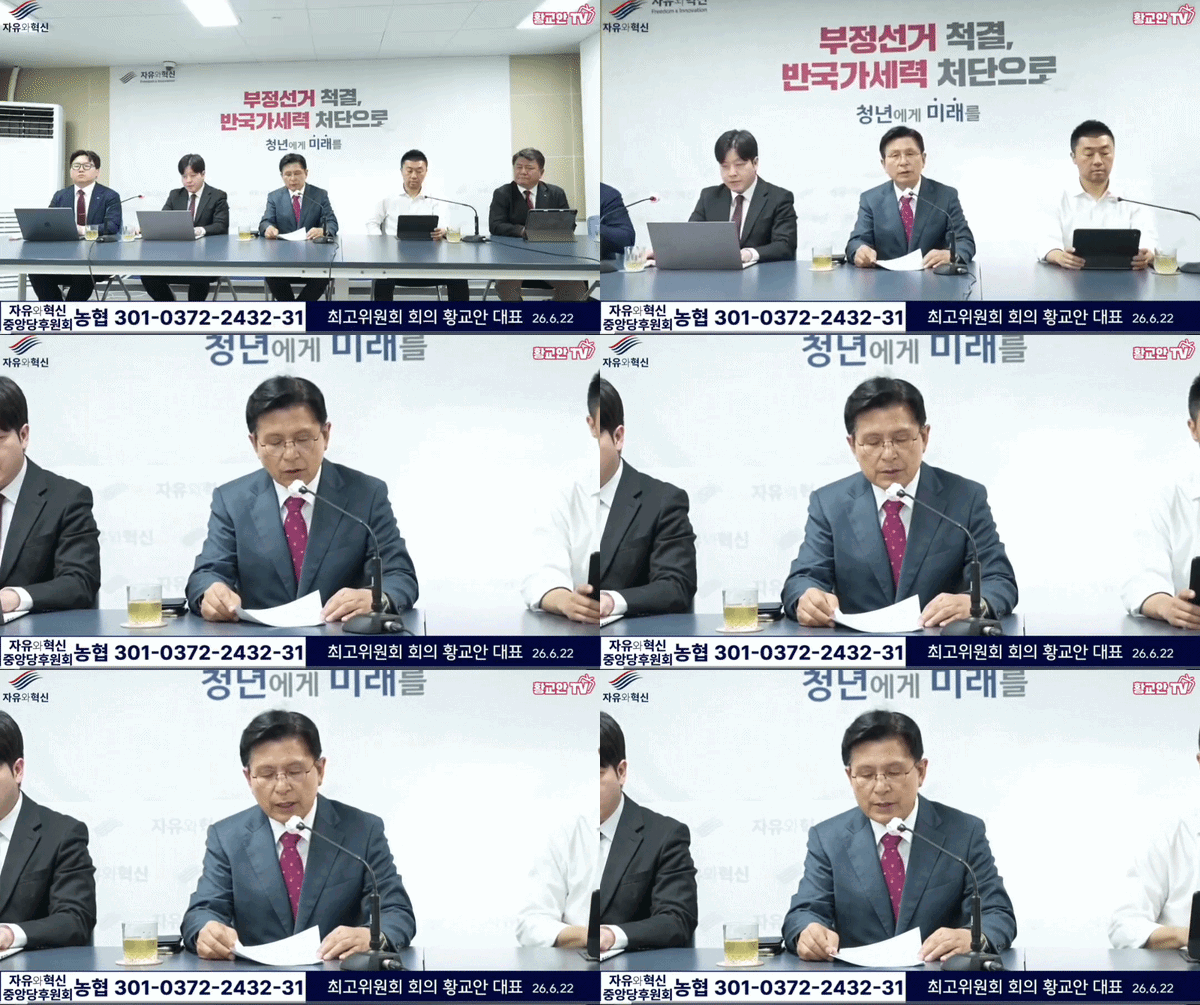 Hwang Kyo-ahn "Suspicion of backroom dealings at Olympic Park... Nationwide live broadcast recount must resume"
Hwang Kyo-ahn, leader of the Freedom and Innovation Party, speaks at the Supreme Council meeting on the 22nd. [Freedom and Innovation] Hwang Kyo-ahn, leader of the Freedom and Innovation Party,
Hwang Kyo-ahn "Suspicion of backroom dealings at Olympic Park... Nationwide live broadcast recount must resume"
Hwang Kyo-ahn, leader of the Freedom and Innovation Party, speaks at the Supreme Council meeting on the 22nd. [Freedom and Innovation] Hwang Kyo-ahn, leader of the Freedom and Innovation Party,
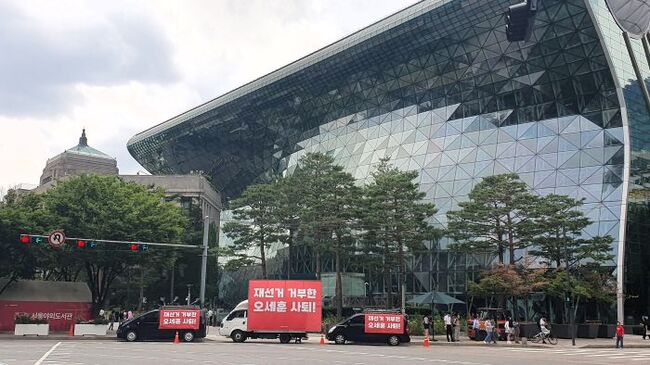 Liberty Korea National Defense Group urges Seoul Mayor Oh Se-hoon to resign, demanding rejection of the by-election.
The Korean Patriots' Association is holding a continuous rally tomorrow, the 23rd, following a protest held today, the 22nd, at 11 AM in front of the main entrance of Seoul City Hall. [Photo=Korean Pa
Liberty Korea National Defense Group urges Seoul Mayor Oh Se-hoon to resign, demanding rejection of the by-election.
The Korean Patriots' Association is holding a continuous rally tomorrow, the 23rd, following a protest held today, the 22nd, at 11 AM in front of the main entrance of Seoul City Hall. [Photo=Korean Pa
 SpaceX, Amassing Funds… First Corporate Bond Issued Just Ten Days After IPO
SpaceX [Reuters=Yonhap News]About ten days after its record-breaking Initial Public Offering (IPO), Elon Musk's aerospace company SpaceX is now venturing into the bond market.The U.S. daily Wall Stree
SpaceX, Amassing Funds… First Corporate Bond Issued Just Ten Days After IPO
SpaceX [Reuters=Yonhap News]About ten days after its record-breaking Initial Public Offering (IPO), Elon Musk's aerospace company SpaceX is now venturing into the bond market.The U.S. daily Wall Stree
 [On-Site] Universities Revitalize Regions, Embrace the World... Far East University to Hold 'Gammok Festival: Freshly Baked Peaches' in September
Students from the Department of Theater and Acting at Kookje University perform a dynamic 'Samul Fantasy' based on traditional Korean percussion instruments. [Photo by Lim Yo-hee]In an era where regio
[On-Site] Universities Revitalize Regions, Embrace the World... Far East University to Hold 'Gammok Festival: Freshly Baked Peaches' in September
Students from the Department of Theater and Acting at Kookje University perform a dynamic 'Samul Fantasy' based on traditional Korean percussion instruments. [Photo by Lim Yo-hee]In an era where regio
 [Photo] Freedom High School Alliance installs banner in Gangdong-gu, Seoul: "June 3rd Fraudulent Election Rerun, In-person Voting, On-site Counting"
The Korea High School Union installed a banner in the Gangdong-gu district of Seoul on the 21st with the slogan "June 3rd Fraudulent Election Re-election, Same-Day Vote Count." The banner also states,
[Photo] Freedom High School Alliance installs banner in Gangdong-gu, Seoul: "June 3rd Fraudulent Election Rerun, In-person Voting, On-site Counting"
The Korea High School Union installed a banner in the Gangdong-gu district of Seoul on the 21st with the slogan "June 3rd Fraudulent Election Re-election, Same-Day Vote Count." The banner also states,
 [Shindongchun Column] The Arctic Shipping Route Should Be Approached Through Multilateral Consultations
Map centered on the Arctic ⒸNational Snow and Ice Data Center In September, South Korea is poised for a significant test voyage to pioneer the Northern Sea Route (NSR). Amidst the volatile
[Shindongchun Column] The Arctic Shipping Route Should Be Approached Through Multilateral Consultations
Map centered on the Arctic ⒸNational Snow and Ice Data Center In September, South Korea is poised for a significant test voyage to pioneer the Northern Sea Route (NSR). Amidst the volatile
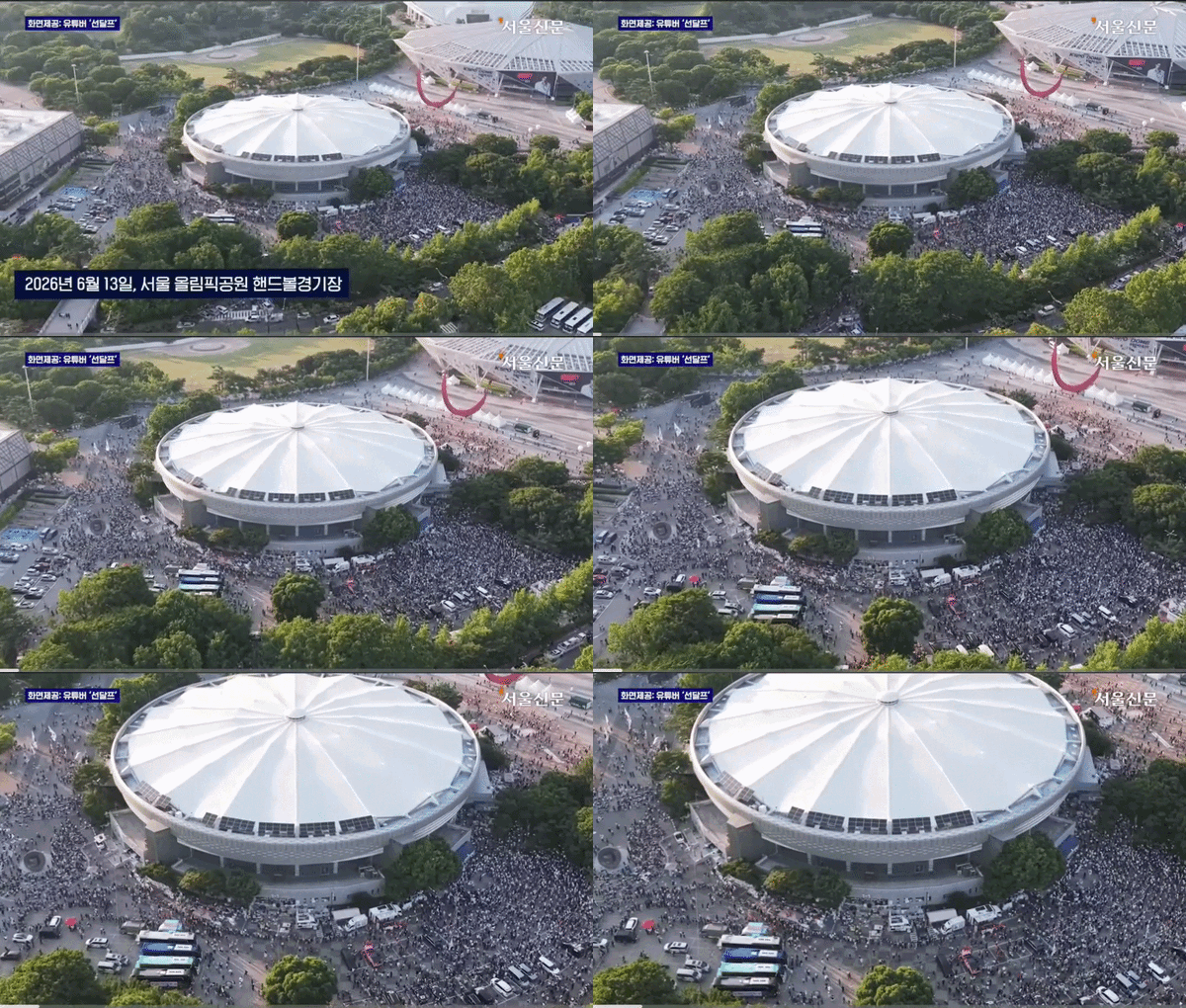 [Video] The Scene of the 'Jamsil Democratization Movement' as Seen from the Sky
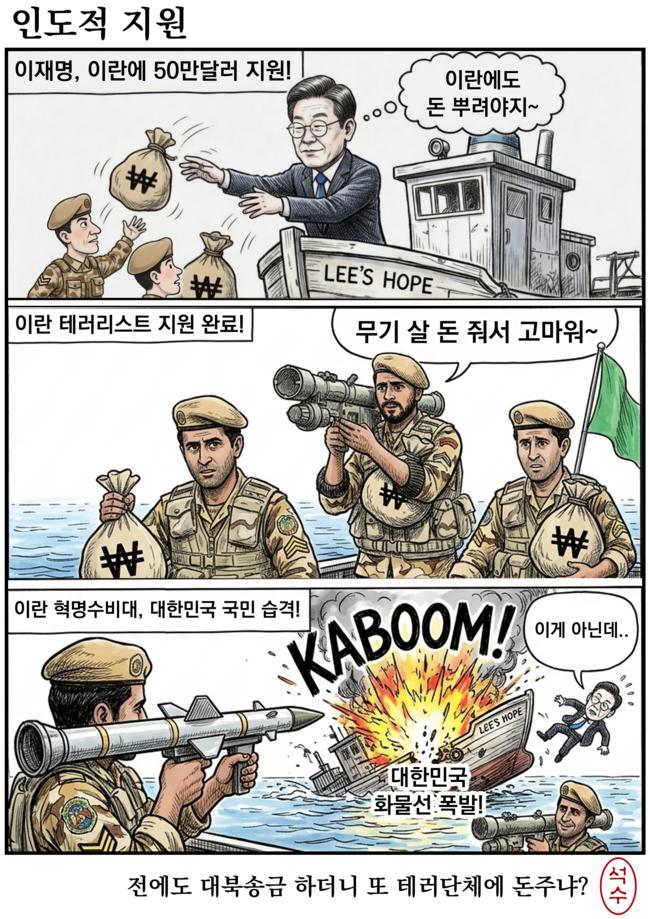 [Editorial Cartoon] Humanitarian Aid

 List
List