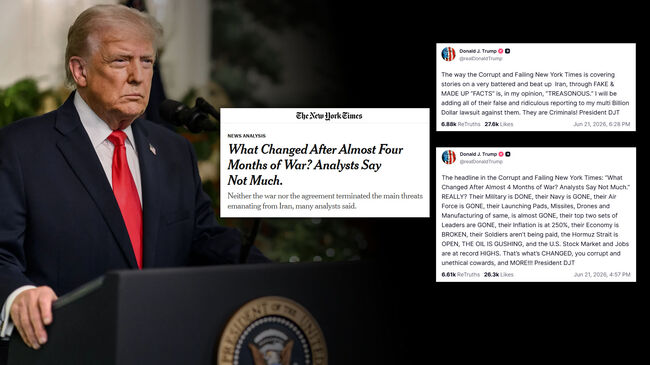
President Donald Trump on Sunday pushed back against a New York Times analysis that questioned what had changed after nearly four months of conflict with Iran.
The president asserted that the dispute had weakened Tehran's military capabilities, degraded its economy and strengthened the U.S. position.
"The corrupt, failing New York Times headline: 'What Has Changed After Nearly 4 Months of War? Analysts Say Not Much.' Really?" he wrote on Truth Social.
Trump continued, "Their Army is finished, their Navy is gone, their Air Force is gone, they have hardly any launchers, missiles, or drones, and the facilities that make them are gone, two of their top leaders are gone, inflation is at 250%, the economy is shot, soldiers are not getting paid, the Strait of Hormuz is open, oil is gushing, our stock market and jobs are at an all-time high. That’s what’s changed, you corrupt, unethical cowards, and much more!!!"
The post came in response to a Sunday article in the New York Times that analyzed a memorandum of understanding between Washington and Tehran and the aftermath of the conflict, which began roughly 100 days after Trump launched military operations against Iran on Feb. 28.
About an hour and a half later, in another Truth Social post, Trump wrote that the way the "corrupt, incompetent New York Times covers stories about Iran, which has been hit so hard by fake and fabricated FACTS, is, in my opinion, TREASONOUS. I will be adding all of their fake and ridiculous reporting to the multi-billion dollar lawsuit I have filed against them. They are criminals!"
The NYT questioned whether the war had achieved its stated goals, noting that Iran's nuclear program had been severely degraded but not entirely eliminated, and its ballistic missile program remained intact.
According to the report, Iran's ruling regime has endured despite leadership changes, and Tehran-backed proxies continue to pose security challenges across the region.
Fighting between Israel and Hezbollah has continued despite the agreement.
One of the key provisions of the memorandum of understanding was the reopening of the Strait of Hormuz, a vital global shipping lane.
However, by Saturday, conflicting claims had emerged about whether Iran was again restricting access to the waterway after accusing the United States of failing to quell violence in Lebanon.
Caitlin Talmadge, a professor at MIT and an expert on Persian Gulf security, told the Times that the agreement reflected Washington's desire to avoid further escalation rather than showcase military success.
"I think that this document is the product of the fact that the United States took on more problems than it could handle, and it did not want to exacerbate the situation," Talmadge said.
According to the report, the agreement includes significant economic benefits for Iran, such as the lifting of U.S. sanctions, access to frozen assets, the creation of reconstruction funds supported by Gulf Arab nations, and the lifting of a U.S. maritime blockade.
Iranian officials have portrayed the outcome of the agreement as a victory. Mohammad Bagher Ghalibaf, the speaker of the Iranian Parliament and chief negotiator, said in an interview with Iran's state-run television that the conflict demonstrated Tehran's ability to exert influence through the Strait of Hormuz.
Vice President JD Vance defended the agreement to reporters, saying that economic incentives could coax Iran into changing its behavior after decades of hostile actions toward the United States and its regional allies.
"People say Iran will never change its behavior. Well, maybe they're right. If so, Iran will get none of the benefits that it could get from this negotiation. But isn't it worth a shot?" Vance said.
Several regional experts have expressed skepticism. Some analysts have argued that the dispute has weakened U.S. influence by demonstrating the limits of its military power.
Others, however, have pointed to widespread destruction within Iran, tensions between Washington and Israel over the agreement, and ongoing instability involving Hezbollah in Lebanon.
Criticism of Trump's memorandum of understanding has also surfaced domestically among Republicans and in Israel. However, Trump has remained undeterred, asserting that his memorandum is not a final agreement and that the final terms will satisfy everyone.
Trump noted on Monday on Truth Social that "everyone knows that Iran will agree to major weapons inspections to guarantee 'Nuclear Honesty' for all time."
USA NNP=Hong Seong-gu Chief Reporter / Special Correspondent NNP info@newsandpost.com

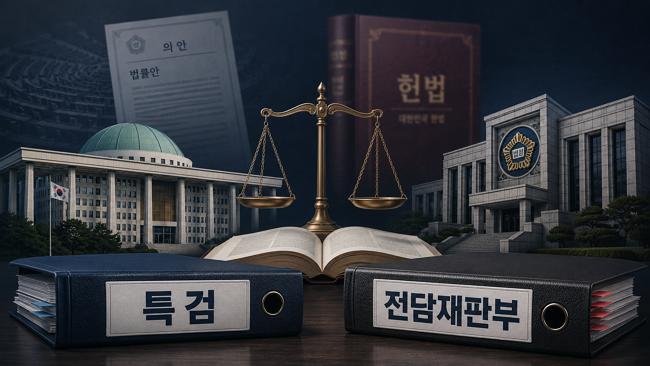 [Special Feature - Disenfranchisement National Assembly Investigation ③] Constitutional Amendment is a Long-term Task, the Law on the Special Court for Insurrection Should Be Applied
Image symbolizing the need for a special prosecutor and dedicated court panels within the existing judicial system to investigate the criminal responsibility for the June 3rd disenfranchisement incide
[Special Feature - Disenfranchisement National Assembly Investigation ③] Constitutional Amendment is a Long-term Task, the Law on the Special Court for Insurrection Should Be Applied
Image symbolizing the need for a special prosecutor and dedicated court panels within the existing judicial system to investigate the criminal responsibility for the June 3rd disenfranchisement incide
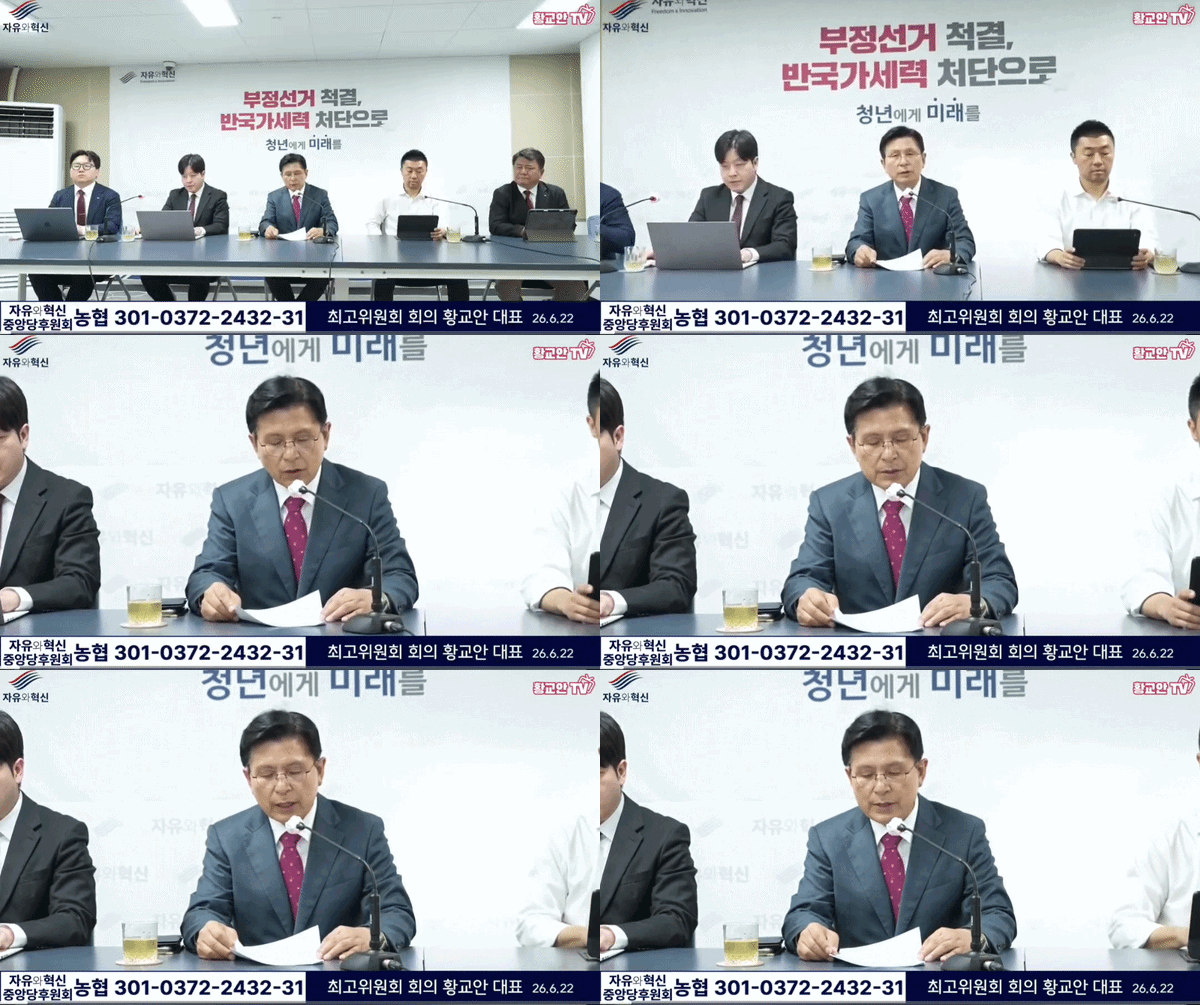 Hwang Kyo-ahn "Suspicion of backroom dealings at Olympic Park... Nationwide live broadcast recount must resume"
Hwang Kyo-ahn, leader of the Freedom and Innovation Party, speaks at the Supreme Council meeting on the 22nd. [Freedom and Innovation] Hwang Kyo-ahn, leader of the Freedom and Innovation Party,
Hwang Kyo-ahn "Suspicion of backroom dealings at Olympic Park... Nationwide live broadcast recount must resume"
Hwang Kyo-ahn, leader of the Freedom and Innovation Party, speaks at the Supreme Council meeting on the 22nd. [Freedom and Innovation] Hwang Kyo-ahn, leader of the Freedom and Innovation Party,
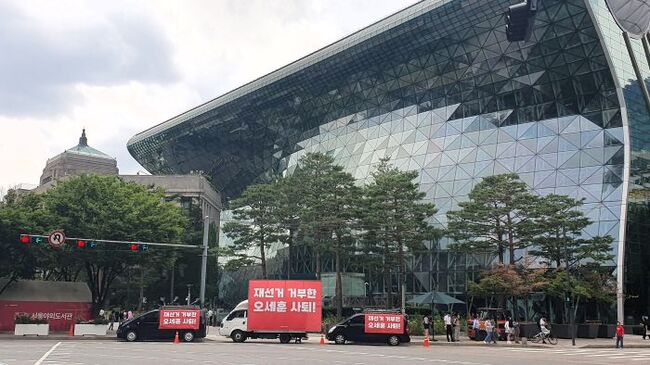 Liberty Korea National Defense Group urges Seoul Mayor Oh Se-hoon to resign, demanding rejection of the by-election.
The Korean Patriots' Association is holding a continuous rally tomorrow, the 23rd, following a protest held today, the 22nd, at 11 AM in front of the main entrance of Seoul City Hall. [Photo=Korean Pa
Liberty Korea National Defense Group urges Seoul Mayor Oh Se-hoon to resign, demanding rejection of the by-election.
The Korean Patriots' Association is holding a continuous rally tomorrow, the 23rd, following a protest held today, the 22nd, at 11 AM in front of the main entrance of Seoul City Hall. [Photo=Korean Pa
 SpaceX, Amassing Funds… First Corporate Bond Issued Just Ten Days After IPO
SpaceX [Reuters=Yonhap News]About ten days after its record-breaking Initial Public Offering (IPO), Elon Musk's aerospace company SpaceX is now venturing into the bond market.The U.S. daily Wall Stree
SpaceX, Amassing Funds… First Corporate Bond Issued Just Ten Days After IPO
SpaceX [Reuters=Yonhap News]About ten days after its record-breaking Initial Public Offering (IPO), Elon Musk's aerospace company SpaceX is now venturing into the bond market.The U.S. daily Wall Stree
 [On-Site] Universities Revitalize Regions, Embrace the World... Far East University to Hold 'Gammok Festival: Freshly Baked Peaches' in September
Students from the Department of Theater and Acting at Kookje University perform a dynamic 'Samul Fantasy' based on traditional Korean percussion instruments. [Photo by Lim Yo-hee]In an era where regio
[On-Site] Universities Revitalize Regions, Embrace the World... Far East University to Hold 'Gammok Festival: Freshly Baked Peaches' in September
Students from the Department of Theater and Acting at Kookje University perform a dynamic 'Samul Fantasy' based on traditional Korean percussion instruments. [Photo by Lim Yo-hee]In an era where regio
 [Photo] Freedom High School Alliance installs banner in Gangdong-gu, Seoul: "June 3rd Fraudulent Election Rerun, In-person Voting, On-site Counting"
The Korea High School Union installed a banner in the Gangdong-gu district of Seoul on the 21st with the slogan "June 3rd Fraudulent Election Re-election, Same-Day Vote Count." The banner also states,
[Photo] Freedom High School Alliance installs banner in Gangdong-gu, Seoul: "June 3rd Fraudulent Election Rerun, In-person Voting, On-site Counting"
The Korea High School Union installed a banner in the Gangdong-gu district of Seoul on the 21st with the slogan "June 3rd Fraudulent Election Re-election, Same-Day Vote Count." The banner also states,
 [Shindongchun Column] The Arctic Shipping Route Should Be Approached Through Multilateral Consultations
Map centered on the Arctic ⒸNational Snow and Ice Data Center In September, South Korea is poised for a significant test voyage to pioneer the Northern Sea Route (NSR). Amidst the volatile
[Shindongchun Column] The Arctic Shipping Route Should Be Approached Through Multilateral Consultations
Map centered on the Arctic ⒸNational Snow and Ice Data Center In September, South Korea is poised for a significant test voyage to pioneer the Northern Sea Route (NSR). Amidst the volatile
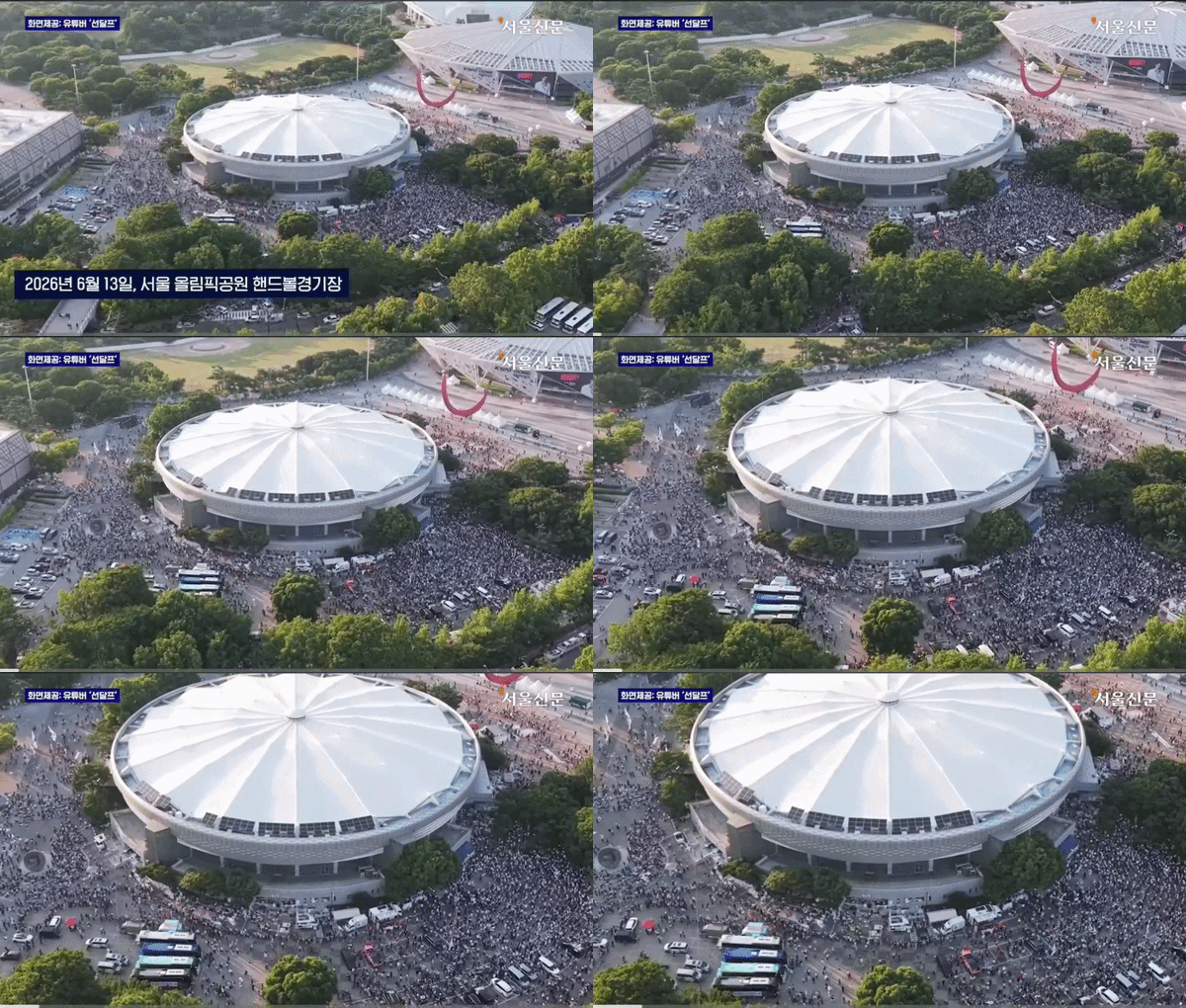 [Video] The Scene of the 'Jamsil Democratization Movement' as Seen from the Sky
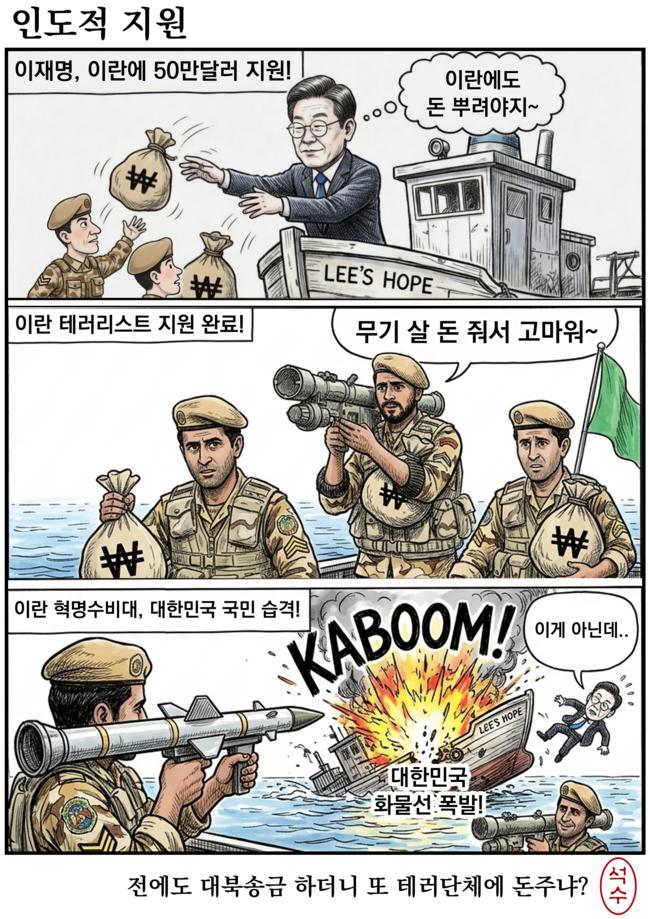 [Editorial Cartoon] Humanitarian Aid

 List
List