A bowl of ramyeon contains various aspects of modern Korean history, from food shortages, U.S. aid flour, and industrialization to night labor, intense college entrance competition, television commercials, food scandals, and internet videos. [Photo=Yonhap News]
The history of Korean ramyeon is more than just a story about food. A single package of ramyeon encapsulates various facets of modern Korean history, ranging from food shortages, U.S. aid flour, and industrialization to night labor, intense college entrance competition, television commercials, food scandals, and even viral internet videos.
1. Korea before ramyeon: A shortage of rice and a surplus of flour
In the 1950s and 1960s, the most urgent problem for Koreans was survival. Rice production could not keep up with population growth, and the "spring poverty" (barley hump) arrived every year. To save rice, the government encouraged a diet of mixed grains and flour-based foods, while consuming the flour that arrived as surplus agricultural aid from the United States.
At schools, teachers would check lunchboxes to see if students had brought rice-only meals. Restaurants even designated "flour-eating days" on Wednesdays and Saturdays, during which they were required to sell flour-based items like noodles and bread instead of rice. The annual per capita flour consumption, which was 13.8 kg in 1965, more than doubled to 28.7 kg by 1969. Ramyeon emerged exactly during this flour era.
2. 1963: The birth of the first Korean ramyeon
On September 15, 1963, Samyang Foods released Samyang Ramyeon, the first instant ramyeon in Korea. It is said that the founder, Jeon Joong-yoon, decided to create a cheap and filling food after seeing people near Seoul’s Namdaemun Market eating "slop," a dish made from leftover food discarded by the U.S. military bases.
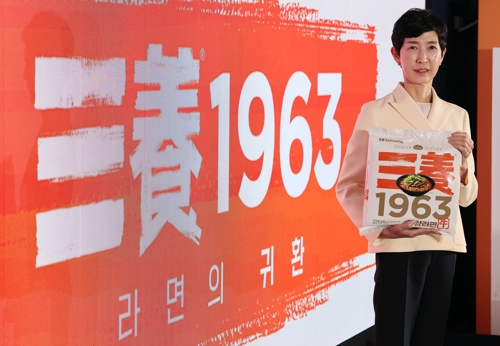 Late last year, Samyang Foods reintroduced its ramyeon made with beef tallow, or "woo-ji," for the first time in 36 years. [Photo=Yonhap News]
He focused on the instant noodles already being sold in Japan. Jeon introduced machinery and manufacturing technology from Japan's Myojo Foods to produce Samyang Ramyeon. The first product cost 10 won per 100g pack. Although it was cheaper than a bowl of jajangmyeon at the time, it was a strange food to consumers. The packaging still contained many Chinese characters and Japanese-style markings, and the broth was relatively mild, based on chicken stock rather than the spicy flavor we know today.
At first, it didn't sell well. Seeing the curly, dry noodles, people asked, "How are you supposed to eat this?" There are stories that people even mistook the noodles for fabric or a type of thread. Employees from the company had to set up pots right in the markets and cook the ramyeon to offer free samples. In a sense, they had to teach people how to eat it from scratch.
3. Did President Park Chung-hee order it to be "spicier"?
A famous anecdote from the early days of Samyang Ramyeon involves a tasting session with President Park Chung-hee. It is said that after trying the ramyeon, President Park remarked, "Our people like red pepper powder; it would be better if it were made a little spicier." As chili powder was subsequently added to the broth, Korean ramyeon began to take a different path from Japanese varieties.
While the details of this anecdote vary slightly depending on the source, the important fact is that Korean ramyeon gradually transitioned toward a red, spicy broth. While Japanese instant noodles diversified into soy sauce, miso, and pork bone broths, the focus in Korea shifted to spicy, broth-based ramyeon containing chili, garlic, and green onions. This was the starting point for the world to eventually associate "Korean ramyeon" with spicy flavor.
4. Government promotion and the role of workers and students
The government's policy of encouraging a diet of mixed grains and flour became an unexpected tailwind for ramyeon. As campaigns to save rice continued, flour-based ramyeon became a government-promoted substitute food. The National Archives of Korea still holds records of a 1968 signing ceremony to export 3.6 million bags of Samyang Ramyeon to Vietnam, as well as footage of factory production in 1972.
Industrialization also drove up ramyeon consumption. For factory workers in cities, construction site laborers, and students living away from home, ramyeon was a warm meal that could be prepared without special kitchen facilities. In factory dormitories, workers would cook ramyeon after late-night shifts, and in boarding houses near universities, students would share multiple packets of ramyeon cooked in a single pot.
Ramyeon gradually shifted from being a "food of necessity when hungry" to a "food people sought out by choice." Adding an egg turned it into a nutritious meal, and pairing it with kimchi made it a satisfying dish. If you mixed in leftover rice at the end, not a single drop of broth remained in the pot.
5. The emergence of Nongshim: From chicken broth to beef broth
Nongshim, which started as Lotte Industrial in 1965, was a latecomer. Since Samyang Foods already dominated the market, they could not win with the same flavor. Instead of the chicken stock that was common at the time, Nongshim promoted a beef-based broth, a flavor Koreans were already familiar with through dishes like seolleongtang (ox bone soup) and beef soup.
In 1970, they launched Korea's first instant jajangmyeon, challenging the brothless noodle market. Afterward, Nongshim expanded the ramyeon category by releasing jjajang, udon, tangmyeon, and spicy ramyeon one after another.
6. The 1980s: The golden age of ramyeon
The 1980s was a decade when many ramyeon brands we are familiar with today appeared all at once.
In 1982, Neoguri was released. It was an udon-style ramyeon with thick noodles and kelp. It is said that some consumers, upon opening the bag and finding a dark piece of kelp, complained to the company, thinking it was a foreign object.
In 1983, Ansungtangmyun arrived, featuring a savory flavor based on soybean paste and traditional beef broth. In 1984, Chapagetti was launched. Designed to make it easy to enjoy Chinese-style jajangmyeon at home, it became the symbol of Sunday lunches.
Then, in 1986, Shin Ramyun was released. The character for "spicy" (辛) was written in large letters on the packaging. By the standards of the time, it was quite spicy. In its commercial, a robust man was shown sweating and crying while eating the noodles. The slogan, "Shin Ramyun, the ramyeon that makes a man cry," originated here. Around 1991, Shin Ramyun surpassed Ansungtangmyun to become the market leader, establishing itself as the representative Korean spicy ramyeon.
During this period, ramyeon was no longer just a symbol of poverty. Hikers would boil it on burner stoves at mountain peaks, and vacationers ate it at seaside guesthouses. It was an indispensable staple at military PXs, college retreats (MTs), and snack shops after late-night study sessions.
7. The 1989 "Woo-ji" Scandal: An event that changed the market
In November 1989, the prosecution announced that some companies were using "industrial-grade beef tallow" to fry ramyeon. The media reported this sensationally as "industrial beef fat ramyeon." Consumers were shocked, and Samyang Foods products were pulled from shelves or shunned.
However, the beef tallow in question was not inedible waste oil; it was a problem caused by a conflict between U.S. classification/customs standards and domestic food safety regulations. After a long legal battle, the Supreme Court acquitted the companies involved in 1997. But the market had already changed significantly. Samyang Foods, which had been the overwhelming leader until the mid-1980s, lost its trust and distribution network, and Nongshim cemented its position as the market leader. Although they were proven innocent in court, the verdict in the public's memory came too late.
The "woo-ji" scandal remains a representative example of how media reports, scientific verification, and consumer anxiety can produce massive economic consequences in the Korean food industry.
8. Ramyeon became a "genre" of its own
Since the 1990s, ramyeon has become segmented based on individual tastes and lifestyles. Spicy broth, mild flavor, jajang, bibim-myeon (mixed noodles), udon-style, seafood, and ox-bone broth ramyeon all competed in the market. Ottogi’s Jin Ramen offered both spicy and mild versions, allowing consumers to choose according to their preferences.
Cup noodles also changed daily life. With just hot water, one could eat ramyeon at convenience stores, highway rest stops, offices, and even on trains. The sight of people eating triangle kimbap and cup noodles in front of convenience stores in the early morning became a familiar scene in urban life since the 1990s.
Koreans didn't stop at just eating the product as it was. They added cheese, dumplings, rice cakes, bean sprouts, tuna, and ham, or mixed two different types of ramyeon together and gave them new names. "Chapaguri" (a mix of Chapagetti and Neoguri) became known globally through the movie *Parasite*. In the film, it was used as a dish to represent the wealth gap by adding high-end beef.
9. 2012: Buldak Bokkeum-myeon— The spicy flavor that did away with the broth
In 2012, Samyang Foods released Buldak Bokkeum-myeon (Hot Chicken Flavor Ramen). It was a product designed to be mixed with an extremely spicy sauce rather than eaten with a broth. At first, some reacted by asking, "Who would buy this because it's so spicy?" The initial heat level was 4,404 SHU on the Scoville scale.
The unexpected twist happened on the global internet. Foreigners began uploading "Fire Noodle Challenge" videos, competing to see how long they could endure eating it. Participants would keep recording until the end, even as their faces turned red and tears streamed down. The spiciness was no longer a disadvantage but a source of entertainment and challenge.
Since then, products that softened the heat, such as Cheese Buldak and Carbonara Buldak, were released, turning Buldak into a global brand. It is as if the Korean ramyeon company, which started by learning technology from Japan in 1963, has spent half a century teaching the world how to enjoy the "Korean spicy flavor."
10. 2025: Ramyeon becomes a $1.5 billion export commodity
In 2025, Korean ramyeon exports reached an all-time high of approximately $1.52 billion, a 21.9% increase from the previous year. Major markets included China ($385.4 million), the U.S. ($254.7 million), and ASEAN countries ($223.2 million), with sales also increasing in Japan, Central Asia, and the Middle East.
Today, to overseas consumers, Korean ramyeon is not just an emergency food to fill a stomach cheaply. It is a product that allows them to experience intense flavors, unique preparation methods, and the lifestyle culture depicted in Korean dramas and movies. If Japanese ramen became globalized as a dish served in restaurants, Korean ramyeon became globalized as a culture unto itself—contained within a bag or a cup.
Korean ramyeon was born out of poverty. It grew under the government's grain-mixing policies, became a staple meal for factory workers and students, and turned into a national food through television commercials. The company's fate was once overturned by food scandals, and thanks to internet videos, it became a global pastime.
A strange food that required instructions on how to eat it in the market in 1963 has now occupied supermarket shelves around the world over 60 years later. The history of Korean ramyeon is a history of adapting foreign food, initially adopted to endure hunger, to suit the Korean palate, and then exporting it back to the world.
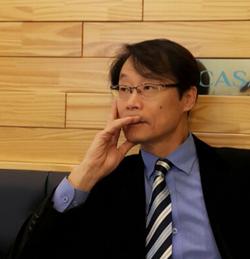
◆ Songsan Jung Kwang-je
A poet and researcher of history and philosophy. Former director of the Rhee Syngman Academy. Currently serving as a research advisor for the Korea Modern and Contemporary History Research Society and head of the philosophy forum "Lyceum." He has published four volumes of poetry, co-translated *Heroes of Hook Ridge*, and authored the humanities books *Joseon Turned into Myth*, *Humanities on the Tatami*, and *A Liberal's Reading of Gramsci*. "Songsan" is his pen name.

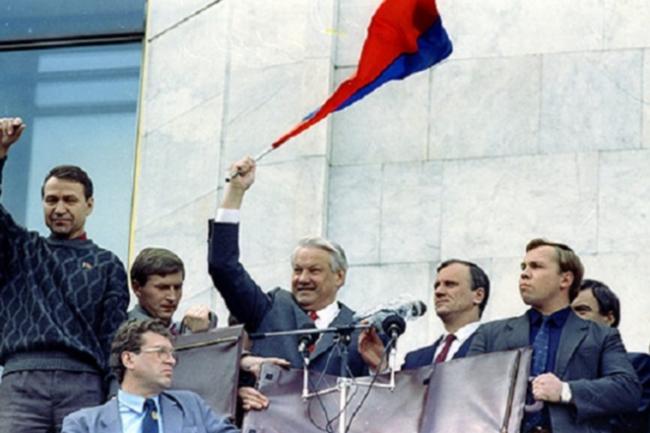 [Songsan Column | 80-Year History of the Pro-North Korean Left] ㉛ 1991: The Dissolution of the Soviet Union
On August 22, 1991, Russian President Boris Yeltsin waves the Russian tricolor flag, calling for resistance against the coup forces. On December 26, 1991, the Soviet Union (USSR), the world’s m
[Songsan Column | 80-Year History of the Pro-North Korean Left] ㉛ 1991: The Dissolution of the Soviet Union
On August 22, 1991, Russian President Boris Yeltsin waves the Russian tricolor flag, calling for resistance against the coup forces. On December 26, 1991, the Soviet Union (USSR), the world’s m
 Trump: "Talks with Iran are underway... preparations for airstrikes are also complete"
President Donald Trump delivers remarks on U.S. nuclear innovation in the Oval Office at the White House in Washington, D.C., on July 24, 2026. (Reuters/Evelyn Hockstein)U.S. President Donald Trump st
Trump: "Talks with Iran are underway... preparations for airstrikes are also complete"
President Donald Trump delivers remarks on U.S. nuclear innovation in the Oval Office at the White House in Washington, D.C., on July 24, 2026. (Reuters/Evelyn Hockstein)U.S. President Donald Trump st
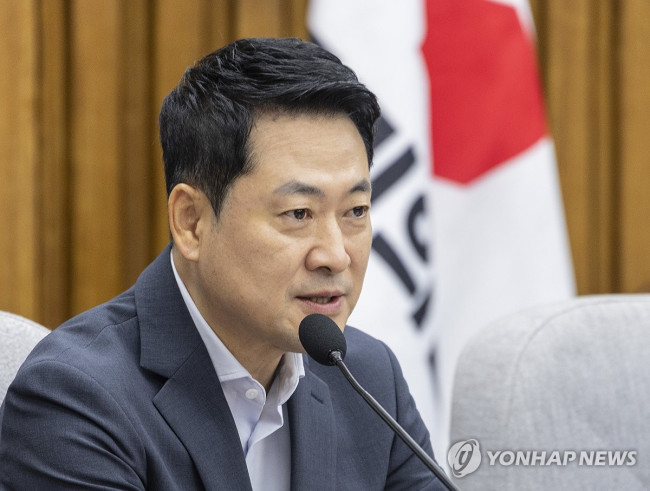 Jang Dong-hyeok to visit Gimhae and Daegu today… to attend a rally condemning the infringement of voting rights
People Power Party leader Jang Dong-hyeok speaks out against government real estate policy at the party's Real Estate Policy Normalization Forum held at the National Assembly on the 24th. [Yonhap News
Jang Dong-hyeok to visit Gimhae and Daegu today… to attend a rally condemning the infringement of voting rights
People Power Party leader Jang Dong-hyeok speaks out against government real estate policy at the party's Real Estate Policy Normalization Forum held at the National Assembly on the 24th. [Yonhap News
 Court Rules: "Chey Tae-won to Pay Roh Soh-yeong 944 Billion Won"... Daily Interest of 130 Million Won
On the 24th, during the remand trial for the property division lawsuit between SK Group Chairman Chey Tae-won and Art Center Nabi Director Roh Soh-yeong held at the Seoul High Court in Seocho-gu, the
Court Rules: "Chey Tae-won to Pay Roh Soh-yeong 944 Billion Won"... Daily Interest of 130 Million Won
On the 24th, during the remand trial for the property division lawsuit between SK Group Chairman Chey Tae-won and Art Center Nabi Director Roh Soh-yeong held at the Seoul High Court in Seocho-gu, the
 FT "South Korean companies flush with cash from 'AI boom' eye U.S. M&A"
Samsung Electronics logo [Reuters=Yonhap News File Photo]South Korean companies, flush with cash from the artificial intelligence (AI) boom, are acquiring U.S. firms to circumvent tariffs expected und
FT "South Korean companies flush with cash from 'AI boom' eye U.S. M&A"
Samsung Electronics logo [Reuters=Yonhap News File Photo]South Korean companies, flush with cash from the artificial intelligence (AI) boom, are acquiring U.S. firms to circumvent tariffs expected und
 [New Book] Approaching the Truth of Gwangju… ‘The Memory of Two Gunshots, the Tears of Two Gwangjus’
Memories of the 5·18 Democratization Movement have long remained scattered, failing to converge into a single, unified meaning. The new book, "Memories of Two Gunshots, Tears of Two Gwangjus," brings
[New Book] Approaching the Truth of Gwangju… ‘The Memory of Two Gunshots, the Tears of Two Gwangjus’
Memories of the 5·18 Democratization Movement have long remained scattered, failing to converge into a single, unified meaning. The new book, "Memories of Two Gunshots, Tears of Two Gwangjus," brings
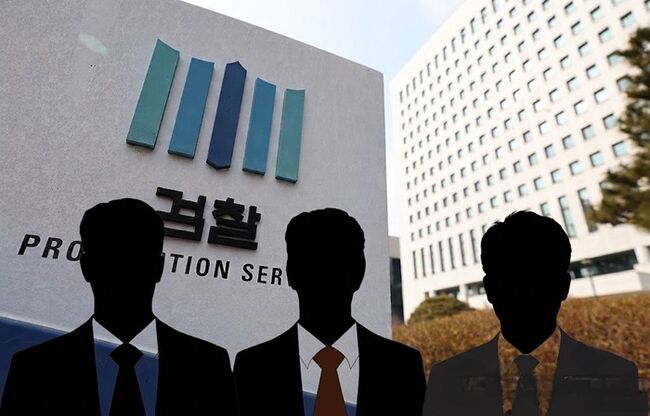 [Byun Jong-pil Column] Investigative Authority for Supplementary Inquiries: For Whom Are We Abolishing It?
"Is it truly reasonable from the perspective of the public to abolish prosecutors' supplementary investigation powers based on the simple catchphrase of 'reforming the politically motivated prosecutio
[Byun Jong-pil Column] Investigative Authority for Supplementary Inquiries: For Whom Are We Abolishing It?
"Is it truly reasonable from the perspective of the public to abolish prosecutors' supplementary investigation powers based on the simple catchphrase of 'reforming the politically motivated prosecutio
 [Photo] Evidence of Election Fraud Flooding U.S. Media… Trump Had 2.7 Million Votes Stolen
 [Video] U.S. Semiquincentennial Air Show... 'Art in the Sky' streaks across New York
 [Editorial Cartoon] A Draconian Law That Undermines Freedom of Expression

 List
List