The 'Professors for Freedom and Justice' held its 30th seminar on the afternoon of the 17th at 4 p.m. on the 2nd floor of the Jongjisa Tongriwon in Dogok-dong, Gangnam-gu, Seoul. [Photo by Reporter Im Yo-hee]
The 'Professors for Freedom and Justice' held its '30th Seminar' on the afternoon of the 17th, Constitution Day, at 4 p.m. on the 2nd floor of the Jongjisa Tongriwon in Dogok-dong, Gangnam-gu, Seoul.
Held under the theme of 'The Worldview of 21st Century Koreans and Gramsci,' this seminar provided an in-depth look at social inertia that remains resistant to change even after shifts in political power, and examined the role of civil society at the center of this phenomenon.
Writer Jung Gwang-je of the Liberal Writers' Association served as the lead presenter. The event was moderated by Professor Hong Hoo-jo of Korea University, with Professor Lee Je-bong of the University of Ulsan and writer Kim Gyu-na participating as discussants in a spirited debate.
Modern Society Through the Lens of Gramsci’s 'Hegemony' and 'War of Position'
Writer Jung Gwang-je, author of 'A Liberal's Reading of Gramsci,' pointed out that despite several changes in administration in South Korea following the presidential elections in 2017, 2022, and 2025, the overall social value system—including academic discourse at universities, textbook narratives, and concepts expressed in media—has not easily changed.
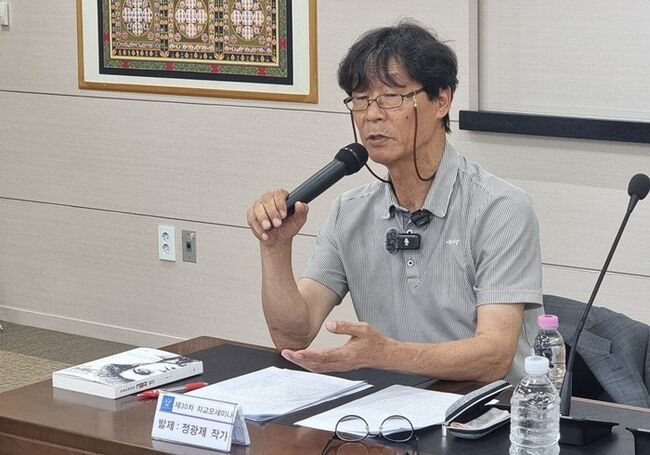 Writer Jung Gwang-je of the Liberal Writers' Association served as the lead presenter. [Photo by Reporter Im Yo-hee]
Jung noted, "While elections can change the government in the short term, civil organizations that drive society—such as education, media, culture, and religion—operate over a much longer timeframe," highlighting the phenomenon where political victories and social influence do not always align.
Jung identified Antonio Gramsci as the thinker who explored this issue most persistently. Citing Gramsci’s concept of 'hegemony,' he explained that the power sustaining a state comes not only from physical coercion like the military or police, but also from the 'common sense' and 'voluntary consent' that a majority of society members accept without question.
In particular, based on Gramsci’s analysis that the failure of socialist revolutions in Western Europe was due to the 'existence of a robust civil society,' he emphasized that modern power competition takes the form of a 'War of Position'—a long-term struggle occurring not only in the National Assembly but across all of civil society, including schools, universities, media, publishing, and culture.
Long-term Competition in Civil Society After South Korea's Democratization
Jung then applied Gramsci’s theory to analyze modern South Korean history since the democratization of 1987.
He explained that despite repeated peaceful transitions of power since 1987, left-wing power groups have been densely active through: △the accumulation of academic interpretations within universities, △changes in the educational field through organizations like the KTU (Korean Teachers and Education Workers Union), △agenda-setting by civic groups like the People's Solidarity for Participatory Democracy and the Citizens' Coalition for Economic Justice, △competition over historical memory in textbooks, and △the spread of values through cultural content such as the films 'Shiri,' 'The Attorney,' and '1987.'
He analyzed, "The phenomenon where universities do not easily change even when a conservative government takes power is the result of a long-term 'war of position' accumulated within civil society. Politics merely institutionalizes superficial results; the real power to create the frames and vocabulary through which we view the world lies within civil society."
Questions for the Future Generation’s Common Sense in the Digital Age
In conclusion, Jung noted that even though the media environment—including SNS, video platforms, and search algorithms—has changed drastically, the essence that 'the process by which people learn and internalize ways of thinking drives society' remains unchanged. He concluded his presentation by stating, "Instead of focusing solely on how regimes change, we must pay deeper attention to how society evolves and what kind of common sense future generations will learn."
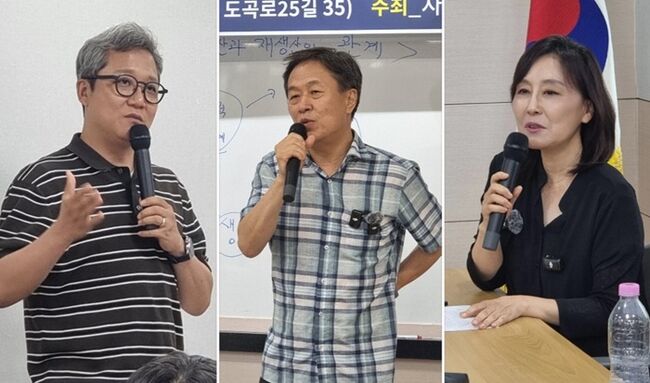 From left: Park Sang-yoon, Secretary-General of the Korea Teachers Union; Professor Lee Je-bong of the University of Ulsan; and writer Kim Gyu-na. [Photo by Reporter Im Yo-hee]
In the subsequent discussion, Professor Lee Je-bong pointed to an "event-oriented" behavior pattern as a problem for conservative groups. He remarked, "Taking political power is important. The right wing lacks political power. It is full of only event-based activities like participating in rallies. For the right to seize hegemony, professors must first organize within universities. When I emphasize organization, everyone says, 'Where would we find the time?' and stays busy holding flags at rallies."
Meanwhile, writer Kim Gyu-na raised the question, "Isn't emphasizing organization to liberals a contradiction to liberalism itself?"
The floor was also active with questions. Park Sang-yoon, Secretary-General of the Korea Teachers Union, pointed out, "School textbooks covering Korean history are filled with omissions and intentional neglect," adding, "There is serious distortion regarding figures who played a major role in Korea's growth."
He further diagnosed, "Even when conservative teachers and parents hold press conferences and issue press releases, the media does not report them. Ultimately, there is no choice but for all of us to step up and take action, such as filing civil complaints."
The seminar was highly regarded by attendees for its fresh analysis of the structure that forms Korea’s long-term worldview and common sense through the lens of Gramsci.
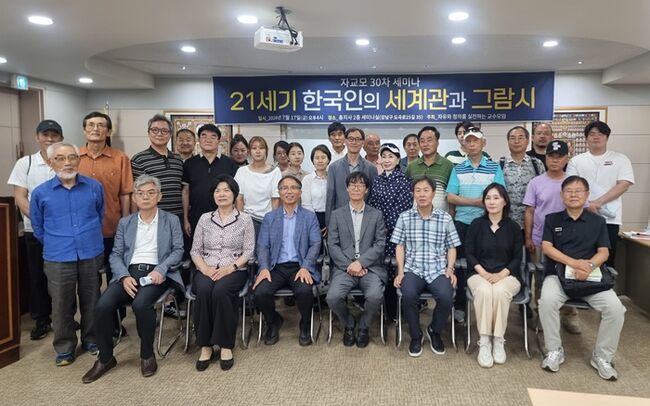 Commemorative photo after the seminar [Photo by Reporter Im Yo-hee]
Reporter Im Yo-hee

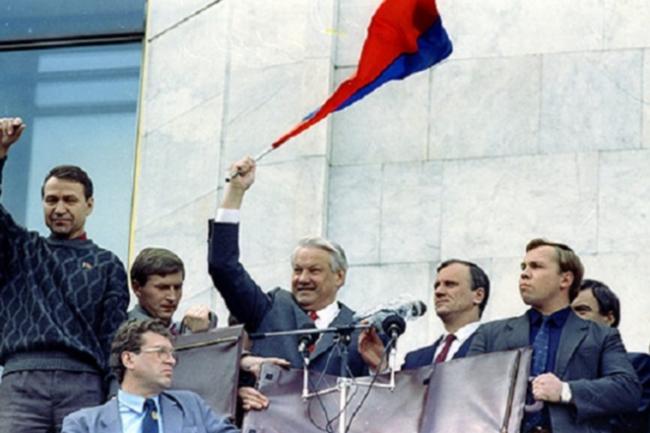 [Songsan Column | 80-Year History of the Pro-North Korean Left] ㉛ 1991: The Dissolution of the Soviet Union
On August 22, 1991, Russian President Boris Yeltsin waves the Russian tricolor flag, calling for resistance against the coup forces. On December 26, 1991, the Soviet Union (USSR), the world’s m
[Songsan Column | 80-Year History of the Pro-North Korean Left] ㉛ 1991: The Dissolution of the Soviet Union
On August 22, 1991, Russian President Boris Yeltsin waves the Russian tricolor flag, calling for resistance against the coup forces. On December 26, 1991, the Soviet Union (USSR), the world’s m
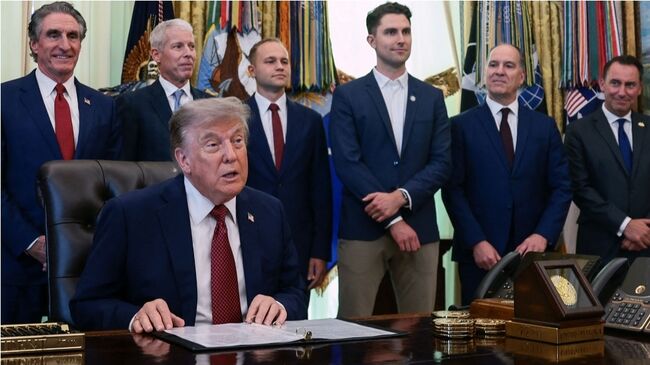 Trump: "Talks with Iran are underway... preparations for airstrikes are also complete"
President Donald Trump delivers remarks on U.S. nuclear innovation in the Oval Office at the White House in Washington, D.C., on July 24, 2026. (Reuters/Evelyn Hockstein)U.S. President Donald Trump st
Trump: "Talks with Iran are underway... preparations for airstrikes are also complete"
President Donald Trump delivers remarks on U.S. nuclear innovation in the Oval Office at the White House in Washington, D.C., on July 24, 2026. (Reuters/Evelyn Hockstein)U.S. President Donald Trump st
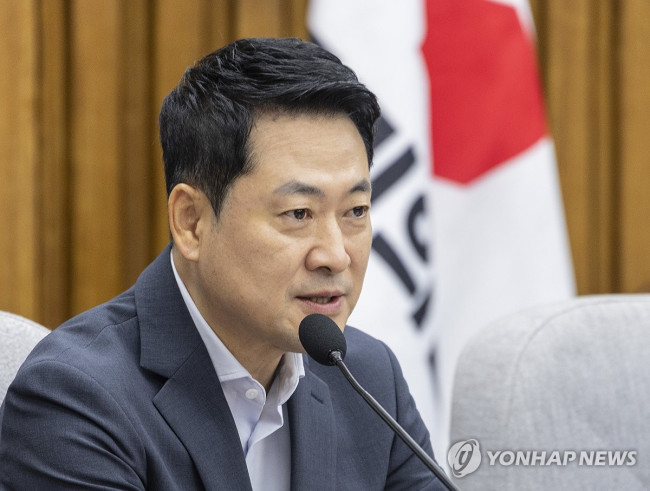 Jang Dong-hyeok to visit Gimhae and Daegu today… to attend a rally condemning the infringement of voting rights
People Power Party leader Jang Dong-hyeok speaks out against government real estate policy at the party's Real Estate Policy Normalization Forum held at the National Assembly on the 24th. [Yonhap News
Jang Dong-hyeok to visit Gimhae and Daegu today… to attend a rally condemning the infringement of voting rights
People Power Party leader Jang Dong-hyeok speaks out against government real estate policy at the party's Real Estate Policy Normalization Forum held at the National Assembly on the 24th. [Yonhap News
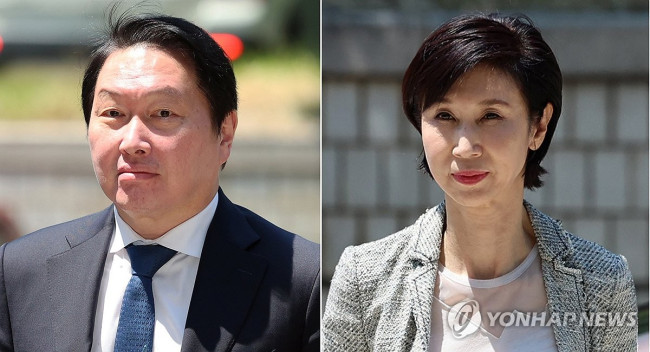 Court Rules: "Chey Tae-won to Pay Roh Soh-yeong 944 Billion Won"... Daily Interest of 130 Million Won
On the 24th, during the remand trial for the property division lawsuit between SK Group Chairman Chey Tae-won and Art Center Nabi Director Roh Soh-yeong held at the Seoul High Court in Seocho-gu, the
Court Rules: "Chey Tae-won to Pay Roh Soh-yeong 944 Billion Won"... Daily Interest of 130 Million Won
On the 24th, during the remand trial for the property division lawsuit between SK Group Chairman Chey Tae-won and Art Center Nabi Director Roh Soh-yeong held at the Seoul High Court in Seocho-gu, the
 FT "South Korean companies flush with cash from 'AI boom' eye U.S. M&A"
Samsung Electronics logo [Reuters=Yonhap News File Photo]South Korean companies, flush with cash from the artificial intelligence (AI) boom, are acquiring U.S. firms to circumvent tariffs expected und
FT "South Korean companies flush with cash from 'AI boom' eye U.S. M&A"
Samsung Electronics logo [Reuters=Yonhap News File Photo]South Korean companies, flush with cash from the artificial intelligence (AI) boom, are acquiring U.S. firms to circumvent tariffs expected und
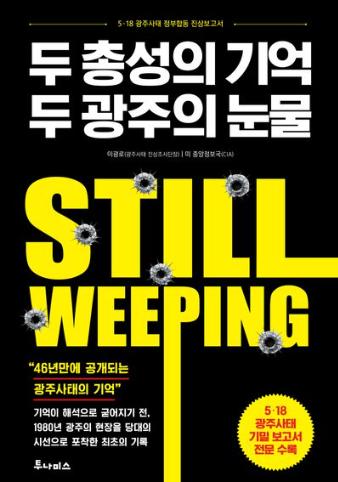 [New Book] Approaching the Truth of Gwangju… ‘The Memory of Two Gunshots, the Tears of Two Gwangjus’
Memories of the 5·18 Democratization Movement have long remained scattered, failing to converge into a single, unified meaning. The new book, "Memories of Two Gunshots, Tears of Two Gwangjus," brings
[New Book] Approaching the Truth of Gwangju… ‘The Memory of Two Gunshots, the Tears of Two Gwangjus’
Memories of the 5·18 Democratization Movement have long remained scattered, failing to converge into a single, unified meaning. The new book, "Memories of Two Gunshots, Tears of Two Gwangjus," brings
 [Byun Jong-pil Column] Investigative Authority for Supplementary Inquiries: For Whom Are We Abolishing It?
"Is it truly reasonable from the perspective of the public to abolish prosecutors' supplementary investigation powers based on the simple catchphrase of 'reforming the politically motivated prosecutio
[Byun Jong-pil Column] Investigative Authority for Supplementary Inquiries: For Whom Are We Abolishing It?
"Is it truly reasonable from the perspective of the public to abolish prosecutors' supplementary investigation powers based on the simple catchphrase of 'reforming the politically motivated prosecutio
 [Photo] Evidence of Election Fraud Flooding U.S. Media… Trump Had 2.7 Million Votes Stolen
 [Video] U.S. Semiquincentennial Air Show... 'Art in the Sky' streaks across New York
 [Editorial Cartoon] A Draconian Law That Undermines Freedom of Expression

 List
List