A welcoming parade in Busan by the US Army in 1945 [Photo=Korean Film Archive]
In August 1945, liberation was a blessing, but also a void. The period of time until order was established in the place of a vanished nation is always dangerous.
During this interim period, the first and decisive error committed by the Korean left, particularly the faction that would later be called the "pro-North left," was the misperception of North Korea as "progressive." This erroneous judgment was the starting point for the political and moral downfall that would span the subsequent 80 years.
Immediately after liberation, the northern part of the Korean Peninsula was placed under Soviet military administration (1945-1948). The Soviet army quickly seized control of the administrative, security, and propaganda systems centered in Pyongyang and prominently introduced Kim Il-sung in October 1945. Kim Il-sung was portrayed as a symbol of anti-Japanese armed struggle, but his actual power was shaped by Soviet military rule and its political backing.
In 1946, the Provisional People's Committee for North Korea was established, and land reform and the nationalization of enterprises were carried out in a short period. These radical measures gave the South Korean left a schematic impression that "the North was progressive, implementing reforms, while the South was reactionary, bound by vested interests."
Kim Il-sung Seized Control of the North... The Problem Was the Nature of Power
The issue was not the speed or form, but the nature of power. The reforms carried out in the North were not premised on pluralistic consensus or citizens' freedoms. Opposition factions were purged, and freedom of the press and association was not permitted.
Between 1946 and 1948, a one-party communist system was effectively completed in the North, and power began to concentrate in the hands of Kim Il-sung personally with the establishment of the Democratic People's Republic of Korea in September 1948. Despite this, the South Korean left mistook this system for "not an incomplete democracy, but a completed progressive system."
There were two underlying reasons for this misconception. First, the anger stemming from the colonial experience clouded their judgment. Simply because they had opposed Japanese imperialism, authoritarian rule and violent purges were dismissed as "matters of process."
Second, there was a simplification of ideology. As long as the labels of anti-imperialism, anti-Americanism, and anti-capitalism were attached, the suppression of freedom and the annihilation of human rights were pushed aside. The habit of judging progress not by its outcome but by its intent solidified at this time.
The Left Embraced North Korea as a Progressive Model
In South Korea, confusion and conflict continued under the US military government (1945-1948). As left-right confrontation, economic hardship, and security instability overlapped, some on the left envied the "order" in the North. However, that order came at the price of freedom.
The North quickly became a system where power could not be changed through elections, and criticism of power soon became a crime against the state. The choice to embrace North Korea as a model for progress, while ignoring this fact, became the decisive reason why the Korean left distanced itself from democracy thereafter.
After 1948, there were several opportunities to correct this misperception. The Korean War (1950-1953) clearly demonstrated the nature of power in that system.
Despite this, some sought to obscure responsibility for the North Korean invasion or explained the violence as a "historical inevitability." The attitude of not acknowledging the initial misjudgment led to even greater distortions. Once something was labeled "progressive," it was never re-examined, no matter how much evidence accumulated.
Progress is a direction of change, not a license for a particular regime. A system that lacks freedom and responsibility, checks and balances on power, and the rights of citizens is not progressive, regardless of the reforms it undertakes.
The judgment that mistook North Korea for progressive immediately after liberation was not simply a limitation of the era, but a choice that prioritized conviction over facts. Unless this choice is reflected upon, the language of the pro-North left will always fail to explain reality and will be doomed to repeat its failures.
Poet, Historian & Philosopher Researcher
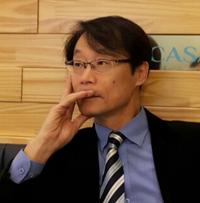
◆ Songsan (송산)
A poet and researcher of history and philosophy, he previously served as a director at the Syngman Rhee Institute and currently works as a research advisor for the Korean Modern and Contemporary History Research Society and as the representative of the philosophical forum Lyceum. He has published four poetry collections and co-translated "The Heroes of Chosin Reservoir." Songsan is a pen name.

 [Statement by the Seo-beo-kka Korea Military Academy Save-the-Nation Comrades Association] ㉛ Recount the Votes Publicly, as the Previous Recount Concealed Election Fraud
Tongyeong Mayoral Election Recount [Photo=Yonhap News]South Korea's liberal democracy is dying. The National Election Commission (NEC) and the judiciary, which have plummeted into criminal syndicates
[Statement by the Seo-beo-kka Korea Military Academy Save-the-Nation Comrades Association] ㉛ Recount the Votes Publicly, as the Previous Recount Concealed Election Fraud
Tongyeong Mayoral Election Recount [Photo=Yonhap News]South Korea's liberal democracy is dying. The National Election Commission (NEC) and the judiciary, which have plummeted into criminal syndicates
 What is the significance of the "Trump 2028" red hats that keep making a comeback?
It is noteworthy that President Donald Trump is "intentionally" fueling controversy over whether he can actually run in the 2028 presidential election, even though it is "highly likely he is seriously
What is the significance of the "Trump 2028" red hats that keep making a comeback?
It is noteworthy that President Donald Trump is "intentionally" fueling controversy over whether he can actually run in the 2028 presidential election, even though it is "highly likely he is seriously
 Jin Cummings: “North Korea says it will increase the number of spies, so what is the government doing?”
U.S. political columnist Gene Cummings has publicly questioned the South Korean government, asking, "North Korea is declaring that it will increase its number of spies, so what is the South Kore
Jin Cummings: “North Korea says it will increase the number of spies, so what is the government doing?”
U.S. political columnist Gene Cummings has publicly questioned the South Korean government, asking, "North Korea is declaring that it will increase its number of spies, so what is the South Kore
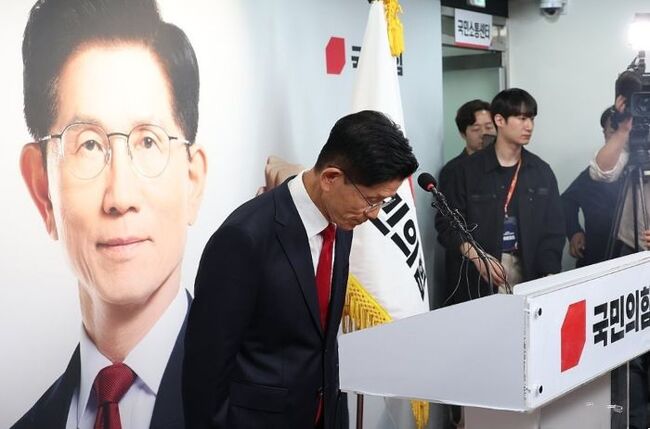 “Too little, too late?…” Kim Moon-soo, who previously conceded his presidential election defeat, now demands a special counsel investigation into ‘allegations of election fraud in the 2025 presidential election’
People Power Party presidential candidate Kim Moon-soo concedes defeat during a press conference at the party headquarters in Yeouido, Seoul, on June 4, 2025. [Joint Press Corps]As allegations emerge
“Too little, too late?…” Kim Moon-soo, who previously conceded his presidential election defeat, now demands a special counsel investigation into ‘allegations of election fraud in the 2025 presidential election’
People Power Party presidential candidate Kim Moon-soo concedes defeat during a press conference at the party headquarters in Yeouido, Seoul, on June 4, 2025. [Joint Press Corps]As allegations emerge
 Stock Market Crash 'Black Tuesday'… KOSPI down 10.8%, KOSDAQ down 7.7%
The KOSPI fell by more than 5% in early trading on the 28th, triggering a sell-side sidecar.On the 28th, the KOSPI plunged by more than 10%.Due to the sharp decline, a sell-side sidecar—a temporary
Stock Market Crash 'Black Tuesday'… KOSPI down 10.8%, KOSDAQ down 7.7%
The KOSPI fell by more than 5% in early trading on the 28th, triggering a sell-side sidecar.On the 28th, the KOSPI plunged by more than 10%.Due to the sharp decline, a sell-side sidecar—a temporary
 [World Heritage Committee] 25 New World Heritage Sites Inscribed in Busan… South Korea Successfully Expands 'Getbol' Listing
The Chairperson of the World Heritage Committee speaks at the plenary session of the 48th session of the World Heritage Committee, held at BEXCO in Busan on the 20th. [Photo: Yonhap News]A total of 25
[World Heritage Committee] 25 New World Heritage Sites Inscribed in Busan… South Korea Successfully Expands 'Getbol' Listing
The Chairperson of the World Heritage Committee speaks at the plenary session of the 48th session of the World Heritage Committee, held at BEXCO in Busan on the 20th. [Photo: Yonhap News]A total of 25
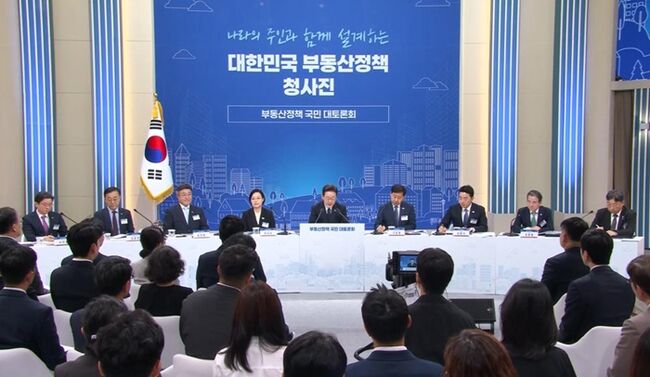 [Liberal Democratic Party Statement] Calling it a Grand Real Estate Debate… It Was Nothing More Than a Private Party Among Themselves
The 'National Grand Debate on Real Estate Policy' held on July 23rd and 27th. [Photo=Yonhap News]The 'National Grand Debate on Real Estate Policy,' hosted by the Lee Jae-myung administration under the
[Liberal Democratic Party Statement] Calling it a Grand Real Estate Debate… It Was Nothing More Than a Private Party Among Themselves
The 'National Grand Debate on Real Estate Policy' held on July 23rd and 27th. [Photo=Yonhap News]The 'National Grand Debate on Real Estate Policy,' hosted by the Lee Jae-myung administration under the
 [Photo] Evidence of Election Fraud Flooding U.S. Media… Trump Had 2.7 Million Votes Stolen
 [Video] U.S. Semiquincentennial Air Show... 'Art in the Sky' streaks across New York
 [Editorial Cartoon] A Draconian Law That Undermines Freedom of Expression

 List
List