An image visualizing the 400,000 won range opened by earnings improvement and the 600,000 won range opened by HBM competitiveness. The gentle upward earnings graph on the left and the HBM tower on the right symbolize the two-stage revaluation path of Samsung Electronics' stock price, while the red arrow below represents the short-term supply and demand pressure caused by foreign selling. [Photo = Hanmi Daily Graphic]
The key to Samsung Electronics' stock price outlook is no longer about "whether memory prices will rise." Rising memory prices are already lifting the floor on earnings. Now, the market is asking a different question: Can Samsung Electronics regain its premium in the HBM market? Therefore, the 400,000 won mark is an issue of earnings, while the 600,000 won mark is an issue of HBM.
The assessment of Hanmi Data Lab is clear. Samsung Electronics is currently difficult to view as a "sell" stock. However, it is also not a stock to chase in one go during a rapid surge. For existing holders, a hold-dominant strategy remains valid, and for new entrants, a split-buy approach during corrections is rational. While investors with significant profits from the short-term rally may consider partial profit-taking, a strategy of retaining core holdings until the HBM verification phase is more persuasive.
On the 30th, Samsung Electronics closed at 334,000 won, up 11,000 won (3.41%) from the previous trading day. This marks a rebound after three trading days. Previously, the stock had plunged 5.44% on the 26th and 4.27% the day before, before rebounding today due to the strength of U.S. semiconductor stocks. The 52-week high is 374,500 won. Based on the closing price of 334,000 won, an additional gain of approximately 19.8% is needed to reach 400,000 won, and about 79.6% to reach 600,000 won. It remains about 12.1% away from its 52-week high.
Even with the same target, the 400,000 won and 600,000 won marks are entirely different in nature. The 400,000 won level is one that earnings can justify, while the 600,000 won level is one that requires market confirmation that Samsung Electronics has made a comeback in HBM.
The window for the first rally is the preliminary Q2 earnings in early July
Now, the market's eyes are shifting to the preliminary Q2 earnings. Samsung Electronics has historically released preliminary earnings immediately after the quarter ends. This year's Q1 preliminary results were announced on April 7. As the second quarter ends on June 30, early July is highly likely to be the first inflection point for Samsung Electronics' stock price, barring any special variables.
The key is the numbers. According to Yonhap Infomax's aggregation of 15 brokerage firms that provided forecasts within the last month, Samsung Electronics' consolidated revenue for Q2 2026 is expected to be 173.8876 trillion won, with an operating profit of 87.1925 trillion won. The year-on-year operating profit growth rate reaches 1,765%. The core of this earnings forecast is memory prices. The analysis suggests that the increase in prices has been greater than expected as demand has spread beyond HBM to general-purpose DRAM, server DRAM, LPDDR, and NAND, driven by expanding AI server investments and increasing high-performance computing demand.
According to FnGuide, as of June 9, the Q2 consensus stood at 166.7649 trillion won in revenue and 86.1705 trillion won in operating profit. Compared to forecasts from a month ago, revenue and operating profit have been upgraded by 4.3% and 6.48%, respectively, and the operating profit forecast is 91.6% higher than it was three months ago. KB Securities projects an operating profit of 90 trillion won, while Daishin Securities forecasts 91 trillion won for Q2.
These figures support the logic for the 400,000 won target. If Q2 operating profit meets the consensus in the mid-to-high 80 trillion won range, the stock could attempt to re-challenge its 52-week high in the 370,000 won range. If a surprise around 90 trillion won emerges, a push to break through 400,000 won is possible. However, meeting the consensus might already be largely priced in. Therefore, more important than simply meeting the forecast is the company's tone regarding memory price outlooks for Q3 and demand for server DRAM and HBM.
The window for the second rally is the final earnings and conference call in late July
The preliminary earnings in early July will only present revenue and operating profit. What the market truly wants to confirm is what follows. The core points are how much the DS division's operating profit has increased, how much the average selling prices (ASP) of DRAM and NAND have risen, how much the share of server memory has expanded, and the progress status of HBM sales and customer certification.
In its final Q1 2026 results, Samsung Electronics recorded consolidated revenue of 133.9 trillion won and an operating profit of 57.2 trillion won. The DS division posted 81.7 trillion won in revenue and 53.7 trillion won in operating profit. Samsung Electronics explained that its memory business broke quarterly revenue records, fueled by high-value AI demand and a general rise in memory prices across the industry.
Therefore, the final earnings report and conference call in late July will be the stage to confirm whether the stock can settle at the 400,000 won level. If the preliminary earnings are the trigger for a rally toward 400,000 won, the final results and conference call serve as the verification gate determining whether that rally is a short-term event or the beginning of a revaluation of earnings. In particular, if there are strong statements regarding Q3 memory prices, server customer demand, and mass production and customer certification of HBM4, the possibility of settling in the 400,000 won range could increase.
Earnings justify the 400,000 won mark
The logic for Samsung Electronics re-entering the 400,000 won range is not complex. If DRAM prices rise, server memory demand remains strong, and NAND recovers simultaneously, Samsung Electronics' profit leverage increases. This is a range the company can reach even without immediately proving it is the leader in HBM.
According to Counterpoint Research, Samsung Electronics maintained its lead in the global DRAM market in Q1 2026 with a 38% market share by revenue. SK Hynix held 29%, and Micron held 22%. Although CXMT has risen to 8%, Samsung Electronics' dominance in the overall DRAM market has been reaffirmed.
Samsung Electronics also maintained its #1 position in the NAND market. According to an English-language report by The Seoul Economic Daily citing Counterpoint Research, the global NAND market share in Q1 2026 was 29% for Samsung Electronics, 18% for SK Hynix, 14% for Kioxia, and 13% each for Micron, SanDisk, and YMTC.
This is the logic for the 400,000 won mark. Samsung Electronics is a comprehensive memory company that possesses general-purpose DRAM, server DRAM, NAND, SSDs, and mobile memory. In a phase where memory prices are soaring, the earnings of the company with the broadest portfolio are re-evaluated first. The 400,000 won mark is not a declaration that "Samsung has completely won in HBM," but rather closer to an assessment that "the memory supercycle is being fully reflected in Samsung Electronics' earnings."
Why do foreigners keep selling?
However, stock prices do not move on earnings alone; supply and demand must follow. This is the most common question in the market recently: with the memory business in such good shape, why are foreigners continuing to sell Samsung Electronics and SK Hynix?
Foreign selling is difficult to explain by a single reason. First is profit-taking. Semiconductor stocks have surged in the short term. Foreigners do not sell only when earnings deteriorate. Rather, they often reduce their positions to lock in profits after earnings improvements are fully expected and the stock price has risen first.
Second is changes in global asset allocation. Foreign investors do not look only at the Korean market. They compare the U.S., Japan, Taiwan, Europe, and emerging markets simultaneously. If funds flow toward U.S. AI/Big Tech, Micron, Nvidia, or Taiwanese semiconductor equipment stocks, the weighting of Korean semiconductors may be temporarily reduced.
Third is exchange rates and volatility. Foreign investors look at not only stock returns but also currency gains and losses. If the won's trend is unstable or volatility increases, some capital may exit first, even if the stock outlook is good. Large-cap stocks with high foreign ownership, such as Samsung Electronics, are particularly sensitive to exchange rates and shifts in global risk asset preferences.
Fourth is the perception of "priced-in." Foreigners do not necessarily buy when earnings improve, but rather when they expect them to improve. And in the phase where actual results are confirmed, they may use a "sell the news" strategy. Therefore, it is premature to interpret foreign selling as an immediate sign of "negative business conditions."
Ultimately, it is rational to view foreign selling as a complex result of global capital flows, exchange rates, profit-taking, portfolio weight adjustments, and the anticipation of business conditions being priced in, rather than because "Samsung Electronics is doing poorly." While foreign selling is a burden, it is not in itself a signal that the memory supercycle has ended.
HBM must justify the 600,000 won mark
The problem is the 600,000 won mark. This level is difficult to explain with simple earnings improvements. This range opens when the market re-acknowledges Samsung Electronics as an AI memory premium stock.
Currently, the core of AI memory stock prices is HBM. Reuters reported that SK Hynix has overtaken Samsung Electronics as the most valuable company on the Korean stock market based on its HBM competitiveness. According to Reuters, SK Hynix held a 61% share of the global HBM market in 2025. HBM is a key memory used in AI systems like those from Nvidia and Google, and the market's judgment is that the AI boom is changing the market's valuation of memory companies.
This is precisely the discount factor for Samsung Electronics. The fact that Samsung Electronics is the overall leader in DRAM has not changed. However, the stock premium in the AI semiconductor era comes from HBM, not general-purpose DRAM. SK Hynix has received the "HBM leader" premium, while Samsung Electronics has been tethered by the "HBM laggard" discount.
Samsung Electronics is targeting this issue head-on. In its Q1 2026 management briefing, the company stated it had begun mass production and sales of HBM4 and SOCAMM2. It also emphasized responding to AI-related demand, such as the timely development of PCIe Gen6 SSDs. At GTC 2026, Samsung also highlighted the start of HBM4 mass production, the unveiling of the next-generation HBM4E, and memory/storage solutions for the Nvidia Vera Rubin platform.
This is crucial for the stock price. If HBM4 and next-generation AI memory products translate into actual customer certification, mass production, and long-term supply, Samsung Electronics' valuation can change. The discount Samsung Electronics has received so far is a "lagging in HBM" discount. The moment this discount is resolved, Samsung Electronics will become an AI memory revaluation stock rather than just a general-purpose memory leader.
The rally timetable has three stages
The timetable for the rally in Samsung Electronics' stock price can be divided into three stages.
The first is around the early July preliminary Q2 earnings. If Q2 operating profit meets the consensus in the mid-to-high 80 trillion won range, a re-challenge of the 52-week high in the 370,000 won range is possible. If a surprise around 90 trillion won occurs, a push to break through 400,000 won may emerge. However, one must also consider that short-term profit-taking may occur even if the consensus is simply met.
The second is the final earnings and conference call in late July. In this stage, statements regarding DS division profit, DRAM/NAND ASP, server memory demand, and HBM4 mass production and customer verification are critical. If the company's tone for the second half is strong here, the 400,000 won mark could change from a temporary breakthrough to a settlement scenario.
The third is news of HBM4 supply in the second half of the year. A rally to 600,000 won will not be opened by Q2 earnings alone. Key customer certifications like Nvidia, expansion of HBM4 supply, and a narrowing of the HBM gap with SK Hynix must be confirmed. The moment this news breaks, it will serve as the second revaluation window for Samsung Electronics' stock price.
Therefore, it is rational to view the window for the first rally in early July, the confirmation rally in late July, and the 600,000 won revaluation window as the HBM4 supply news in the second half.
Large-scale investment announcements are a double-edged sword
The large-scale semiconductor investment announcements by the Korean government and companies are also a variable. Reuters reported that the Korean government has announced an AI/semiconductor investment strategy and that Samsung Electronics and SK Hynix plan to invest approximately 800 trillion won in new fabs. Reuters noted that while this plan aims to strengthen Korea's semiconductor leadership and regional development, investors reacted cautiously, fearing potential oversupply.
This is positive for long-term growth. However, the stock market always looks at both sides. Large-scale investments boost future supply capacity but can simultaneously stir fears of oversupply after 2027. Semiconductor factories are not built overnight. Time is needed for electricity, water supply, licensing, equipment procurement, and yield stabilization. Therefore, the immediate price strength and long-term concerns about supply expansion can be reflected in the stock price simultaneously.
Is it a buy or a sell?
Thus, the question simplifies again: should one buy or sell Samsung Electronics?
The assessment of Hanmi Data Lab is not "sell." Samsung Electronics is difficult to view as a stock to sell. This is because rising memory prices, server demand, record-high Q1 earnings, and the potential for Q2 earnings upgrades are supporting the floor of the stock price. However, it is also not a stock to chase in a desperate attempt at the current price level. This is due to foreign selling, the burden of short-term surges, and the remaining variable of HBM verification.
For existing holders, a hold-dominant strategy is best. It is difficult to believe that the earnings improvement phase has ended, and there is room for further revaluation if HBM verification proceeds.
For new entrants, a split-buy approach during corrections is correct. A strategy of buying in stages during the low 300,000 won range or during sharp correction phases is more stable than a single lump-sum purchase. This is because the logic for rising to 400,000 won remains, but short-term volatility has also increased.
Those who have made profits from the short-term surge may consider partial profit-taking. However, retaining core holdings rather than selling everything is more rational. The 600,000 won logic is not yet a confirmed conclusion, but rather an upside scenario that opens when HBM4 customer verification and supply expansion are confirmed.
Hanmi Data Lab's assessment
There are four criteria for judging Samsung Electronics' stock price this week.
First, rising memory prices are lifting the floor on Samsung Electronics' earnings.
Second, the preliminary Q2 earnings in early July are the first trigger for a 400,000 won rally.
Third, foreign selling has more to do with profit-taking and weight adjustment than with negative industry conditions.
Fourth, revaluation to the 600,000 won range is only possible if HBM4 customer verification and supply expansion are confirmed.
Therefore, the outlook for Samsung Electronics' stock price should be divided into two stages and three intervals in terms of the timetable.
400,000 won is an earnings issue. It is a range that can be explained by DRAM/NAND prices, server memory demand, and DS division earnings upgrades. If the preliminary Q2 earnings in early July meet or exceed market expectations, the attempt to break through 400,000 won becomes a reality.
600,000 won is an HBM issue. HBM4 customer certification, expansion of supply to key customers like Nvidia, and a narrowing of the HBM gap with SK Hynix must be confirmed. Once these conditions are met, Samsung Electronics will become an AI memory revaluation stock rather than just a memory leader.
The conclusion is clear. Samsung Electronics is closer to "hold-dominant" than "sell." For new entrants, a split-buy during corrections is more rational than a chase buy. Those with profits from the short-term rally may consider partial profit-taking, but a strategy of leaving core holdings until the HBM verification phase is more persuasive.
Samsung Electronics' 400,000 won mark is explained by memory prices and Q2 earnings. However, 600,000 won cannot be explained by price and earnings alone. That range requires market confirmation that Samsung Electronics has returned in HBM. Earnings raise the floor of the stock price, while HBM is the variable that opens the ceiling.
※ This article is not an investment recommendation but a market analysis by Hanmi Data Lab based on public materials and market data.

 [In-depth Analysis] Will the U.S. House Report on Coupang Deal a 'Direct Blow' to Semiconductors?
Interim staff report by the U.S. House Judiciary Committee Republicans [Photo = Captured from report cover]The "Interim Staff Report by the U.S. House Judiciary Committee Republicans" is escalating be
[In-depth Analysis] Will the U.S. House Report on Coupang Deal a 'Direct Blow' to Semiconductors?
Interim staff report by the U.S. House Judiciary Committee Republicans [Photo = Captured from report cover]The "Interim Staff Report by the U.S. House Judiciary Committee Republicans" is escalating be
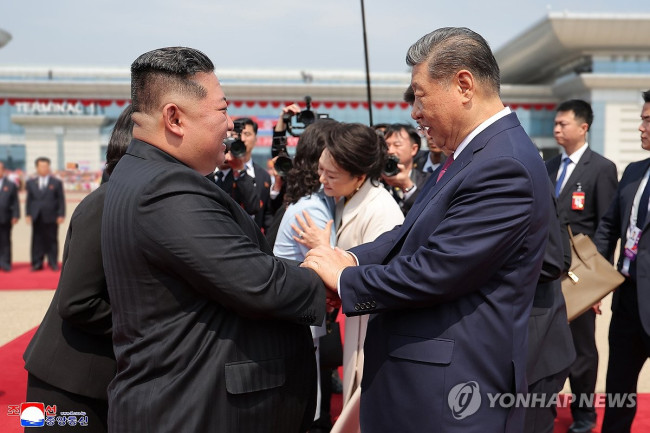 Xi Jinping Sends Reply to Kim Jong Un… "Developing DPRK-China Relations Stably and Long-Term"
According to a report by the Korean Central News Agency (KCNA) on the 10th, Chinese President Xi Jinping and his wife, Peng Liyuan, departed Pyongyang by private plane on the afternoon of the 9th, con
Xi Jinping Sends Reply to Kim Jong Un… "Developing DPRK-China Relations Stably and Long-Term"
According to a report by the Korean Central News Agency (KCNA) on the 10th, Chinese President Xi Jinping and his wife, Peng Liyuan, departed Pyongyang by private plane on the afternoon of the 9th, con
 Jang Dong-hyeok, casting out the pro-Han faction first?… PPP on high alert over the 'coming soon' politics of disciplinary action
Representative Jang Dong-hyeok (left) and former representative Han Dong-hoon [Yonhap News] A palpable sense of tension is building within the People Power Party on the 5th as the central party's
Jang Dong-hyeok, casting out the pro-Han faction first?… PPP on high alert over the 'coming soon' politics of disciplinary action
Representative Jang Dong-hyeok (left) and former representative Han Dong-hoon [Yonhap News] A palpable sense of tension is building within the People Power Party on the 5th as the central party's
 [Exclusive Investigation] The Fatal Boomerang of the 5·18 ‘Gwang-su Ruling’… The ‘Genocide’ Bomb Thrown by Dr. Ji Man-won
Dr. Ji Man-won ©Hanmi IlboA new legal debate is igniting within the legal and historical communities surrounding the 1980 Gwangju Democratization Movement (May 18), which has been the most volati
[Exclusive Investigation] The Fatal Boomerang of the 5·18 ‘Gwang-su Ruling’… The ‘Genocide’ Bomb Thrown by Dr. Ji Man-won
Dr. Ji Man-won ©Hanmi IlboA new legal debate is igniting within the legal and historical communities surrounding the 1980 Gwangju Democratization Movement (May 18), which has been the most volati
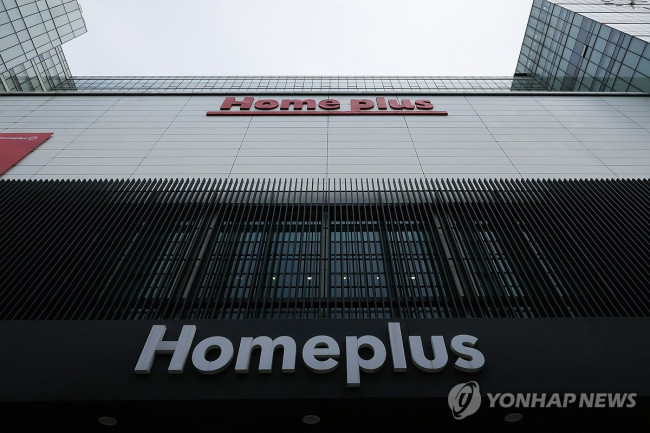 Homeplus effectively heading toward bankruptcy… Court terminates rehabilitation proceedings
Homeplus submits revised rehabilitation plan incorporating store closures and cost-cutting measures [Yonhap News file photo]Homeplus, the major discount store chain, is now headed toward bankruptcy as
Homeplus effectively heading toward bankruptcy… Court terminates rehabilitation proceedings
Homeplus submits revised rehabilitation plan incorporating store closures and cost-cutting measures [Yonhap News file photo]Homeplus, the major discount store chain, is now headed toward bankruptcy as
 [Cool Summer Destinations] ➀ Korea’s ‘Tate Modern’: MMCA Cheongju
As Cheongju City transformed the former tobacco manufacturing plant into the 'National Museum of Modern and Contemporary Art, Cheongju,' it preserved the 20-meter chimney and the building's exterior w
[Cool Summer Destinations] ➀ Korea’s ‘Tate Modern’: MMCA Cheongju
As Cheongju City transformed the former tobacco manufacturing plant into the 'National Museum of Modern and Contemporary Art, Cheongju,' it preserved the 20-meter chimney and the building's exterior w
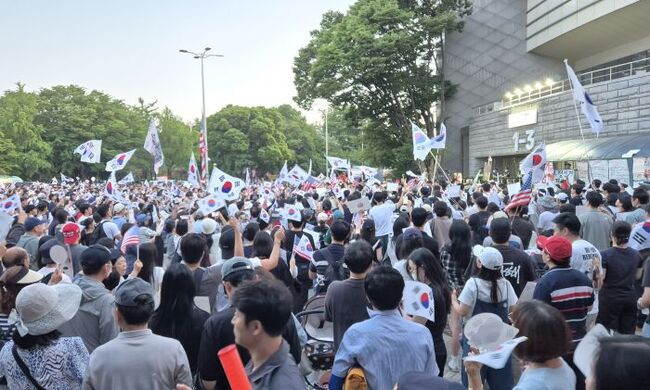 [Seobokka Yuksa Gukguk Comrades Association Statement] ㉑ Eradicate the Election Fraud Cartel through an Opposition-Led Special Prosecutor and Reclaim the Stolen Republic of Korea
Citizens condemning the National Election Commission’s violation of suffrage and calling for a "rerun of the fraudulent election!" ⒸHanmi Ilbo A month has passed since the truth was revealed
[Seobokka Yuksa Gukguk Comrades Association Statement] ㉑ Eradicate the Election Fraud Cartel through an Opposition-Led Special Prosecutor and Reclaim the Stolen Republic of Korea
Citizens condemning the National Election Commission’s violation of suffrage and calling for a "rerun of the fraudulent election!" ⒸHanmi Ilbo A month has passed since the truth was revealed
 [Photo] “Don’t hang the Taegeukgi upside down”… Did BewhY take a jab at Kim Min-seok?
 [Video] U.S. Semiquincentennial Air Show... 'Art in the Sky' streaks across New York
 [Editorial Cartoon] A Comparative Visualization of the 7,460kg of Ballot Papers Shredded by the NEC

 List
List