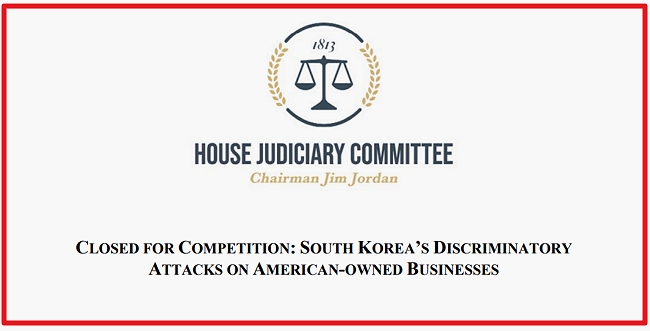
 Interim staff report by the U.S. House Judiciary Committee Republicans [Photo = Captured from report cover]
The "Interim Staff Report by the U.S. House Judiciary Committee Republicans" is escalating beyond the controversy over Coupang's personal data leak, evolving into a trade risk that could shake South Korea’s semiconductor industry and stock market.
The exact title of the report is "Closed for Competition: South Korea’s Discriminatory Attacks on American-owned Businesses."
The cover identifies the House Judiciary Committee, Chairman Jim Jordan, the Subcommittee on the Administrative State, Regulatory Reform, and Antitrust, Chairman Scott Fitzgerald, and labels it as an interim staff report dated July 1, 2026.
This report did not emerge suddenly.
Hanmi Ilbo has been tracking the Coupang issue not as a mere personal data leak controversy, but as a trend that could lead to discrimination against U.S. firms, platform regulations, pressure under Section 301 of the U.S. Trade Act, and risks involving tariffs and semiconductors.
Last February, analyzing the U.S. House Judiciary Committee's hearing on Coupang, Hanmi Ilbo observed that it was "a new variable in U.S.-Korea trade relations that goes beyond a simple corporate incident."
This report is a continuation of that warning.
A press release from the House Judiciary Committee explains that the report addresses the issue of South Korea’s discrimination against American-owned businesses and a "harassment campaign" against Coupang. Coupang is positioned as a key case study in the report's table of contents.
Chapter II is titled "South Korea Has Weaponized Its Government Agencies to Attack Coupang," and includes sections on unauthorized access by a former employee, allegations of involvement by the National Intelligence Service (NIS), National Assembly hearings, and retaliation by the Korean government.
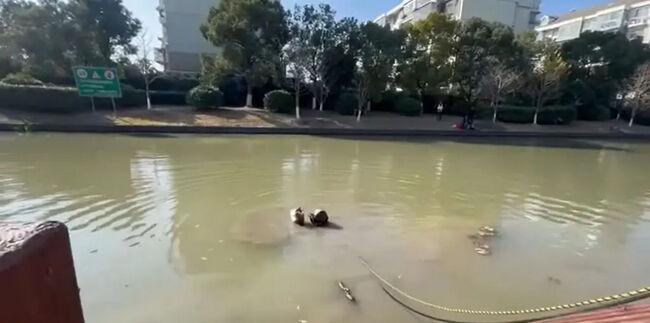 Shanghai waterfront, known as the location where Coupang retrieved laptops related to the data leak from China. [Photo = Provided by Coupang]
The government and the NIS are refuting the contents of the report.
However, the danger of this situation does not lie in "whose claim is ultimately true."
The United States is already reframing this event from a domestic personal information sanctions case into the language of "discrimination against U.S. companies" and "digital trade barriers." In particular, the allegations of NIS involvement are points the U.S. could use to cast doubt on the fairness of the investigation.
Actual trade procedures are also already in motion.
The USTR website includes a separate entry for "Section 301 – Korea’s Acts, Policies, and Practices Concerning Coupang (Petition)."
While it is more accurate to view this as being at the petition stage rather than the retaliation stage, the very fact that the Coupang issue is framed within Section 301 of the Trade Act is significant.
The explanatory material for the U.S.-Korea Strategic Trade and Investment Deal also aligns with this flow.
The fact sheet released by the USTR regarding the U.S.-Korea Strategic Trade and Investment Deal states that it ensures U.S. companies do not face discrimination or unnecessary barriers in laws and policies related to digital services. "Network usage fees and online platform regulations" are explicitly cited as examples.
However, the possibility of the U.S. immediately delivering a full-scale blow to South Korean semiconductors is limited.
This is because Korean memory and High Bandwidth Memory (HBM) are linked to Nvidia, U.S. AI data centers, and the capital expenditures of Big Tech. If Korean semiconductors are hit harshly, it would not only shake the Korean stock market but also create headwinds for the U.S. AI supply chain and the Nasdaq rally.
Therefore, the expected approach is sophisticated pressure rather than total retaliation.
Potential actions include initiating or expanding a Section 301 investigation, public pressure on South Korea’s digital regulations in general, reviewing conditions for Section 232 semiconductor tariffs, delaying equipment and technology permits, strengthening end-user screening related to China, and monitoring compliance with the U.S.-Korea fact sheet.
A "direct hit" does not necessarily mean only immediate, high-rate tariffs. Methods that increase future costs for semiconductor companies—such as tariff exemptions, equipment permits, and end-user screenings for China—also function as direct hits to the market.
The Korean stock market has already reacted to the preview.
On July 2, the Korean won weakened against the dollar, and foreign investors net sold 4.3 trillion KRW worth of domestic stocks. Foreigners have maintained a net selling streak for 10 consecutive trading days as of that day, and the won has pushed near its weakest level since March 2009.
If foreign selling and currency depreciation move separately, interpretations can differ.
Foreign selling alone could be profit-taking, and currency depreciation alone could be due to a strong dollar. However, the situation changes when foreign investors sell trillion-won amounts of Korean stocks, the won weakens, and large-cap semiconductor stocks shake the entire index simultaneously. The market has no choice but to read this not as simple profit-taking, but as an increase in the risk premium for Korean assets.
Reuters also reported that in the first half of this year, foreign investors sold Asian stocks at the fastest pace in history, with $70.8 billion pulled out from South Korea alone.
South Korea and Taiwan were classified as markets that had risen excessively due to the AI semiconductor rally, and it was analyzed that foreigners were engaged in profit-taking and rebalancing from overcrowded AI winners.
Ultimately, the next point of impact from the Coupang report may not be Coupang itself.
The moment the U.S. uses this report as a basis for claims of discrimination against American companies, digital trade barriers, and flaws in investigative fairness, the tip of the spear of retaliation could turn toward the heart of the Korean stock market: semiconductors.
Even if the U.S. does not actually impose tariffs, the mere mention of Section 301 investigations and Section 232 tariff cards causes the market to adjust prices in advance.
The Coupang report is not just a Coupang problem. It is an interim settlement of the flow that Hanmi Ilbo has been tracking: Coupang, platform regulations, Congressional investigations, and USTR pressure.
While Korean media dismisses this as merely "Coupang’s one-sided claims" or a "U.S. House Republican report," the U.S. is translating it into the "language of trade retaliation." The Korean stock market is already shaking from the preview.
※ Hanmi Ilbo will provide an in-depth analysis of this matter in the 17th weekly edition of Hanmi Ilbo. It will cover the structure of the original House Judiciary Committee Republican interim report, its connection to previous Hanmi Ilbo reports, the USTR Section 301 petition and Section 232 semiconductor tariff cards, and the in-depth and comprehensive impact that foreign selling and currency depreciation will have on the Korean stock market.

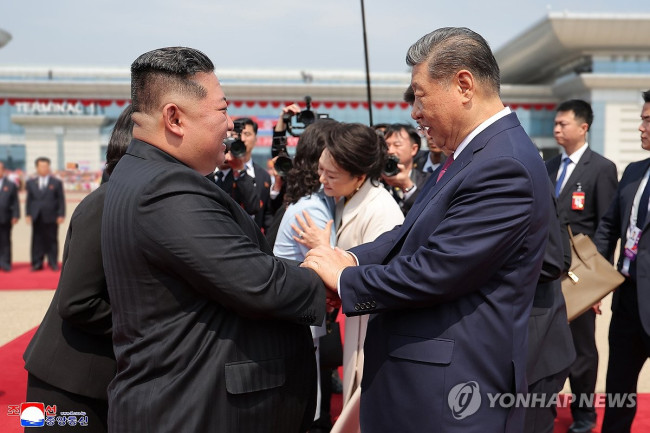 Xi Jinping Sends Reply to Kim Jong Un… "Developing DPRK-China Relations Stably and Long-Term"
According to a report by the Korean Central News Agency (KCNA) on the 10th, Chinese President Xi Jinping and his wife, Peng Liyuan, departed Pyongyang by private plane on the afternoon of the 9th, con
Xi Jinping Sends Reply to Kim Jong Un… "Developing DPRK-China Relations Stably and Long-Term"
According to a report by the Korean Central News Agency (KCNA) on the 10th, Chinese President Xi Jinping and his wife, Peng Liyuan, departed Pyongyang by private plane on the afternoon of the 9th, con
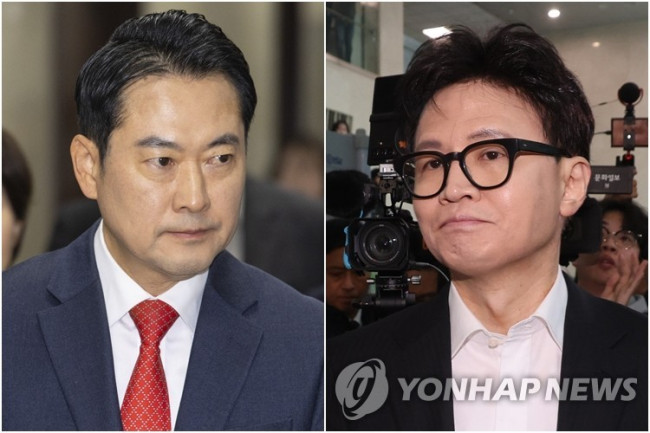 Jang Dong-hyeok, casting out the pro-Han faction first?… PPP on high alert over the 'coming soon' politics of disciplinary action
Representative Jang Dong-hyeok (left) and former representative Han Dong-hoon [Yonhap News] A palpable sense of tension is building within the People Power Party on the 5th as the central party's
Jang Dong-hyeok, casting out the pro-Han faction first?… PPP on high alert over the 'coming soon' politics of disciplinary action
Representative Jang Dong-hyeok (left) and former representative Han Dong-hoon [Yonhap News] A palpable sense of tension is building within the People Power Party on the 5th as the central party's
 [Exclusive Investigation] The Fatal Boomerang of the 5·18 ‘Gwang-su Ruling’… The ‘Genocide’ Bomb Thrown by Dr. Ji Man-won
Dr. Ji Man-won ©Hanmi IlboA new legal debate is igniting within the legal and historical communities surrounding the 1980 Gwangju Democratization Movement (May 18), which has been the most volati
[Exclusive Investigation] The Fatal Boomerang of the 5·18 ‘Gwang-su Ruling’… The ‘Genocide’ Bomb Thrown by Dr. Ji Man-won
Dr. Ji Man-won ©Hanmi IlboA new legal debate is igniting within the legal and historical communities surrounding the 1980 Gwangju Democratization Movement (May 18), which has been the most volati
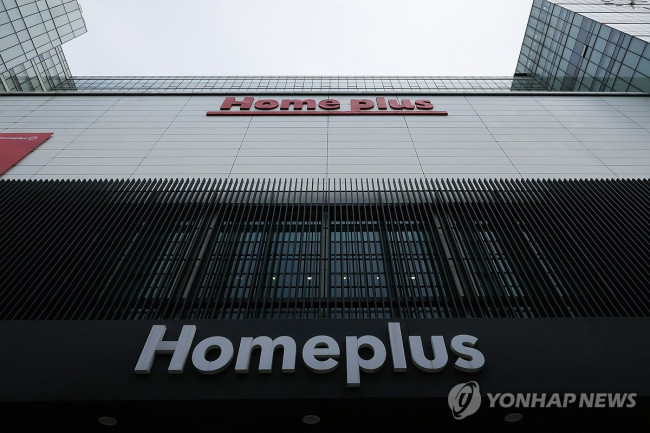 Homeplus effectively heading toward bankruptcy… Court terminates rehabilitation proceedings
Homeplus submits revised rehabilitation plan incorporating store closures and cost-cutting measures [Yonhap News file photo]Homeplus, the major discount store chain, is now headed toward bankruptcy as
Homeplus effectively heading toward bankruptcy… Court terminates rehabilitation proceedings
Homeplus submits revised rehabilitation plan incorporating store closures and cost-cutting measures [Yonhap News file photo]Homeplus, the major discount store chain, is now headed toward bankruptcy as
 [Cool Summer Destinations] ➀ Korea’s ‘Tate Modern’: MMCA Cheongju
As Cheongju City transformed the former tobacco manufacturing plant into the 'National Museum of Modern and Contemporary Art, Cheongju,' it preserved the 20-meter chimney and the building's exterior w
[Cool Summer Destinations] ➀ Korea’s ‘Tate Modern’: MMCA Cheongju
As Cheongju City transformed the former tobacco manufacturing plant into the 'National Museum of Modern and Contemporary Art, Cheongju,' it preserved the 20-meter chimney and the building's exterior w
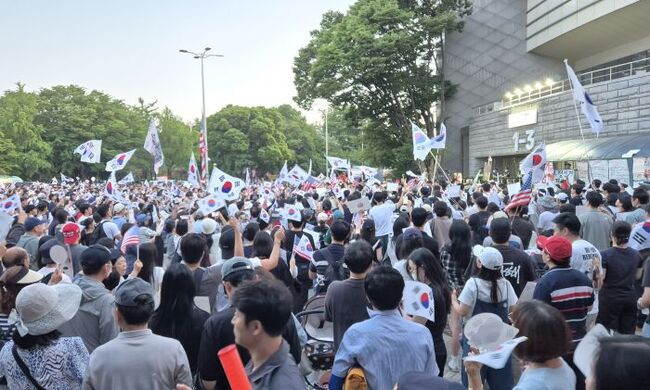 [Seobokka Yuksa Gukguk Comrades Association Statement] ㉑ Eradicate the Election Fraud Cartel through an Opposition-Led Special Prosecutor and Reclaim the Stolen Republic of Korea
Citizens condemning the National Election Commission’s violation of suffrage and calling for a "rerun of the fraudulent election!" ⒸHanmi Ilbo A month has passed since the truth was revealed
[Seobokka Yuksa Gukguk Comrades Association Statement] ㉑ Eradicate the Election Fraud Cartel through an Opposition-Led Special Prosecutor and Reclaim the Stolen Republic of Korea
Citizens condemning the National Election Commission’s violation of suffrage and calling for a "rerun of the fraudulent election!" ⒸHanmi Ilbo A month has passed since the truth was revealed
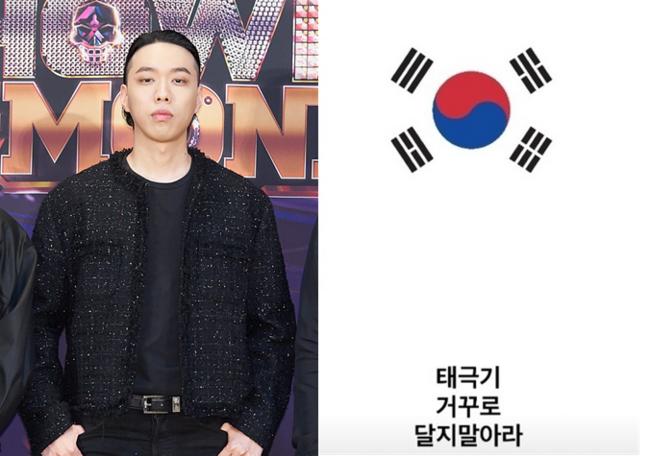 [Photo] “Don’t hang the Taegeukgi upside down”… Did BewhY take a jab at Kim Min-seok?
 [Video] U.S. Semiquincentennial Air Show... 'Art in the Sky' streaks across New York
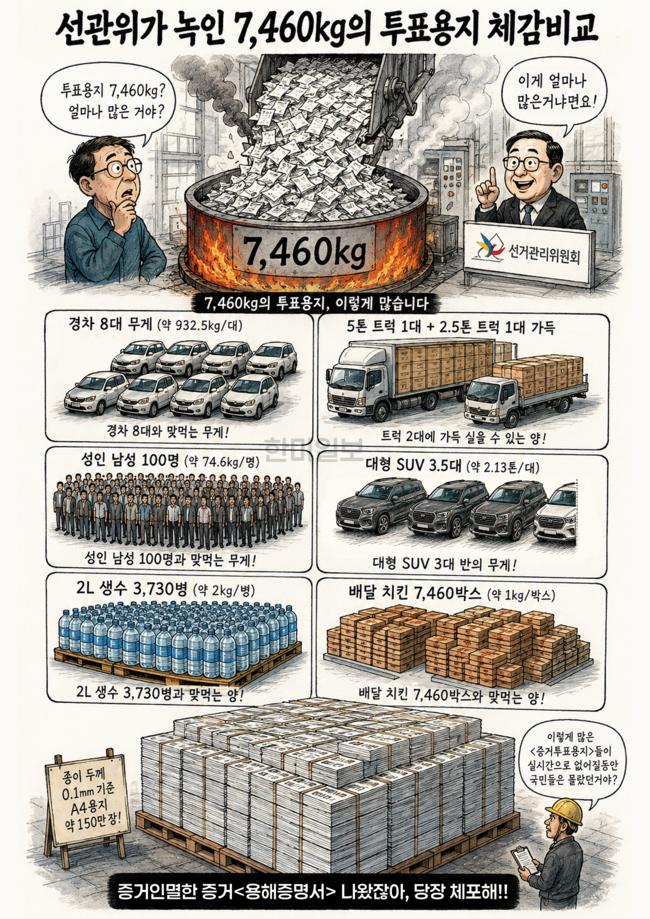 [Editorial Cartoon] A Comparative Visualization of the 7,460kg of Ballot Papers Shredded by the NEC

 List
List