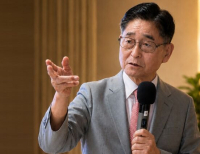
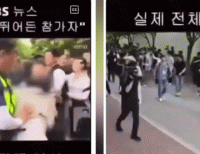
Paejae High School baseball players dance in the dugout during a game against Gwangju Jeil High School, accompanied by a chant mocking "Let's go to Starbucks." [Photo=X]
The Russian October Revolution of 1917 was more than a mere political upheaval. It was the definitive origin of the Soviet state system, a symbol of noble liberation won with the blood of a people long oppressed by hunger and imperial tyranny, and a sacred sanctuary revered by the nation.
Whenever red flags fluttered in the square, all people were expected to bow their heads reverently before the sacrifices of the Red Army, which had laid the foundation for the motherland. The revolution was, in itself, a religion—an absolute moral code that no one dared to challenge.
Treating the Hypocritical 'Nomenklatura' with 'Anekdot'
However, after decades had passed, this sacred myth degraded into the most ridiculous object of mockery whispered by youths in the back alleys of Moscow. What exactly caused the solemn weight of that history to collapse?
The answer lay in the profound hypocrisy of the privileged bureaucratic class, the so-called "Nomenklatura." Party officials, who claimed to have inherited the blood of the revolution and preached equality for the people, spent their time indulging in Western luxuries at exclusive shops while maintaining a reign of terror and dictatorship.
It became a daily absurdity: the people would wait in ration lines for half a day just to secure a roll of toilet paper, only to have pot-bellied officials stand on podiums and lecture them to "remember the great sacrifices of the revolution."
Faced with such overwhelming deceit, the masses chose "caricature" over riots. The more the authorities brandished their clubs to enforce solemnity, the more young people created and circulated "Anekdot"—pointed political satires that trampled on the sacred grounds of the regime.
The once-noble October Revolution was corrupted into an alibi to protect the vested interests of the officials, and for the public who saw through that hypocrisy, the history of the revolution was no longer an object of respect but fuel for sharp, cathartic comedy.
It is a heavy lesson in causality: no matter how sacred a sacrifice may be, it cannot escape the harsh penalty of public ridicule once it is reduced to a "political business" for the private gain of the ruling class.
Are We in a Position to Blame Them for Saying "Let's Go to Starbucks"?
Now, let us bring this old Soviet historical trajectory into the Republic of Korea in 2026.
A chant that echoed through the Mokdong Baseball Stadium in Seoul has become the subject of public indignation. During a high school baseball tournament, students from Paejae High School shouted "Let's go to Starbucks" toward their opponents, Gwangju Jeil High School.
The school has bowed its head in apology, and adults are fuming, pushing the students to the brink of disciplinary action for allegedly mocking the May 18 Gwangju Democratization Movement by referencing a specific franchise's marketing.
The flippancy of teenagers who consumed the scars of history as a form of entertainment is certainly an area that needs correction. However, before we raise the rod of harsh punishment against these children, we must ask a very uncomfortable question about the origins of this surreal phenomenon.
How did the once-sacred May of Gwangju turn into such a shallow piece of mockery in the eyes of young students? Who are the Korean "Nomenklatura" who planted such cynical bitterness on their lips?
Let us dissect the skeleton of this "Starbucks Tumbler controversy" with the scalpel of reason. The claim that Starbucks disparaged Gwangju—the word "tank" was merely the name of a tumbler that had existed long before, and there is absolutely no way to prove any underlying political intent behind that promotion.
Yet, a blind collective claiming to be the successors of the May 18 movement tried to frame a single word to incite nationwide anger; in reality, once the local elections were over, hardly a trace of that outrage could be found.
They raised their voices as if a national disaster had occurred over a tumbler's name, but what was actually happening in the Gwangju square itself during those May events?
It Is the Politicians Who Squandered 'Gwangju' as Fuel
Look at the sites of the vigils and memorials, which should be the most solemn of places. At some point, these spaces transformed into venues for praising left-wing speakers like those from 'Maebul Show' or Kim Ou-joon, and instead of reflecting on the meaning of sacrifice, they became places for cathartic venting—demonizing the opposition and snickering.
The blood and tears of citizens who resisted injustice were soon repurposed to praise a specific politician, Lee Jae-myung, as a messiah of national salvation, reducing history to a ragged shield for a political faction.
These students have witnessed the hypocrisy of adults who treat history as a tool for their own interests, monopolizing it as the exclusive property of their faction. It is a shameless demand to expect children to be polite mourners before an altar that corrupted bureaucrats have turned into a marketplace.
It is time to stop the exhausting habit of blaming others. Before wielding the sword of discipline against the antics of immature high schoolers, we must painfully begin to "look back" at our own distorted trajectory—one that has rendered the noble assets of Gwangju as light as a feather by burning them as political kindling.
The anger of those who have surrendered their right to be hurt can never preserve the weight of history. Who was it, in the end, that first tarnished the essence of the memorial?
Unless we stop the hypocrisy ourselves and break out of it, the cold "Anekdot" of the youth hovering around the squares will only become more clandestine and will not easily cease.
◆ Author Park Ju-hyun
Composer, music director, columnist, and essayist. They actively express opinions on political, current, and social issues on Facebook, garnering widespread empathy. They are the author of the essay collection, "Crossing the Stormy Sea."

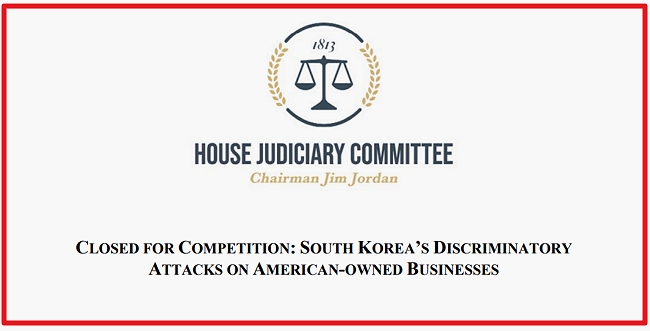 [In-depth Analysis] Will the U.S. House Report on Coupang Deal a 'Direct Blow' to Semiconductors?
Interim staff report by the U.S. House Judiciary Committee Republicans [Photo = Captured from report cover]The "Interim Staff Report by the U.S. House Judiciary Committee Republicans" is escalating be
[In-depth Analysis] Will the U.S. House Report on Coupang Deal a 'Direct Blow' to Semiconductors?
Interim staff report by the U.S. House Judiciary Committee Republicans [Photo = Captured from report cover]The "Interim Staff Report by the U.S. House Judiciary Committee Republicans" is escalating be
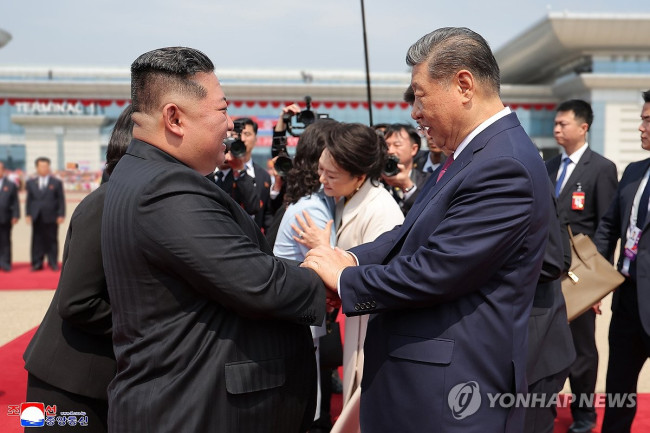 Xi Jinping Sends Reply to Kim Jong Un… "Developing DPRK-China Relations Stably and Long-Term"
According to a report by the Korean Central News Agency (KCNA) on the 10th, Chinese President Xi Jinping and his wife, Peng Liyuan, departed Pyongyang by private plane on the afternoon of the 9th, con
Xi Jinping Sends Reply to Kim Jong Un… "Developing DPRK-China Relations Stably and Long-Term"
According to a report by the Korean Central News Agency (KCNA) on the 10th, Chinese President Xi Jinping and his wife, Peng Liyuan, departed Pyongyang by private plane on the afternoon of the 9th, con
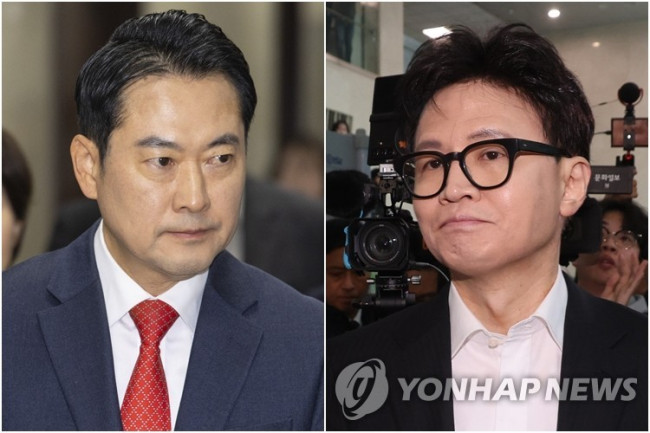 Jang Dong-hyeok, casting out the pro-Han faction first?… PPP on high alert over the 'coming soon' politics of disciplinary action
Representative Jang Dong-hyeok (left) and former representative Han Dong-hoon [Yonhap News] A palpable sense of tension is building within the People Power Party on the 5th as the central party's
Jang Dong-hyeok, casting out the pro-Han faction first?… PPP on high alert over the 'coming soon' politics of disciplinary action
Representative Jang Dong-hyeok (left) and former representative Han Dong-hoon [Yonhap News] A palpable sense of tension is building within the People Power Party on the 5th as the central party's
 [Exclusive Investigation] The Fatal Boomerang of the 5·18 ‘Gwang-su Ruling’… The ‘Genocide’ Bomb Thrown by Dr. Ji Man-won
Dr. Ji Man-won ©Hanmi IlboA new legal debate is igniting within the legal and historical communities surrounding the 1980 Gwangju Democratization Movement (May 18), which has been the most volati
[Exclusive Investigation] The Fatal Boomerang of the 5·18 ‘Gwang-su Ruling’… The ‘Genocide’ Bomb Thrown by Dr. Ji Man-won
Dr. Ji Man-won ©Hanmi IlboA new legal debate is igniting within the legal and historical communities surrounding the 1980 Gwangju Democratization Movement (May 18), which has been the most volati
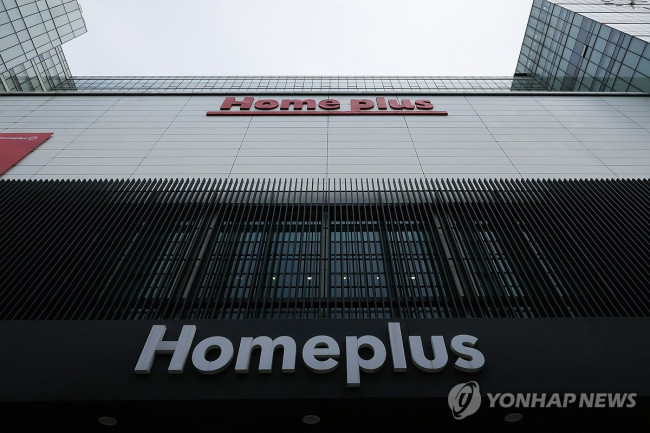 Homeplus effectively heading toward bankruptcy… Court terminates rehabilitation proceedings
Homeplus submits revised rehabilitation plan incorporating store closures and cost-cutting measures [Yonhap News file photo]Homeplus, the major discount store chain, is now headed toward bankruptcy as
Homeplus effectively heading toward bankruptcy… Court terminates rehabilitation proceedings
Homeplus submits revised rehabilitation plan incorporating store closures and cost-cutting measures [Yonhap News file photo]Homeplus, the major discount store chain, is now headed toward bankruptcy as
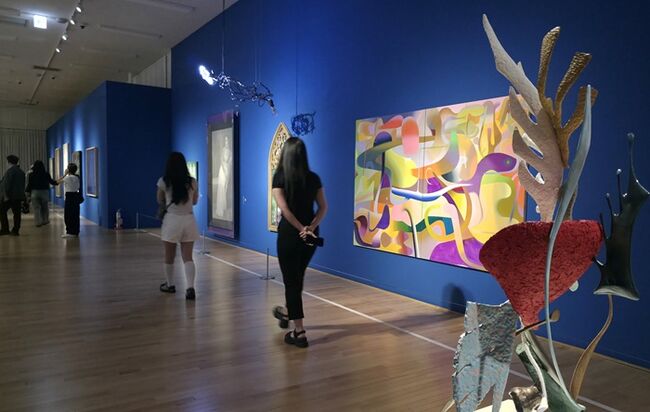 [Cool Summer Destinations] ➀ Korea’s ‘Tate Modern’: MMCA Cheongju
As Cheongju City transformed the former tobacco manufacturing plant into the 'National Museum of Modern and Contemporary Art, Cheongju,' it preserved the 20-meter chimney and the building's exterior w
[Cool Summer Destinations] ➀ Korea’s ‘Tate Modern’: MMCA Cheongju
As Cheongju City transformed the former tobacco manufacturing plant into the 'National Museum of Modern and Contemporary Art, Cheongju,' it preserved the 20-meter chimney and the building's exterior w
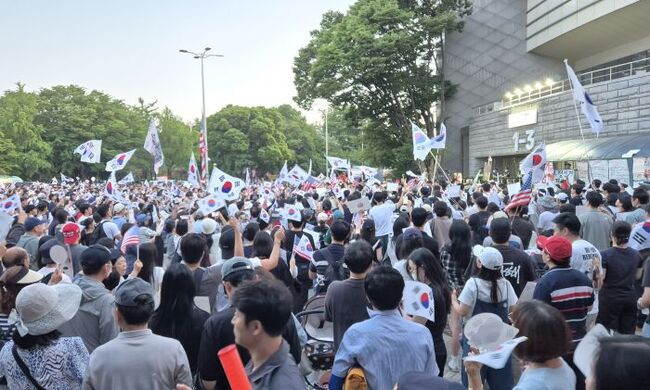 [Seobokka Yuksa Gukguk Comrades Association Statement] ㉑ Eradicate the Election Fraud Cartel through an Opposition-Led Special Prosecutor and Reclaim the Stolen Republic of Korea
Citizens condemning the National Election Commission’s violation of suffrage and calling for a "rerun of the fraudulent election!" ⒸHanmi Ilbo A month has passed since the truth was revealed
[Seobokka Yuksa Gukguk Comrades Association Statement] ㉑ Eradicate the Election Fraud Cartel through an Opposition-Led Special Prosecutor and Reclaim the Stolen Republic of Korea
Citizens condemning the National Election Commission’s violation of suffrage and calling for a "rerun of the fraudulent election!" ⒸHanmi Ilbo A month has passed since the truth was revealed
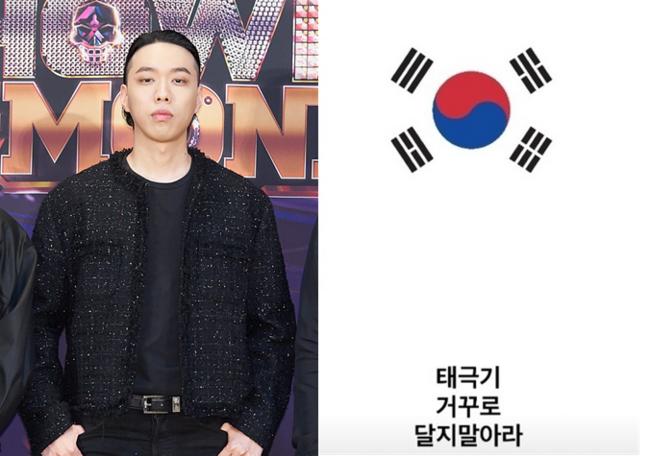 [Photo] “Don’t hang the Taegeukgi upside down”… Did BewhY take a jab at Kim Min-seok?
 [Video] U.S. Semiquincentennial Air Show... 'Art in the Sky' streaks across New York
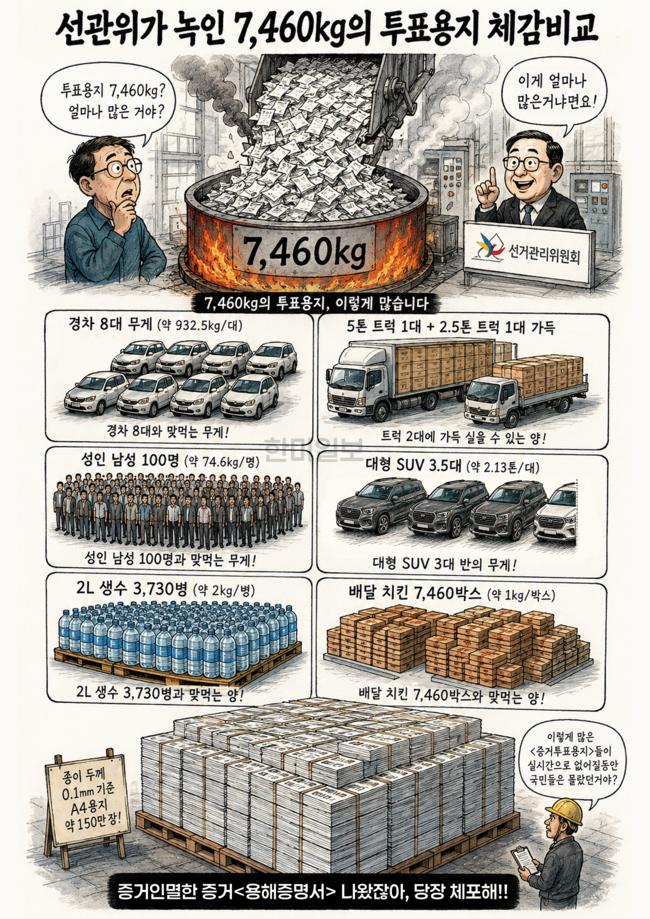 [Editorial Cartoon] A Comparative Visualization of the 7,460kg of Ballot Papers Shredded by the NEC

 List
List