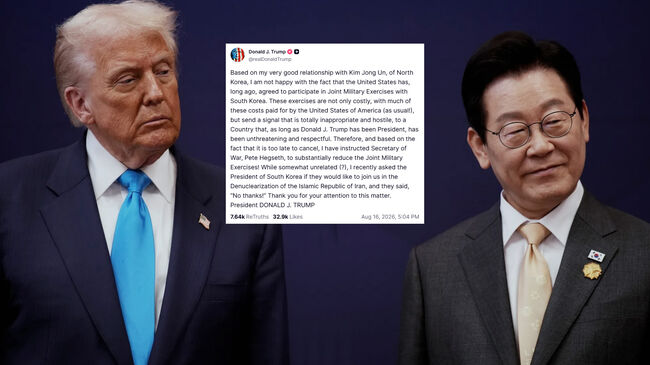
U.S. President Donald Trump announced on the 16th (local time) that he has directed Secretary of War Pete Hegseth to "substantially reduce" scheduled joint military exercises with South Korea. President Trump stated that these drills are costly and send an unnecessarily hostile signal to North Korea.
President Trump announced this measure via a TruthSocial post, just one day before the start of the 11-day annual "Ulchi Freedom Shield" (UFS) exercise, which was scheduled to run from the 17th to the 27th.
Specifically, he pointed out that this decision is related to the attitude of the President of South Korea.
The following is the full text of President Trump’s Truth:
Given the very good relationship Chairman Kim Jong Un of North Korea and I have, I am not satisfied with the fact that the United States has long agreed to participate in joint military exercises with South Korea. These drills are not only very expensive (as usual!), and the U.S. is bearing the vast majority of that cost, but they also send a completely inappropriate and hostile signal to a country that has been non-threatening and respectful since President Donald J. Trump took office. Therefore, considering that it is too late to cancel them now, I have instructed Secretary of Defense Pete Hegseth to substantially reduce the scale of the joint military exercises! As a somewhat unrelated side note (?), I recently asked the South Korean President whether he would be willing to join in the denuclearization efforts regarding the Islamic Republic of Iran, but they replied, “No thanks!” Thank you for your interest in this matter. President Donald J. Trump
Approximately 18,000 South Korean troops are participating in this year's exercise, and U.S. and South Korean officials have described the drills as defensive in nature.
According to the U.S. military, the two countries' forces were scheduled to conduct combined operations involving complex scenarios, including live-fire drills to test joint precision targeting and maneuver capabilities, river-crossing operations, and the deployment of pre-positioned military supplies to strengthen readiness against North Korean threats.
North Korea has long criticized joint U.S.-South Korea military exercises as rehearsals for invasion, while the U.S. and South Korea maintain that the drills are defensive and necessary to ensure that both nations' militaries can operate together in the event of a conflict.
During his first term, after his summit with Chairman Kim in Singapore in 2018, President Trump also described U.S.-South Korea joint exercises as "provocative" and announced plans to halt them.
It has become highly likely that the reason President Trump released "unfriendly" photos of himself and Kim Jong Un on Saturday the 15th was to express this very dissatisfaction. However, the core issue is that Trump's grievance stems from the South Korean President.
Lee Jae-myung Rejects Trump's Request for 'Denuclearization' Support
The real reason President Trump’s announcement signals serious repercussions is not just the directive to substantially reduce joint military exercises, but the fact that the South Korean President provided a response unbecoming of a U.S. ally.
President Trump brought up the South Korean issue by saying, "As a somewhat unrelated side note (?)," choosing his words carefully with a question mark.
Trump stated that he had asked for a commitment to join efforts regarding what he termed the "denuclearization of the Islamic Republic of Iran"—a phrase carrying significant weight, given that the U.S. has set "complete denuclearization" as its strategic goal for North Korea.
However, according to President Trump, Lee Jae-myung’s response was, “No thanks!”
On March 14, President Trump publicly requested that multiple countries participate in an international military mission to reopen the Strait of Hormuz, mentioning South Korea, Japan, the U.K., France, and China.
This was not merely a request for diplomatic support, but a demand for a military contribution from the South Korean Navy.
Following this, on July 22, the Dong-A Ilbo reported that the Trump administration had "recently" again requested military contributions from the South Korean government, such as the deployment of warships to the Strait of Hormuz.
The Lee Jae-myung administration, which has pursued "pragmatic diplomacy," has sought to maintain the U.S.-ROK alliance while minimizing the economic shocks associated with the Strait of Hormuz, thereby ignoring President Trump's requests for troop deployments.
Since signing the U.S.-ROK Mutual Defense Treaty in 1953, South Korea deployed approximately 320,000 troops to the Vietnam War, and sent medical, transport, and support personnel to the Gulf War (1990–1991). Furthermore, it deployed the Zaytun Division to the Iraq War (2003–2011) and participated in the War in Afghanistan (2001–2021) to perform duties including medical support, construction and reconstruction, and force protection.
The U.S.-ROK alliance has gradually expanded from a 1953 bilateral military pact centered on the defense of the Korean Peninsula to one of Indo-Pacific and global security cooperation. In the 2024 joint statement by the U.S.-ROK foreign and defense ministers, both nations reaffirmed that the alliance is a "linchpin" for peace, security, and prosperity not only on the Korean Peninsula but throughout the Indo-Pacific region.
Additionally, both countries confirmed in 2024 that the U.S.-ROK Mutual Defense Treaty could apply to the domains of space and cyberspace. This highlights growing concerns that the alliance's perspective on its global role is being shaken under the Lee Jae-myung administration. The U.S.-ROK relationship, which had been developing constructively, now appears to be hitting a wall.
This, coupled with criticisms that the Lee Jae-myung administration is failing to properly fulfill its $350 billion investment pledge to the U.S., is expected to further exacerbate the Trump administration's frustrations.
Meanwhile, President Trump’s remarks came just one day after large-scale anti-government protests were held in South Korea on Liberation Day.
U.S. NNP = Representative Reporter Hong Sung-gu / Special Dispatch NNP info@newsandpost.com

 [Statement by the Seo-beo-kka Korea Military Academy Patriotic Comrades Association] ㊷ We Condemn the Ruling Party Leader's Intimidation and Mockery of Supreme Court Justices, and Acts of Destroying the Judiciary
Chief Justice of the Supreme Court Cho Hee-de (left) and Democratic Party of Korea Leader Lee Jae-myung [Photo=Yonhap News]We are witnessing an unprecedented situation where the newly inaugurated lead
[Statement by the Seo-beo-kka Korea Military Academy Patriotic Comrades Association] ㊷ We Condemn the Ruling Party Leader's Intimidation and Mockery of Supreme Court Justices, and Acts of Destroying the Judiciary
Chief Justice of the Supreme Court Cho Hee-de (left) and Democratic Party of Korea Leader Lee Jae-myung [Photo=Yonhap News]We are witnessing an unprecedented situation where the newly inaugurated lead
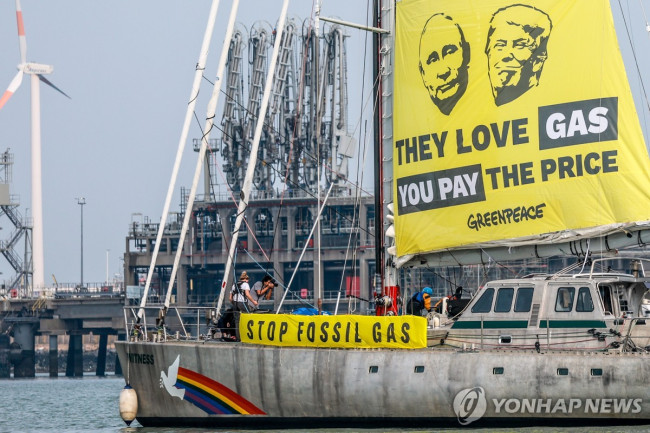 Criticizing Trump, yet… Europe also backsliding on climate change response
Greenpeace, an environmental organization calling for renewable energy policies [EPA=Yonhap News file photo]European nations, which previously criticized U.S. President Donald Trump's rollback of clim
Criticizing Trump, yet… Europe also backsliding on climate change response
Greenpeace, an environmental organization calling for renewable energy policies [EPA=Yonhap News file photo]European nations, which previously criticized U.S. President Donald Trump's rollback of clim
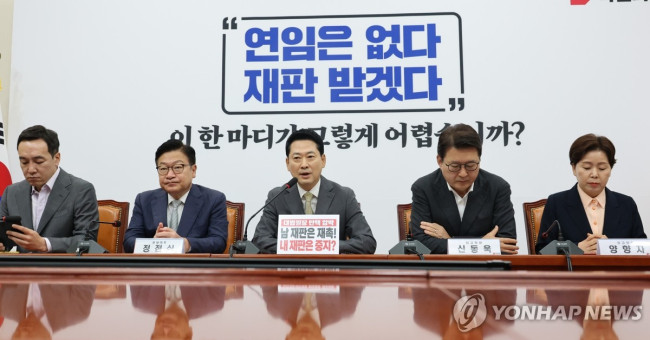 PPP on Nomination of 'Ruling Party-Recommended' Special Inspector Candidate: "We Will Rigorously Verify Them at the Hearing"
People Power Party representative Jang Dong-hyeok is speaking at the Supreme Council meeting held at the National Assembly on the 24th. [Yonhap News] On the 24th, the People Power Party stated th
PPP on Nomination of 'Ruling Party-Recommended' Special Inspector Candidate: "We Will Rigorously Verify Them at the Hearing"
People Power Party representative Jang Dong-hyeok is speaking at the Supreme Council meeting held at the National Assembly on the 24th. [Yonhap News] On the 24th, the People Power Party stated th
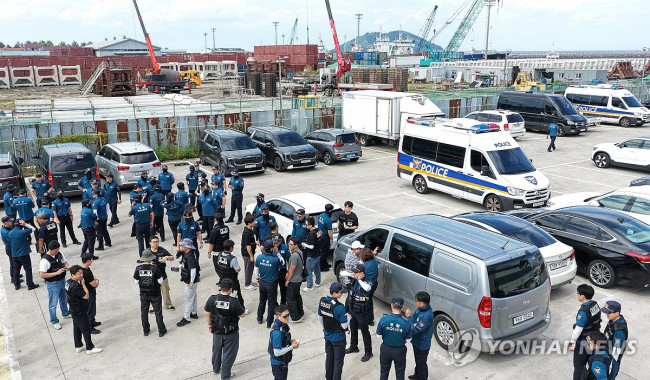 [Comprehensive] Another body of a missing person discovered in Jeju… 4th in three days
Police conducting an intensive search for missing persons [Yonhap News file photo]Recently, bodies suspected to be those of missing persons have been discovered in succession on Jeju Island. This mark
[Comprehensive] Another body of a missing person discovered in Jeju… 4th in three days
Police conducting an intensive search for missing persons [Yonhap News file photo]Recently, bodies suspected to be those of missing persons have been discovered in succession on Jeju Island. This mark
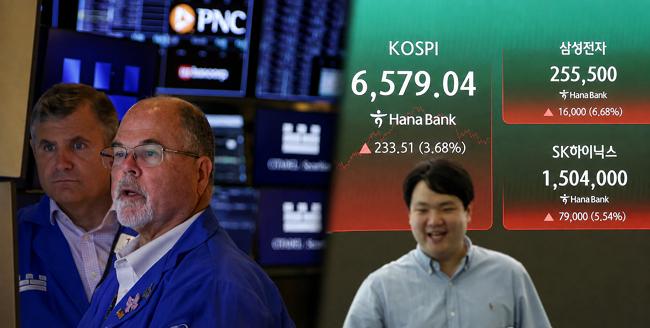 [Korea-US Data Lab] 3rd Week of August (18th–21st) Money Insight
In the U.S., rising long-term Treasury yields lowered the future cash value of tech stocks, while in Korea, shareholder returns from Samsung Electronics and SK Hynix drove a rebound in major semicondu
[Korea-US Data Lab] 3rd Week of August (18th–21st) Money Insight
In the U.S., rising long-term Treasury yields lowered the future cash value of tech stocks, while in Korea, shareholder returns from Samsung Electronics and SK Hynix drove a rebound in major semicondu
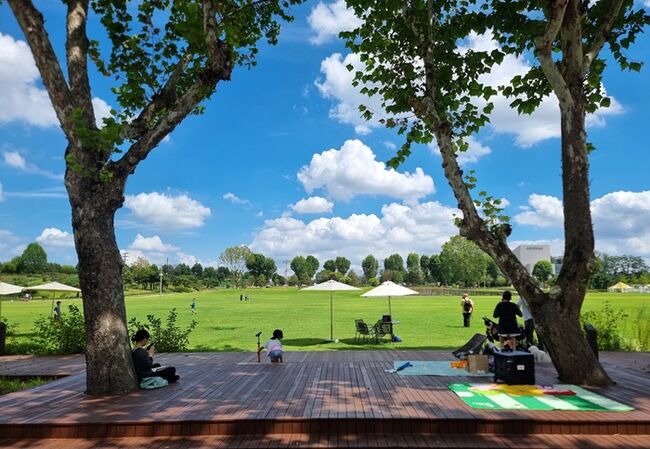 [Trending Travel Destinations] Unlocking a Century of Secrets: ‘Yongsan Children’s Garden’
Family visitors resting in the shade on a picnic mat. [Photo by Reporter Yohi Lim]Throughout history, the wealthy in both the East and the West have enjoyed greenery by creating private gardens on vas
[Trending Travel Destinations] Unlocking a Century of Secrets: ‘Yongsan Children’s Garden’
Family visitors resting in the shade on a picnic mat. [Photo by Reporter Yohi Lim]Throughout history, the wealthy in both the East and the West have enjoyed greenery by creating private gardens on vas
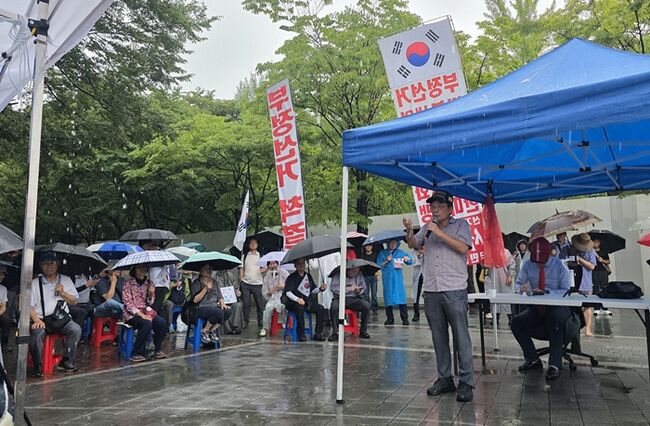 [Photo] Btooyun “We are recruiting 1,600 members for the Olympic Park Scientific Verification Team”… The rainy scenery of Olympic Park on the 22nd
On Saturday the 22nd, amid rainy weather at Olympic Park, the National Coalition for Election Fraud Struggle held a public forum on election integrity. They argued that the "Olympic Park Scientific Ve
[Photo] Btooyun “We are recruiting 1,600 members for the Olympic Park Scientific Verification Team”… The rainy scenery of Olympic Park on the 22nd
On Saturday the 22nd, amid rainy weather at Olympic Park, the National Coalition for Election Fraud Struggle held a public forum on election integrity. They argued that the "Olympic Park Scientific Ve
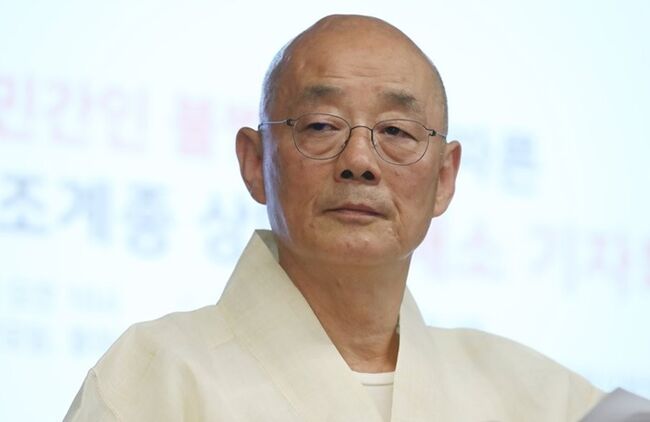 [Special Contribution: Songsan] The Life of a Political Monk Must Also Be Evaluated… What the Passing of Venerable Myeongjin Leaves Behind
Venerable Myeongjin, former head monk of Bongeunsa Temple, passed away on the 22nd. He was 76 years old and had been a monk for 52 years. [Yonhap News File Photo]Various narratives are emerging follow
[Special Contribution: Songsan] The Life of a Political Monk Must Also Be Evaluated… What the Passing of Venerable Myeongjin Leaves Behind
Venerable Myeongjin, former head monk of Bongeunsa Temple, passed away on the 22nd. He was 76 years old and had been a monk for 52 years. [Yonhap News File Photo]Various narratives are emerging follow
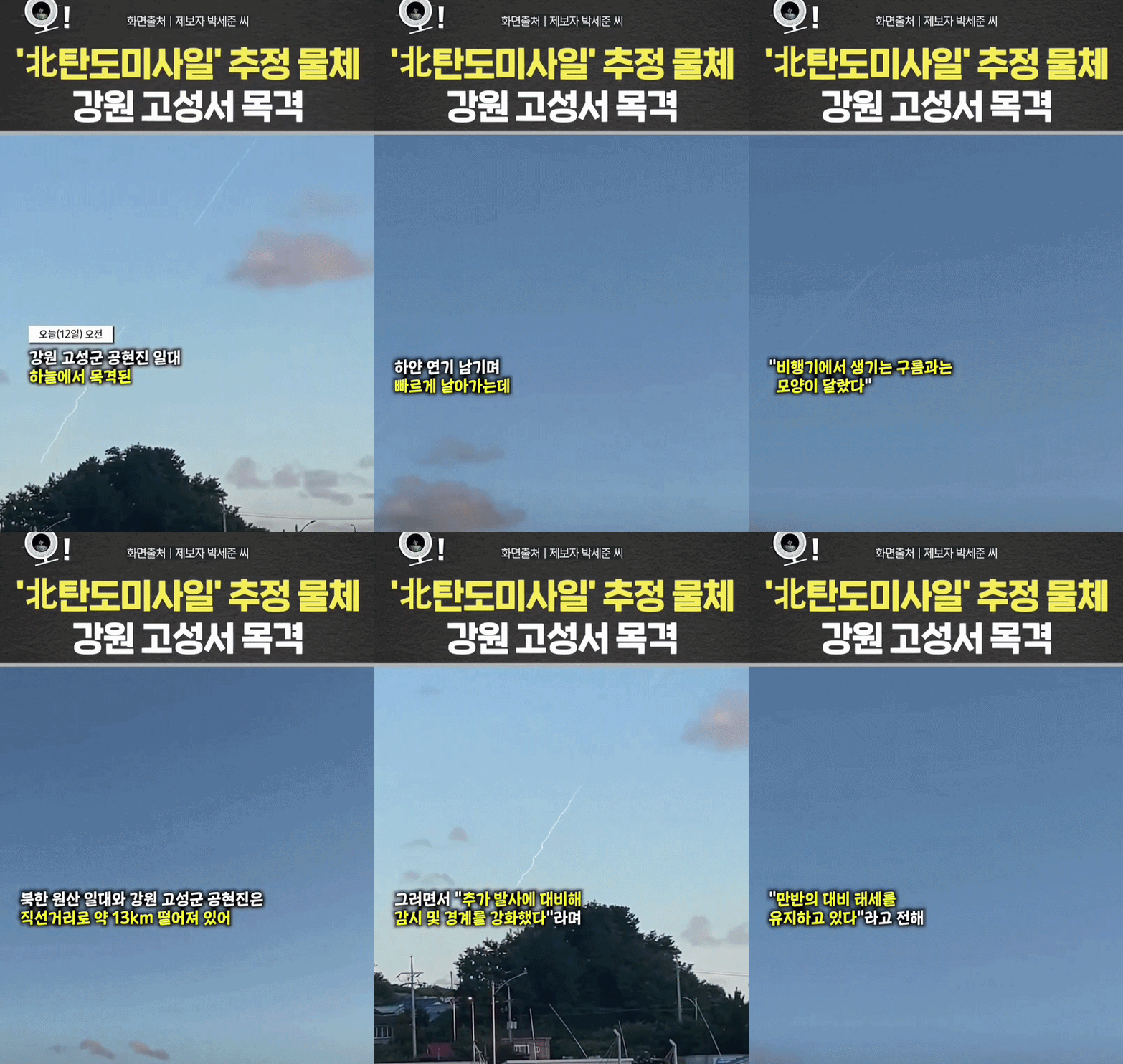 [Video] North Korean ballistic missile filmed by a civilian in Goseong, Gangwon-do
 [Editorial Cartoon] A Draconian Law That Undermines Freedom of Expression

 List
List