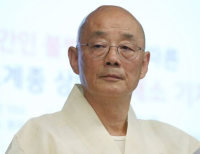
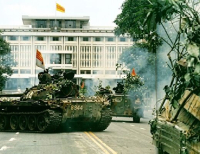
U.S. President Donald Trump has acknowledged that he is in communication with North Korean leader Kim Jong Un.
At the White House on the 17th (local time), when asked by reporters why Chairman Kim had not responded to his overtures for dialogue, Trump countered by asking, "How do you know he hasn't responded?"
When reporters followed up by asking if that meant Chairman Kim had responded, President Trump paused for a moment and replied, "Yeah, he has."
Regarding the current status of the dialogue, President Trump described it as "very positive."
Trump then told reporters, "I hope you understand about South Korea," adding, "South Korea has been protected by us for a very long time. And during my first term, they agreed to pay nearly $3 billion a year for their protection. I had demanded $10 billion in cost-sharing, and we eventually agreed on $3 billion. That is money paid for their protection."
He noted, "After that, there was a fraudulent election, and I watched the process (of cost-sharing negotiations) for four years before returning. For some reason, I saw Biden send that $3 billion back."
Trump stated, "I recently called the South Korean president, whom I like. I think he is a very good person. But I called him and said, 'Could you help us? We don't need help with the Iran issue, but we would appreciate it if you wanted to help.' He replied, 'No, thanks.'"
President Trump relayed that he told the South Korean president, "Wait a minute, we have 39,000 troops stationed there to protect you from Kim Jong Un and your neighboring countries, and you won't cooperate on a very simple military operation regarding Iran? That seems strange." He said the South Korean president responded, "No, we don't want to get involved."
President Trump said he asked, "I see. If that's the case, why should we help you?" adding, "I want to help them, but you know, when you ask someone, 'Will you help?' and they say, 'Thanks, but no thanks,' while we are spending billions of dollars protecting them from a country—and we are spending billions protecting other countries as well—it’s a situation."
He also mentioned NATO, pointing out that the U.S. is spending "tens of billions of dollars" to protect Europe from Russia.
President Trump said South Korea claims they "don't want to get involved" in protecting the strait that accounts for 50% of their oil imports, asking, "Why are we doing this? All I want is fairness."
He stated, "I get along very well with South Korea. However, South Korea was paying $3 billion a year, and they convinced Biden—who is likely a bad person in my eyes—not to pay it, and Biden immediately revoked that order. We were receiving money, and in the future, we could have received much more. But we cannot protect every country, especially when they don't help us."
When asked by a reporter about his directive to significantly scale back the "Ulchi Freedom Shield (UFS)" exercises, specifically how he would respond to criticism that reducing drills prioritizes the interests of the U.S. adversary North Korea over its long-standing ally South Korea, President Trump replied, "I am making the situation much safer." He added, "Kim Jong Un has been very respectful of me, and we have talked and spent time together on several occasions, especially in two major summits."
He said, "I understand him, and he understands me. We are conducting war games. I get along with him. As you know, he hated Biden, he hated Obama, he didn't like anyone. But I get along very well with him. What I am doing is making the situation safer."
Ultimately, Is Increasing Cost-Sharing the Goal?
According to a report released on July 23 by David Vine of the Center for International Policy, the U.S. currently spends approximately $5.5 to $6 billion annually to maintain 27,000 troops and civilian military personnel across 80 bases in South Korea.
Under the Special Measures Agreement (SMA), South Korea shares a portion of the costs for stationing U.S. forces, with current annual contributions amounting to about $1.13 to $1.19 billion (approximately 1.5 trillion KRW).
Essentially, this means approximately $4.4 to $4.8 billion of U.S. taxpayer money is being spent on the U.S. military presence in Korea.
While President Trump's demand for $10 billion from South Korea is seen as an "art of the deal" tactic, the claim that it was eventually settled at $3 billion is contained in the "Joint Fact Sheet" released during the conclusion of the "U.S.-Korea Trade and Security Negotiations" on November 14, 2025.
The announcement, made by both governments immediately following the bilateral summit between Lee Jae-myung and President Trump, explicitly states: "Provide a total of $33 billion in comprehensive support to U.S. Forces Korea over the next 10 years."
The South Korean government explains this $33 billion as a "symbolic figure calculated by aggregating the 10-year defense cost-sharing contributions, the value of land provided free of charge to USFK, reductions in electricity and water bills, and tax exemptions—quantified at their maximum direct and indirect contribution levels."
Along with this, the joint fact sheet at the time included plans for the purchase of $25 billion worth of U.S.-made weapons and an increase in South Korea's defense spending to 3.5% of its GDP.
Ultimately, President Trump is pushing for the fulfillment of the entire "U.S.-Korea Trade and Security Negotiations" agreement, not just the $350 billion investment pledge in the U.S.
This is the explanation offered for why he described Lee Jae-myung as a "very nice" person. He called him that because Lee had made the promises Trump wanted; the problem is that the delay in fulfilling those promises is now causing friction.
Will U.S.-North Korea Summits Resume?
President Trump's North Korea policy appears similar to his first term, yet it possesses distinct differences. In particular, while North Korea came to the negotiating table in the past as a non-nuclear state, it has since developed nuclear weapons.
Of course, the U.S. strategic goal of "complete denuclearization" remains unchanged. However, given that North Korea now possesses nuclear weapons, any summit would likely be fundamentally different, focusing on managing the nuclear threat rather than simple denuclearization.
In particular, President Trump seems intent on utilizing his personal rapport with Kim Jong Un as a diplomatic asset. Unlike his first term, when he used "maximum pressure" to bring the Chairman to the negotiating table, analysts suggest he is now aiming to create an atmosphere of détente to open doors for dialogue.
His directive to significantly scale back the Ulchi Freedom Shield exercises is evidence of this policy shift.
For the U.S., which is wary of deepening trilateral security cooperation between North Korea, China, and Russia, the situation requires achieving two goals simultaneously: weaning North Korea away from China and Russia, and ensuring that South Korea’s leftist administration does not become an obstacle to trilateral cooperation between the U.S., South Korea, and Japan.
This is interpreted as the reason President Trump explains that the reduction in combined exercises is "making the situation safer" rather than "creating a situation more favorable to North Korea than South Korea."
Although President Trump claimed that Chairman Kim responded, he did not specify whether that response was to the publication of unfriendly photos, his directive to scale back the exercises, or something else.
Attention is now focused on whether North Korea, which is already deepening its relationship with Russia by expanding troop deployments for the war in Ukraine while maintaining close contact with China, will take Trump's hand.
U.S. NNP = Representative Journalist Sung Ku Hong / Exclusive NNP info@newsandpost.com

 [Statement by the Seo-beo-kka Korea Military Academy Patriotic Comrades Association] ㊷ We Condemn the Ruling Party Leader's Intimidation and Mockery of Supreme Court Justices, and Acts of Destroying the Judiciary
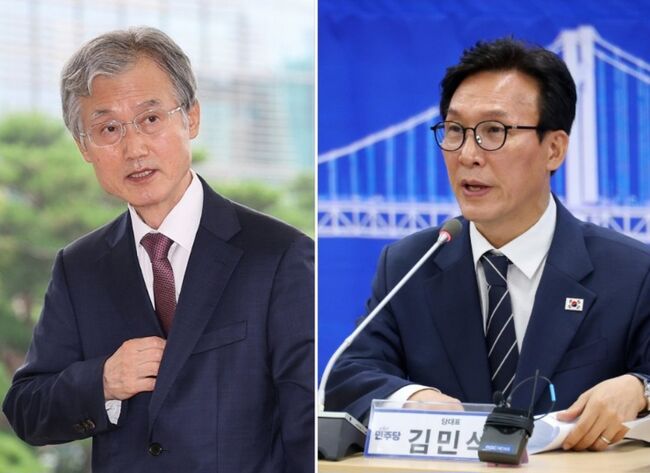
Chief Justice of the Supreme Court Cho Hee-de (left) and Democratic Party of Korea Leader Lee Jae-myung [Photo=Yonhap News]We are witnessing an unprecedented situation where the newly inaugurated lead
[Statement by the Seo-beo-kka Korea Military Academy Patriotic Comrades Association] ㊷ We Condemn the Ruling Party Leader's Intimidation and Mockery of Supreme Court Justices, and Acts of Destroying the Judiciary
Chief Justice of the Supreme Court Cho Hee-de (left) and Democratic Party of Korea Leader Lee Jae-myung [Photo=Yonhap News]We are witnessing an unprecedented situation where the newly inaugurated lead
 Criticizing Trump, yet… Europe also backsliding on climate change response
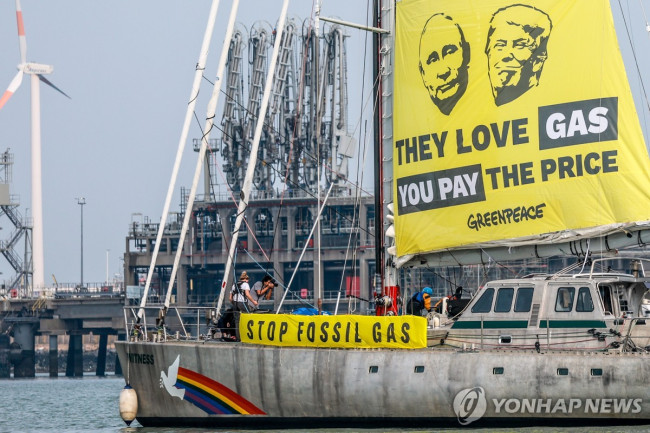
Greenpeace, an environmental organization calling for renewable energy policies [EPA=Yonhap News file photo]European nations, which previously criticized U.S. President Donald Trump's rollback of clim
Criticizing Trump, yet… Europe also backsliding on climate change response
Greenpeace, an environmental organization calling for renewable energy policies [EPA=Yonhap News file photo]European nations, which previously criticized U.S. President Donald Trump's rollback of clim
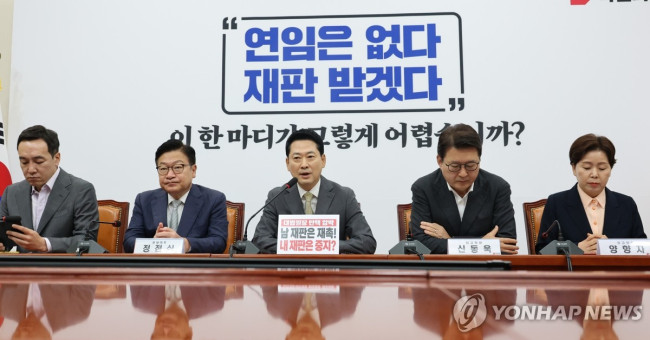 PPP on Nomination of 'Ruling Party-Recommended' Special Inspector Candidate: "We Will Rigorously Verify Them at the Hearing"
People Power Party representative Jang Dong-hyeok is speaking at the Supreme Council meeting held at the National Assembly on the 24th. [Yonhap News] On the 24th, the People Power Party stated th
PPP on Nomination of 'Ruling Party-Recommended' Special Inspector Candidate: "We Will Rigorously Verify Them at the Hearing"
People Power Party representative Jang Dong-hyeok is speaking at the Supreme Council meeting held at the National Assembly on the 24th. [Yonhap News] On the 24th, the People Power Party stated th
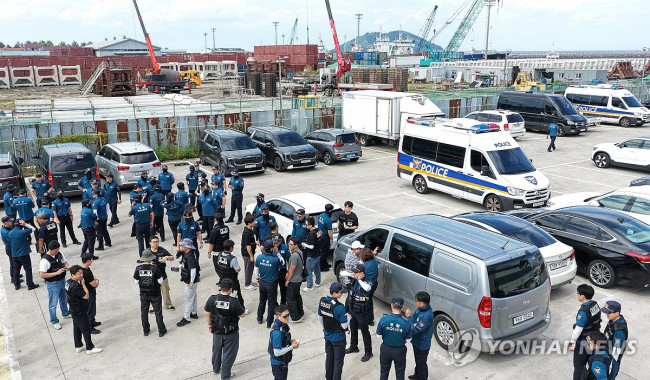 [Comprehensive] Another body of a missing person discovered in Jeju… 4th in three days
Police conducting an intensive search for missing persons [Yonhap News file photo]Recently, bodies suspected to be those of missing persons have been discovered in succession on Jeju Island. This mark
[Comprehensive] Another body of a missing person discovered in Jeju… 4th in three days
Police conducting an intensive search for missing persons [Yonhap News file photo]Recently, bodies suspected to be those of missing persons have been discovered in succession on Jeju Island. This mark
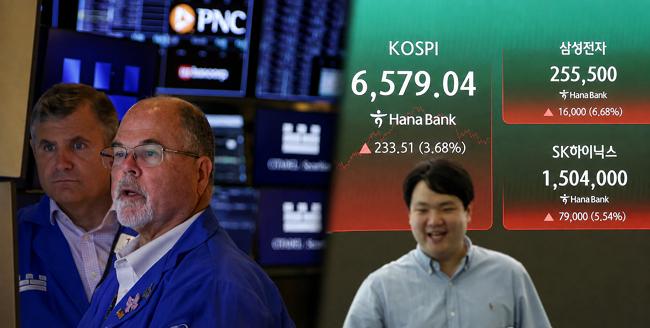 [Korea-US Data Lab] 3rd Week of August (18th–21st) Money Insight
In the U.S., rising long-term Treasury yields lowered the future cash value of tech stocks, while in Korea, shareholder returns from Samsung Electronics and SK Hynix drove a rebound in major semicondu
[Korea-US Data Lab] 3rd Week of August (18th–21st) Money Insight
In the U.S., rising long-term Treasury yields lowered the future cash value of tech stocks, while in Korea, shareholder returns from Samsung Electronics and SK Hynix drove a rebound in major semicondu
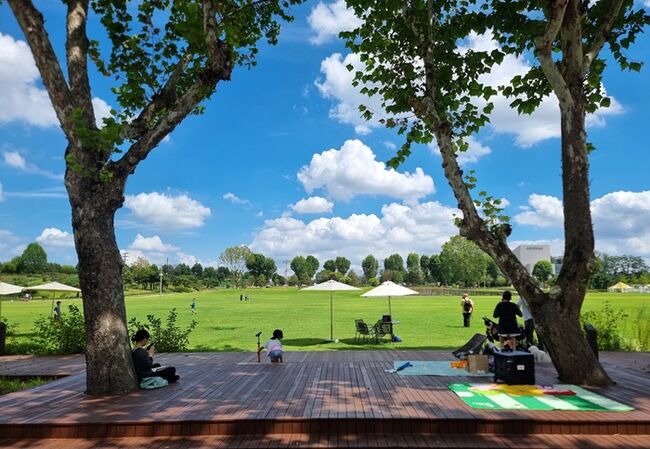 [Trending Travel Destinations] Unlocking a Century of Secrets: ‘Yongsan Children’s Garden’
Family visitors resting in the shade on a picnic mat. [Photo by Reporter Yohi Lim]Throughout history, the wealthy in both the East and the West have enjoyed greenery by creating private gardens on vas
[Trending Travel Destinations] Unlocking a Century of Secrets: ‘Yongsan Children’s Garden’
Family visitors resting in the shade on a picnic mat. [Photo by Reporter Yohi Lim]Throughout history, the wealthy in both the East and the West have enjoyed greenery by creating private gardens on vas
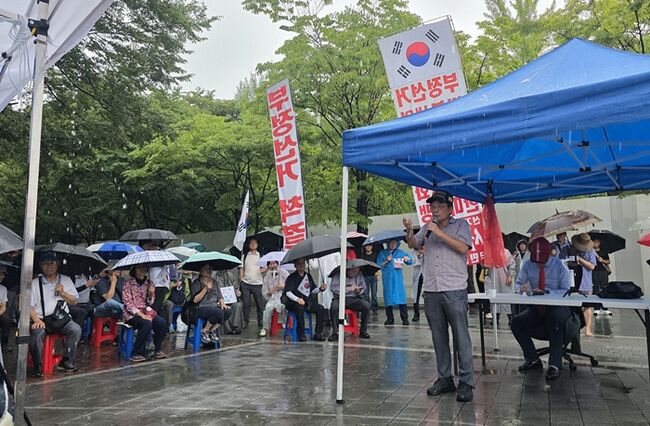 [Photo] Btooyun “We are recruiting 1,600 members for the Olympic Park Scientific Verification Team”… The rainy scenery of Olympic Park on the 22nd
On Saturday the 22nd, amid rainy weather at Olympic Park, the National Coalition for Election Fraud Struggle held a public forum on election integrity. They argued that the "Olympic Park Scientific Ve
[Photo] Btooyun “We are recruiting 1,600 members for the Olympic Park Scientific Verification Team”… The rainy scenery of Olympic Park on the 22nd
On Saturday the 22nd, amid rainy weather at Olympic Park, the National Coalition for Election Fraud Struggle held a public forum on election integrity. They argued that the "Olympic Park Scientific Ve
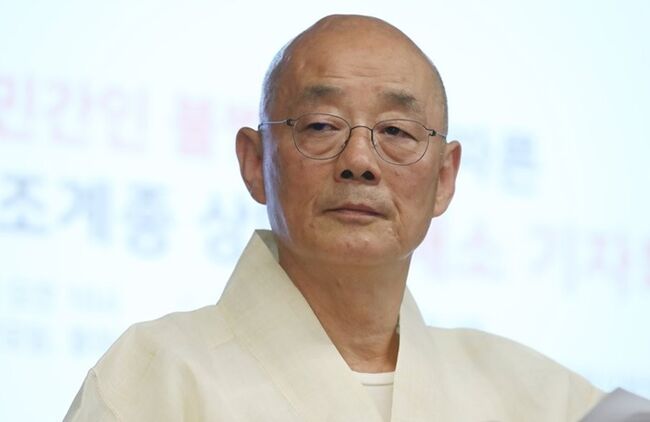 [Special Contribution: Songsan] The Life of a Political Monk Must Also Be Evaluated… What the Passing of Venerable Myeongjin Leaves Behind
Venerable Myeongjin, former head monk of Bongeunsa Temple, passed away on the 22nd. He was 76 years old and had been a monk for 52 years. [Yonhap News File Photo]Various narratives are emerging follow
[Special Contribution: Songsan] The Life of a Political Monk Must Also Be Evaluated… What the Passing of Venerable Myeongjin Leaves Behind
Venerable Myeongjin, former head monk of Bongeunsa Temple, passed away on the 22nd. He was 76 years old and had been a monk for 52 years. [Yonhap News File Photo]Various narratives are emerging follow
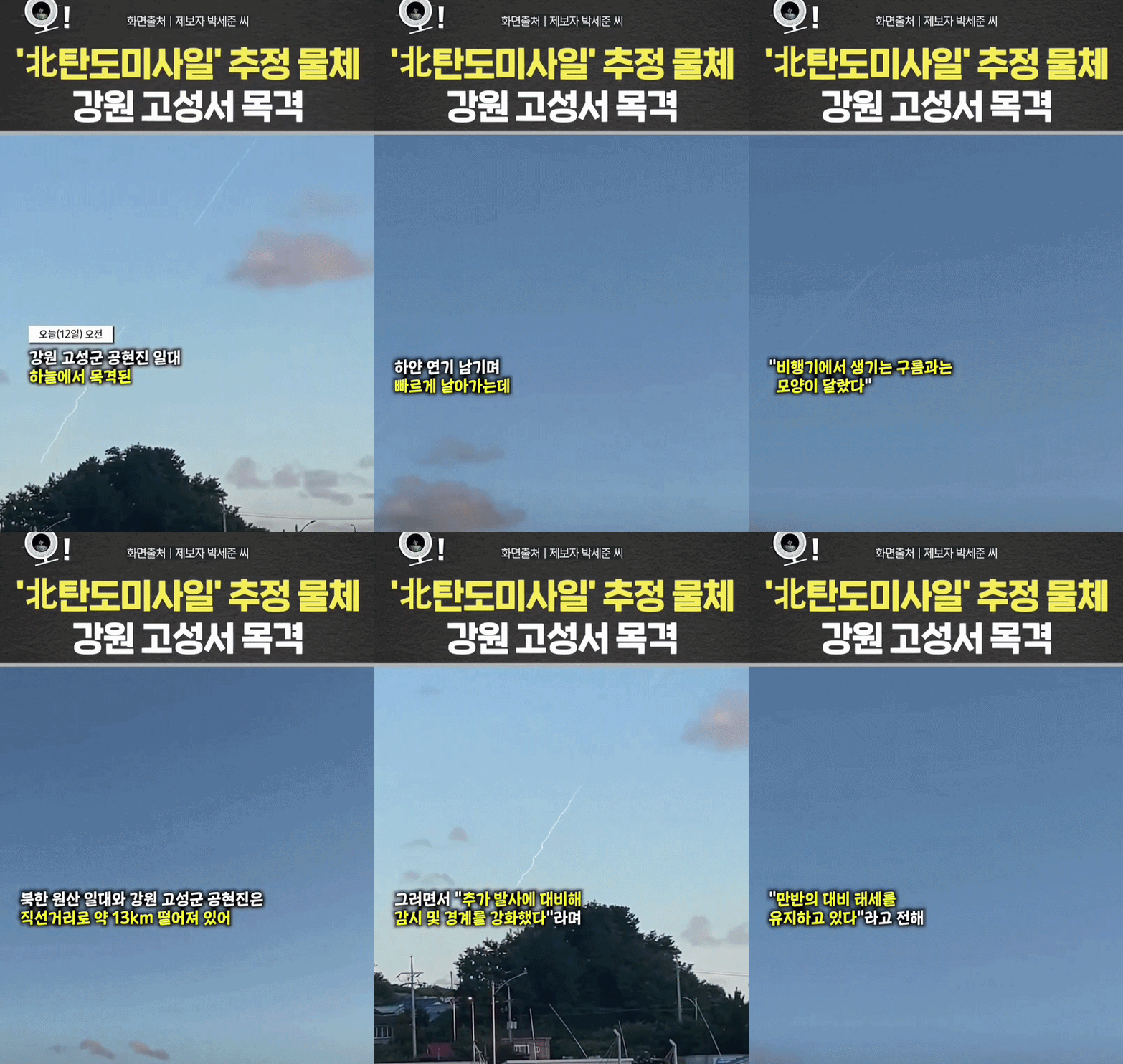 [Video] North Korean ballistic missile filmed by a civilian in Goseong, Gangwon-do
 [Editorial Cartoon] A Draconian Law That Undermines Freedom of Expression

 List
List