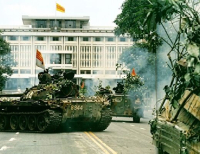
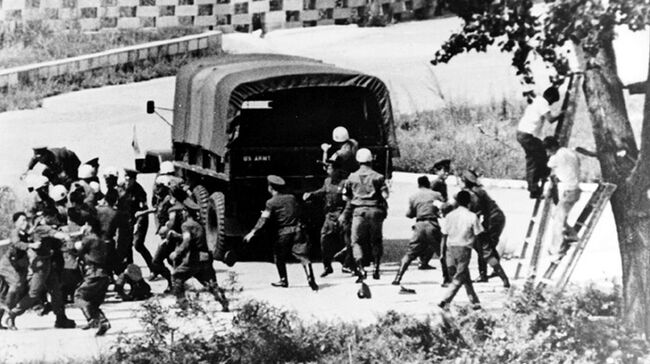
 ‘August 18 Panmunjom Axe Murder Incident’Today marks the 50th anniversary of North Korea's ‘Panmunjom Axe Murder Incident’ on August 18. Looking back, even just before the 1976 incident, North Korea carried out a deceptive peace offensive—advocating for a peace treaty and the withdrawal of U.S. forces—while simultaneously escalating violence and provocations within the Joint Security Area (JSA). We must remember that North Korea’s true nature is that of an aggressive entity capable of turning hostile at any moment.
In its recent commemorative address for the 81st National Liberation Day, the government officially proposed multilateral talks to transition from an armistice to a peace regime, urging North Korea to "set aside intentions of mutual threat and begin discussions among the relevant parties for an 'end to the war'." While North Korean leader Kim Jong-un has remained unresponsive to the government’s proposal, reports suggest he has responded to President Trump's requests for dialogue.
Although the government appears to have chosen the multilateral route as a detour in the absence of a breakthrough in inter-Korean dialogue, this ‘end-of-war’ proposal carries significant security vulnerabilities, as it is not predicated on substantial denuclearization measures. There is a grave concern that this is not an incentive for dialogue, but rather an act of self-inflicted security harm stemming from a lingering obsession with peace-only policies.
1. The Diplomatic Illusion Created by ‘End-of-War and Peace First’
This sudden proposal comes at a time when North Korea continues to advance its nuclear and missile capabilities, adheres to its "two hostile states" theory, shuts the door on dialogue, and intensifies ideological indoctrination for military action while escalating threats against the South. Consequently, it is being dismissed as a mere "political and diplomatic illusion" completely detached from the reality of the situation on the Korean Peninsula.
In particular, it contains a fatal contradiction that ignores the international legal reality that the Republic of Korea is not a legal signatory to the Armistice Agreement (the parties are the U.S., North Korea, and China). Historically, a state not explicitly named as a party cannot be a subject of a treaty (see photo).
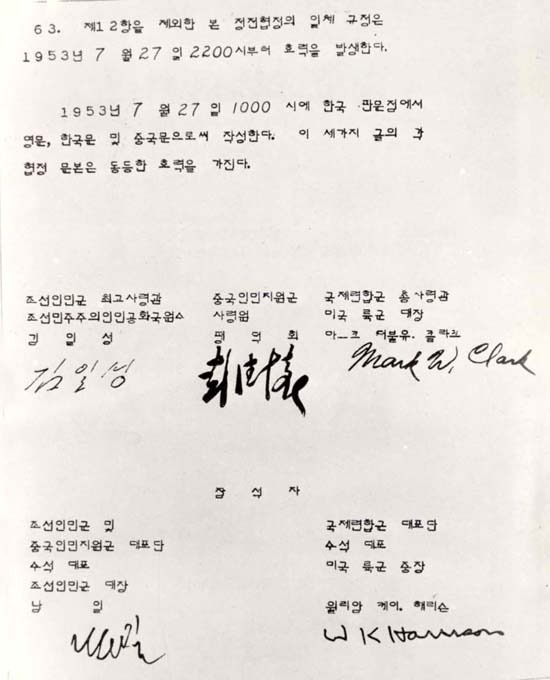 A document illustrating that the Republic of Korea is not a legal signatory to the Korean War Armistice Agreement signed on July 27, 1953.A declaration to end the war without guarantees for actual nuclear dismantlement carries a high risk of becoming a fatal strategic blunder that provides North Korea with a justification for the lifting of sanctions. While past commemorative addresses always included the key term "denuclearization," this address used the vague expression "cessation of nuclear capability advancement," which could be construed as indirectly acknowledging North Korea’s status as a nuclear-armed state.
2. The Illusory History of Peace Negotiations: The Munich Agreement and the Korean Peninsula
The historical lesson of trying to appease an enemy’s ambitions in the name of peace, only to face tragic failure, is directly reflected in the current situation on the Korean Peninsula.
In 1938, British Prime Minister Neville Chamberlain signed the 'Munich Agreement' with Hitler under the guise of halting Nazi Germany's expansionist policies, famously boasting that he had brought about "peace for our time."
However, that illusory promise of peace, which amounted to nothing more than a scrap of paper, only emboldened Hitler to pursue further aggression, ultimately leading to the immense catastrophe of World War II, the most tragic event in human history.
If we push for an end-of-war declaration without guarantees for North Korea’s substantive denuclearization and systemic change, it would be no different from a second Munich Conference, and it would merely add to our list of fatal historical errors of self-disarmament.
3. The Duality of Pursuing a Peace Offensive Despite Being Deceived by North Korea
Looking back, every promise of ‘ending the war’ and ‘peace’ pursued as a political event without verifying North Korea’s sincerity has, without exception, ended in North Korean deception tactics. Since the 1953 Armistice, North Korea has engaged in countless peace treaties and non-aggression promises, only to turn them into waste paper at critical moments, using the time and space gained to complete its nuclear arsenal.
From the Inter-Korean Basic Agreement of December 13, 1991, and the June 15 Joint Declaration in 2000, to the Panmunjom Declaration and the September 19 Pyongyang Joint Declaration during the Moon Jae-in administration, North Korea has always secretly continued its nuclear and missile advancement work behind the scenes of dialogue.
An even more serious problem is that despite being so devastatingly deceived by these tactics, we are now committing the dual error of clinging to an ineffective ‘peace offensive.’ Proposing an end to the war without the prerequisite of denuclearization and begging for peace without verification is simply repeating the failures of the past that only served to grant absolution to the North Korean regime.
4. Refusing to Join Iran’s Denuclearization Efforts Weakens the ROK-U.S. Alliance Deterrence
When U.S. President Trump recently requested cooperation on Iran's denuclearization, our refusal to participate was a painful diplomatic blunder, as it meant squandering a golden opportunity to strategically link the issue to the denuclearization framework of the Korean Peninsula.
Despite the need to align with the Trump administration’s global security issues to secure diplomatic leverage, our complacent refusal narrowed our own diplomatic space and invited dissatisfaction from the U.S.
The price of ignoring this global-level cooperation is manifesting directly in cracks within the ROK-U.S. alliance and the risk of Trump’s ‘backlash.’ To a U.S. administration sensitive to alliance contributions, the signal of “No thanks” has provided justification for pressuring us in future negotiations, such as defense cost-sharing and the adjustment of U.S. Forces Korea, ultimately acting as a diplomatic negative that shakes the trust in ROK-U.S. coordination.
Amid such diplomatic friction, discussions on ending the war—which are effectively political rhetoric—are bound to lead to the reduction of ROK-U.S. joint military exercises or the loosening of alliance defense readiness. National security, upon which the survival of the state depends, is not a matter of political self-esteem or vague expectations. It is maintained solely through overwhelming strength and a firm alliance.
The current government's policies—△the premature transfer of wartime operational control (OPCON), which signifies the breakdown of the ROK-U.S. alliance, △the establishment of a 'National Armed Forces Academy' that contradicts the military's legitimacy, identity, and the will of the people, △the 'end-of-war' proposal that ignores North Korea's hardline stance, and △the selective volunteer military system that undermines the foundation of our defense—are all acts that destroy security and create a vacuum, necessitating a forward-looking re-evaluation.
5. True Peace is Only Valid When Based on Alliance-Backed ‘Strength’
Security history proves that one-sided courting and proposals to end the war while the enemy continues its provocations do not bring peace; rather, they lead to war by dismantling our own security defenses.
In particular, the possibility of North Korea committing local provocations on the Korean Peninsula is increasing in connection with China's anticipated attempt to annex Taiwan next year. Recently, North Korea’s construction of 100km of tactical roads in the DMZ, its drastically improved drone technology, and intensified ideological indoctrination directly threaten our security.
The current proposal to end the war is nothing more than a declaration of giving up on security. Instead of wasting time on ineffective, piecemeal multilateral talk concepts, the government must focus on strengthening ROK-U.S.-Japan security cooperation and establishing a thorough readiness posture and decisive, alliance-based deterrence to fundamentally block North Korea’s advanced drones, asymmetric threats, and miscalculations.
I urge the immediate cessation of the four malignant policies that jeopardize the security of the Republic of Korea: the early transfer of OPCON, the creation of the National Armed Forces Academy, the proposal to end the war, and the selective volunteer military system.

◆ Commissioner Park Pil-gyu
Editorial Board Member, Korea-U.S.-Japan Daily
Korea Military Academy, 40th Class

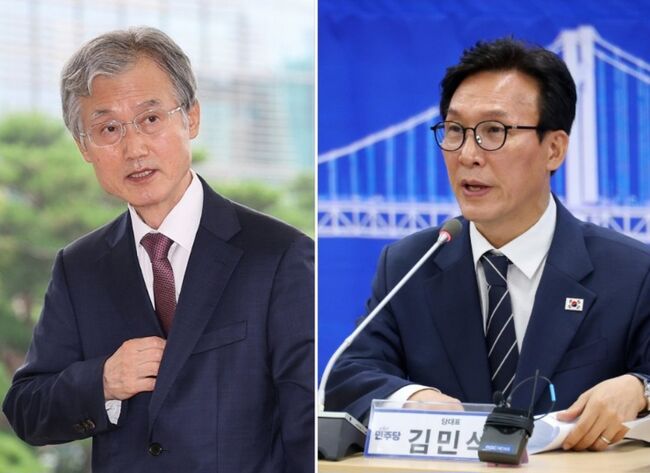 [Statement by the Seo-beo-kka Korea Military Academy Patriotic Comrades Association] ㊷ We Condemn the Ruling Party Leader's Intimidation and Mockery of Supreme Court Justices, and Acts of Destroying the Judiciary
Chief Justice of the Supreme Court Cho Hee-de (left) and Democratic Party of Korea Leader Lee Jae-myung [Photo=Yonhap News]We are witnessing an unprecedented situation where the newly inaugurated lead
[Statement by the Seo-beo-kka Korea Military Academy Patriotic Comrades Association] ㊷ We Condemn the Ruling Party Leader's Intimidation and Mockery of Supreme Court Justices, and Acts of Destroying the Judiciary
Chief Justice of the Supreme Court Cho Hee-de (left) and Democratic Party of Korea Leader Lee Jae-myung [Photo=Yonhap News]We are witnessing an unprecedented situation where the newly inaugurated lead
 Criticizing Trump, yet… Europe also backsliding on climate change response
Greenpeace, an environmental organization calling for renewable energy policies [EPA=Yonhap News file photo]European nations, which previously criticized U.S. President Donald Trump's rollback of clim
Criticizing Trump, yet… Europe also backsliding on climate change response
Greenpeace, an environmental organization calling for renewable energy policies [EPA=Yonhap News file photo]European nations, which previously criticized U.S. President Donald Trump's rollback of clim
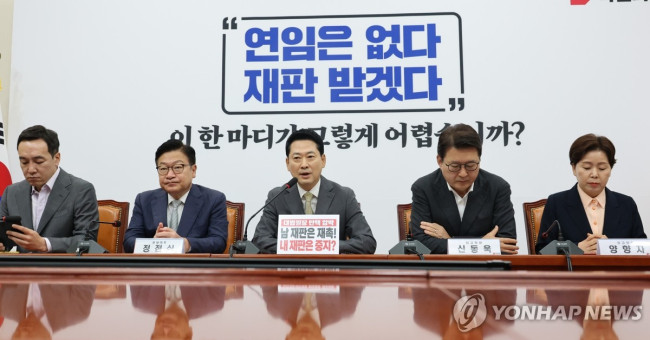 PPP on Nomination of 'Ruling Party-Recommended' Special Inspector Candidate: "We Will Rigorously Verify Them at the Hearing"
People Power Party representative Jang Dong-hyeok is speaking at the Supreme Council meeting held at the National Assembly on the 24th. [Yonhap News] On the 24th, the People Power Party stated th
PPP on Nomination of 'Ruling Party-Recommended' Special Inspector Candidate: "We Will Rigorously Verify Them at the Hearing"
People Power Party representative Jang Dong-hyeok is speaking at the Supreme Council meeting held at the National Assembly on the 24th. [Yonhap News] On the 24th, the People Power Party stated th
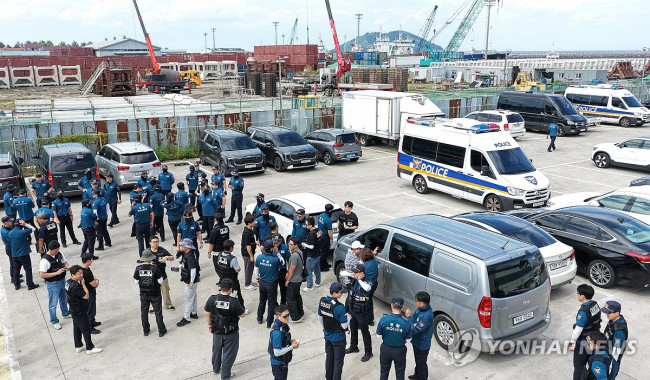 [Comprehensive] Another body of a missing person discovered in Jeju… 4th in three days
Police conducting an intensive search for missing persons [Yonhap News file photo]Recently, bodies suspected to be those of missing persons have been discovered in succession on Jeju Island. This mark
[Comprehensive] Another body of a missing person discovered in Jeju… 4th in three days
Police conducting an intensive search for missing persons [Yonhap News file photo]Recently, bodies suspected to be those of missing persons have been discovered in succession on Jeju Island. This mark
 [Korea-US Data Lab] 3rd Week of August (18th–21st) Money Insight
In the U.S., rising long-term Treasury yields lowered the future cash value of tech stocks, while in Korea, shareholder returns from Samsung Electronics and SK Hynix drove a rebound in major semicondu
[Korea-US Data Lab] 3rd Week of August (18th–21st) Money Insight
In the U.S., rising long-term Treasury yields lowered the future cash value of tech stocks, while in Korea, shareholder returns from Samsung Electronics and SK Hynix drove a rebound in major semicondu
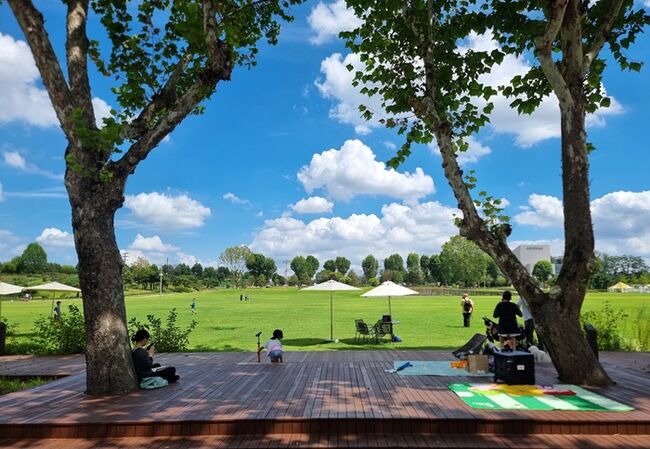 [Trending Travel Destinations] Unlocking a Century of Secrets: ‘Yongsan Children’s Garden’
Family visitors resting in the shade on a picnic mat. [Photo by Reporter Yohi Lim]Throughout history, the wealthy in both the East and the West have enjoyed greenery by creating private gardens on vas
[Trending Travel Destinations] Unlocking a Century of Secrets: ‘Yongsan Children’s Garden’
Family visitors resting in the shade on a picnic mat. [Photo by Reporter Yohi Lim]Throughout history, the wealthy in both the East and the West have enjoyed greenery by creating private gardens on vas
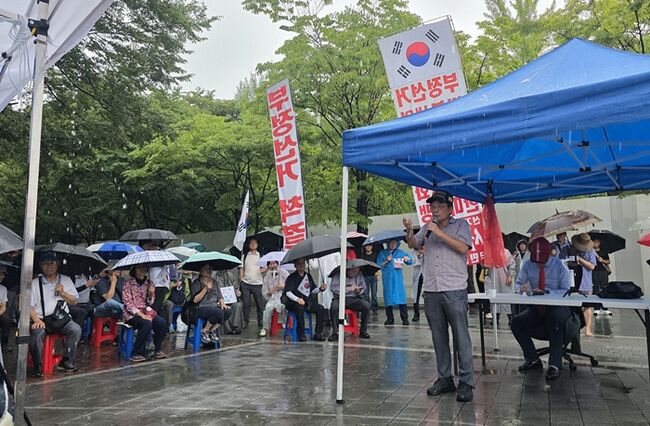 [Photo] Btooyun “We are recruiting 1,600 members for the Olympic Park Scientific Verification Team”… The rainy scenery of Olympic Park on the 22nd
On Saturday the 22nd, amid rainy weather at Olympic Park, the National Coalition for Election Fraud Struggle held a public forum on election integrity. They argued that the "Olympic Park Scientific Ve
[Photo] Btooyun “We are recruiting 1,600 members for the Olympic Park Scientific Verification Team”… The rainy scenery of Olympic Park on the 22nd
On Saturday the 22nd, amid rainy weather at Olympic Park, the National Coalition for Election Fraud Struggle held a public forum on election integrity. They argued that the "Olympic Park Scientific Ve
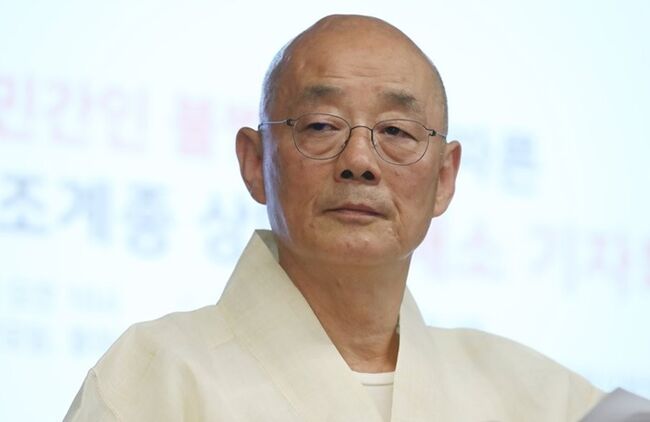 [Special Contribution: Songsan] The Life of a Political Monk Must Also Be Evaluated… What the Passing of Venerable Myeongjin Leaves Behind
Venerable Myeongjin, former head monk of Bongeunsa Temple, passed away on the 22nd. He was 76 years old and had been a monk for 52 years. [Yonhap News File Photo]Various narratives are emerging follow
[Special Contribution: Songsan] The Life of a Political Monk Must Also Be Evaluated… What the Passing of Venerable Myeongjin Leaves Behind
Venerable Myeongjin, former head monk of Bongeunsa Temple, passed away on the 22nd. He was 76 years old and had been a monk for 52 years. [Yonhap News File Photo]Various narratives are emerging follow
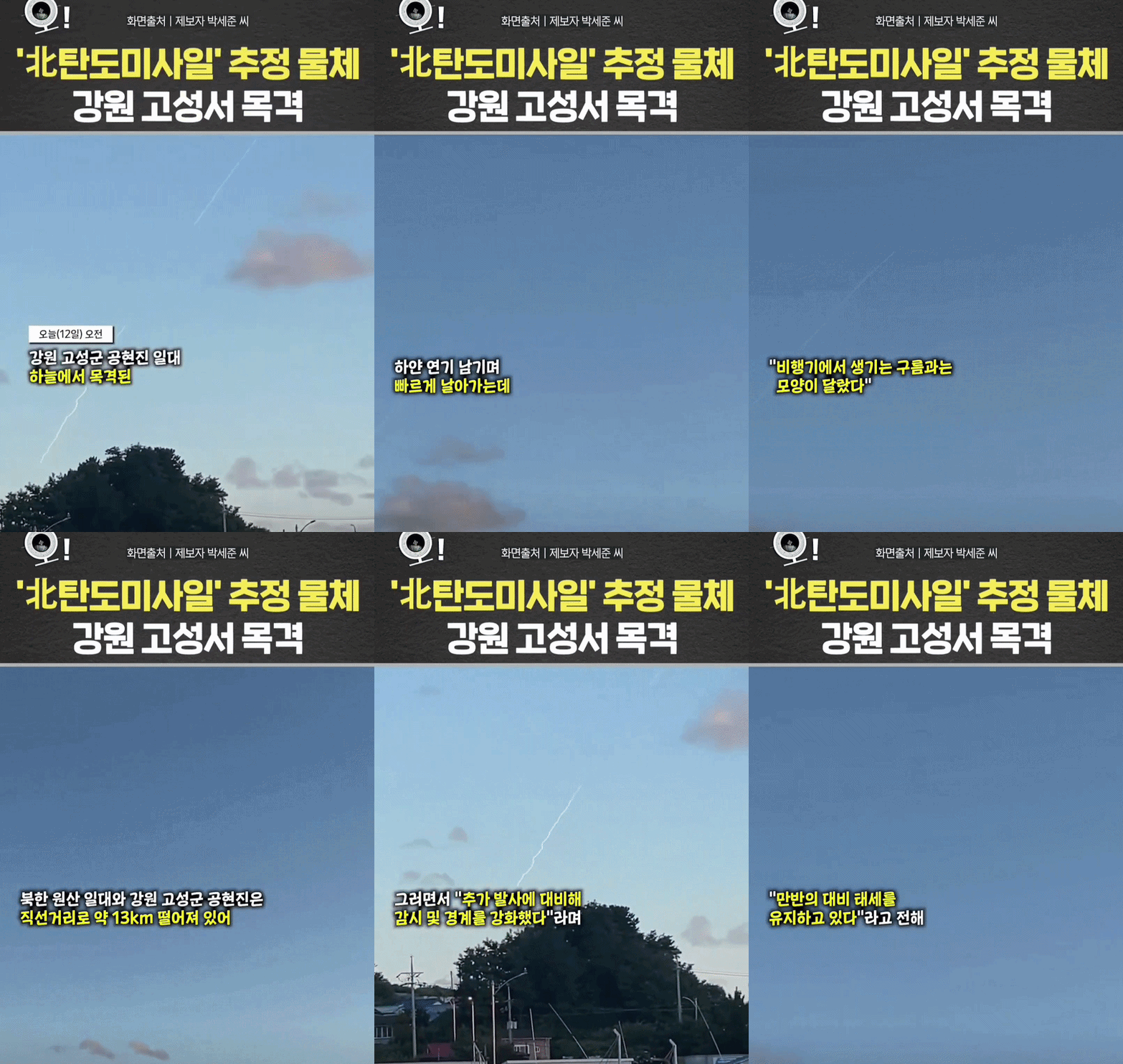 [Video] North Korean ballistic missile filmed by a civilian in Goseong, Gangwon-do
 [Editorial Cartoon] A Draconian Law That Undermines Freedom of Expression

 List
List