[Archived Article 2024-10-22] Must-read for Lee Tae-han's special investigation team… 'Election fraud' mathematically proven by a senior scholar becomes a hot topic: "Irrefutable evidence, even if the sky falls"
The special counsel team led by Tae-han Lee, tasked with investigating the broad allegations of election fraud in the June 3rd incident, has finally assembled and entered the full-scale preparation stage for the investigation. Some express skepticism regarding the expertise and election investigation capabilities of the appointed assistant special prosecutors, harboring anxieties that a team appointed by the Lee Jae-myung administration might grant absolution by downplaying the election fraud issues. In response, is serializing the [Old Articles] series, selecting and re-uploading reports previously covered and published in other media, to provide information regarding election fraud. does not expect the special counsel team to necessarily understand the mathematical proofs provided below. Focusing on the fact that South Korea's election statistics to date have yielded results so mysterious that they would require rewriting mathematics textbooks worldwide, we urge the special counsel team to commit fully to not only uncovering whether voter turnout was manipulated but also to identifying and bringing to justice those who artificially manipulated the 'vote share.' [Editor's Note]
The following article was published on October 22, 2024, two months before the December 3rd emergency martial law declaration.
Veteran Scholar's Mathematical Proof of 'Election Fraud' Sparks Controversy... "Irrefutable Evidence Even If the Sky Falls"
Professor Emeritus Byung-ki Hur of Inha University Anatomizes the Results of the April 10 General Election Academically
"If the NEC's Announcement Is True, High School Math Textbooks Worldwide Must Be Revised"
Excluding Artificial Correction Values, All Figures Finally Fall Within the 99% Confidence Interval
Five Months of Sleepless Nights Proving and Re-proving... Academia Calls It "A Perfect Proof"
46 People Power Party (PPP) Candidates Suffered 'Impossible Defeats'... A Mystery in Probability and Statistics
According to Election Data Analysis, 137 PPP and 102 Democratic Party Candidates Should Have Won
A veteran scholar is drawing attention for his evaluation of what he claims is a mathematical proof of 'election fraud,' a project that kept him awake for five consecutive months.
Professor Emeritus Byung-ki Hur [Photo: Reporter Gyeom Hur] Byung-ki Hur (77, pictured), Professor Emeritus of Engineering at Inha University, shocked attendees at an election seminar held in Incheon last month by presenting statistical analysis results showing that 46 defeated People Power Party candidates in the 22nd National Assembly election (April 10 General Election) held this year had, in reality, won.
According to his analysis, the results should have been 137 seats for the PPP and 102 for the Democratic Party, but the National Election Commission (NEC) announced 91 seats for the PPP and 163 for the Democratic Party. Numerous academic figures present at the seminar publicly praised the work as a 'perfect proof.'
Professor Hur recently met with this reporter and lamented, "If the NEC's announcement is true, then all high school mathematics textbooks in the world must be revised," pointing out that we should not accept results that deviate from statistical and probabilistic axioms.
An axiom is a principle that is accepted as a self-evident truth without proof in mathematics or logic.
The argument is that the NEC's final statistical values cannot explain this immutable principle, which serves as the major premise for proving other propositions. Professor Hur explains that it is a statistical axiom that the 'day-of-voting' vote share and the 'constituency' vote share (day-of-voting + early voting, both in-district and out-of-district) should have 'almost the same value (≒).'
He concluded, based on the statistical values released by the NEC, that "these values must have been planned and manipulated."
The seasoned scholar is credited with deriving correction values that can be explained at the high school statistics level after painstakingly inputting and analyzing every single election result with all his might.
According to him, if there were 10,000 voters, the NEC inflated the votes by 'one-third' or 'one-fourth' of the total, and then added the surplus to the Democratic Party candidate's total—a method of planned manipulation.
Here, the 'one-third' or 'one-fourth' is referred to as the correction integer (correction value).
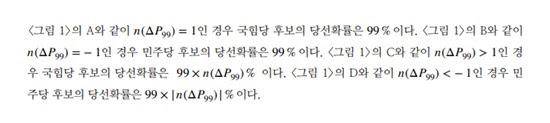
In the April 10 General Election, in 425 neighborhoods across 48 Seoul constituencies, the difference between the early voting turnout and the day-of-voting turnout was positive (+) for Democratic Party candidates and negative (-) for PPP candidates in all 425 locations.
He emphasized, "There is a statistical formula called the 99% confidence interval. When you subtract the (manipulated) correction values, the vote counts for the Democratic Party, the PPP, and other minor parties all fall within the confidence interval," adding, "It is through the formulas we learn in high school textbooks and which are recognized worldwide that statistical axioms are finally verified and identified."
Professor Hur is scheduled to present these analytical results at the 'Seminar on the Truth and Alternatives of the April 10 General Election Results' held at 2:30 PM on the 22nd at the Incheon City Council conference hall; this is the first such seminar at the metropolitan city level in the country.
The policy seminar, co-hosted by former Incheon City Council Chairman Shik Hur (current City Council member) and City Council member Dae-jung Kim, will feature presentations by Professor Emeritus Hur, the operator of the election analysis YouTube channel 'Chonbu (Country Bumpkin),' lawyer Oh-yong Kwon, and former lawmaker Kyung-wook Min. Discussions will be held by former National Defense University professor Jae-eon Jang and Mega Focus publisher Kyung-hee Kwon, with former Prime Minister Kyo-ahn Hwang scheduled to deliver a congratulatory speech.
Previously, Professor Emeritus Hur was recognized for uncovering the reality of election manipulation through mathematical and statistical analysis in his book 'The Secret Orders That Moved the April 15, 2020 Election 1 & 2 (Kingdom Books, co-authored with Kyung-wook Min, 818 pages),' published last year.
The following is the statistical, mathematical, and probabilistic proof provided by Professor Emeritus Hur.
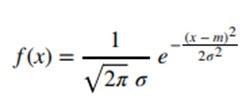
Six months have passed since the 22nd National Assembly election ended. However, there are still 15 lawsuits pending as the election results have not been accepted. Various civic groups argue that the 22nd general election was fraudulent and that the outcomes were reversed in dozens of constituencies. Can this claim be analyzed and proven academically? Taking it a step further, can we identify the constituencies where the results were reversed? If so, how many seats would there be? To solve this problem academically, the following conditions must be met: First, the formulas or theories used to solve the problem must be officially recognized. Second, there must be many instances of the applied theories or formulas being used. Third, the data used for analysis must be reliable and secure. Finally, the credibility of the derived results must be ensured. Regarding the formulas used for vote share estimation, statisticians have discovered that the distribution of characteristic values (such as height, weight, presidential approval ratings, election vote shares) for social problems like the height, weight, and CSAT scores of elementary school students nationwide, as well as natural phenomena like precipitation and temperature, exhibit a bell-shaped characteristic, and their probability density functions are expressed by the following equation.
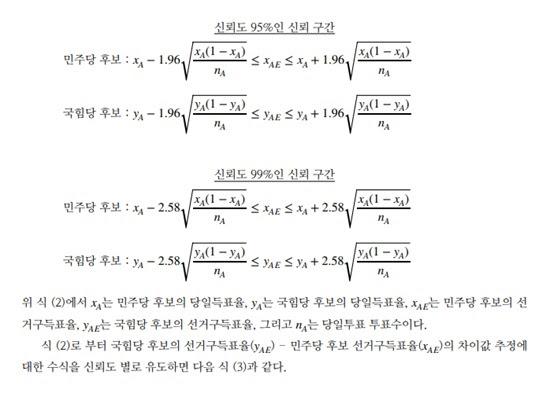
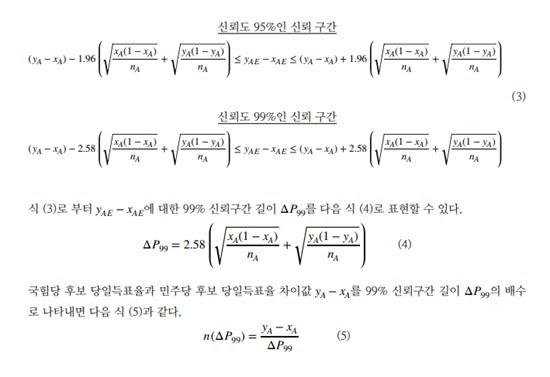
▲ Equation (1). In this equation, it represents the value of the characteristic, represents the mean of the characteristic, and represents the standard deviation. Equation (1) is used for the distribution of characteristic values in many problems, such as product defect rates in manufacturing, viewership ratings, presidential policy approval ratings, and approval ratings for leading presidential candidates. This equation is included in high school mathematics textbooks worldwide, including those in liberal democracies, socialist countries, and even communist countries, for students to study. Using this equation to derive a formula that estimates the population vote share of a constituency from the day-of-voting results for any given constituency in the 22nd general election leads to the following Equation (2).
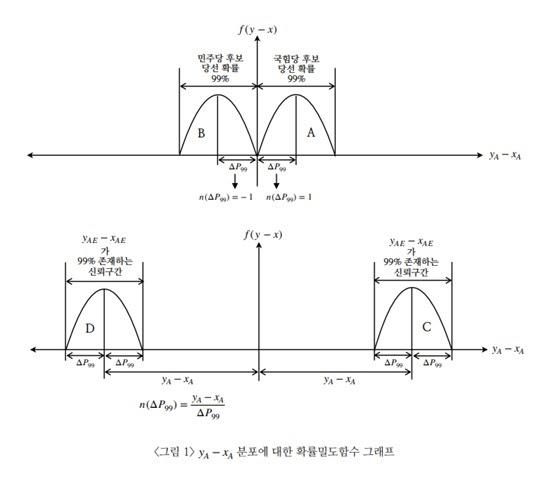
Plotting the meaning of Equation (5) on a coordinate plane results in .
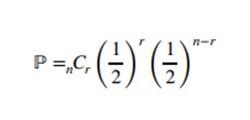
The Most Reliable Voting Sample. The 22nd general election consisted of day-of-voting, in-district early voting, out-of-district early voting, absentee/shipboard early voting, and overseas early voting. The constituency voting result, which corresponds to the population, is determined by the sum of these five types of voting. Therefore, the day-of-voting and the four types of early voting become samples of the constituency voting, which is the population. It is a very important issue to determine which sample's vote share is the safest to use to estimate the population vote share. Thus, it is necessary to identify the safest voting sample among the five types. When the competitiveness between candidates is similar, a simple method to verify the safety of a sample is to use the occurrence probability of the voting sample calculated using the number of constituencies where the difference between the Democratic Party candidate's vote share and the PPP candidate's vote share is (+) and (-). Because the positive and negative differences in vote shares between the two candidates are mutually exclusive events and each constituency's vote is cast independently, the probability that the voting result is derived using the number of constituencies with (+) and (-) differences can be calculated using the following Equation (6). This formula is also an officially recognized formula found in high school mathematics textbooks.
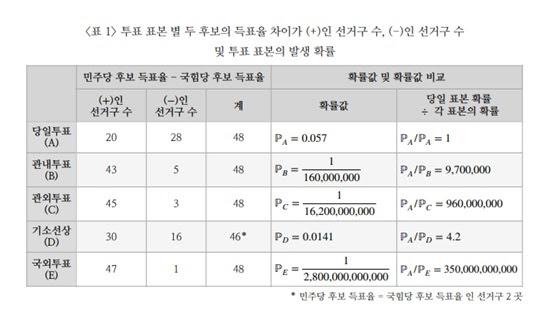
In Equation (6), P represents the probability value, n represents the total number of constituencies, and r represents the number of constituencies where the vote share difference is (+). Calculating the occurrence probability for each voting sample for the 48 constituencies in Seoul using Equation (6) results in
. From this result, we can confirm that among the five types of voting samples, the day-of-voting sample is the safest. Therefore, it is reasonable to use the day-of-voting share to estimate the candidate-specific vote share for a constituency.
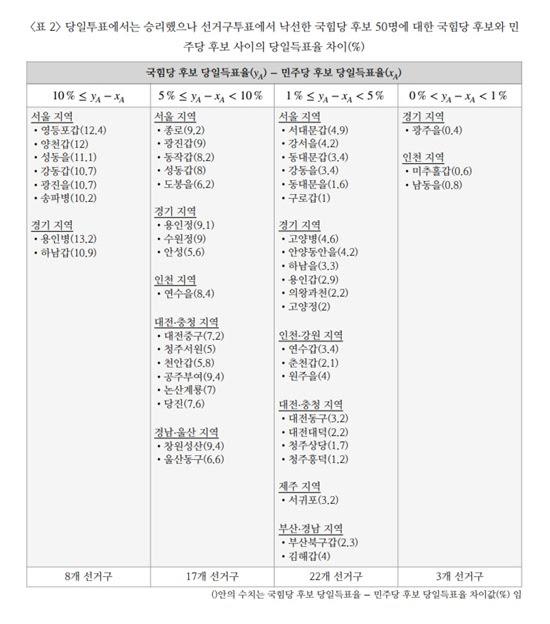
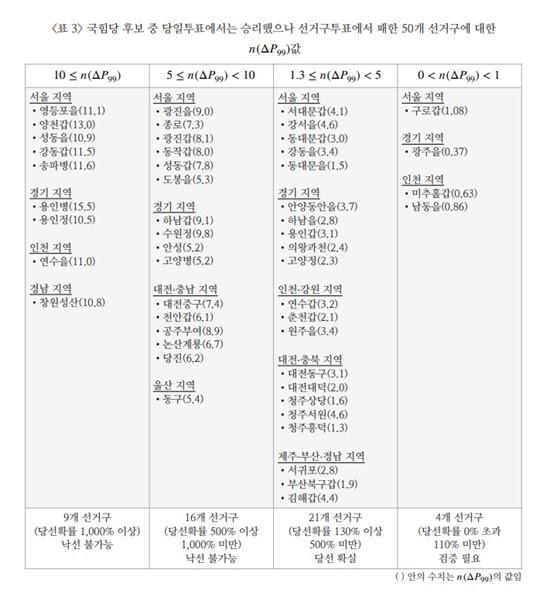
Statistical Calculation Results for PPP Candidate Outcomes. Let's analyze the statistical results for the 50 PPP candidates who won the day-of-voting but lost in the constituency vote, using Equation (5).
shows the difference between the PPP candidate's day-of-voting share (Ya) and the Democratic Party candidate's day-of-voting share (Xa) for these 50 candidates.
The results in
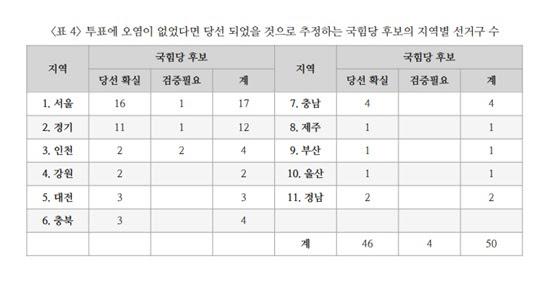
show that if there had been no contamination in the voting, the PPP candidates would have won. Summarizing the constituencies where defeat occurred due to contamination by region, we get
.
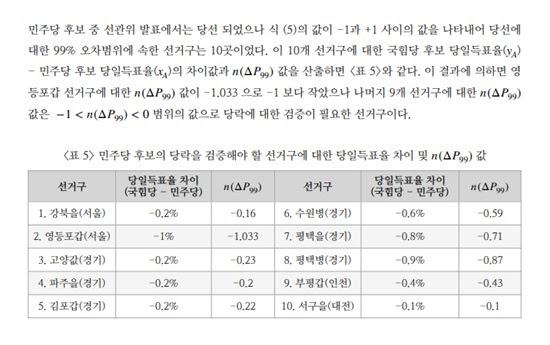
Democratic Party Candidate Constituencies That Need Verification
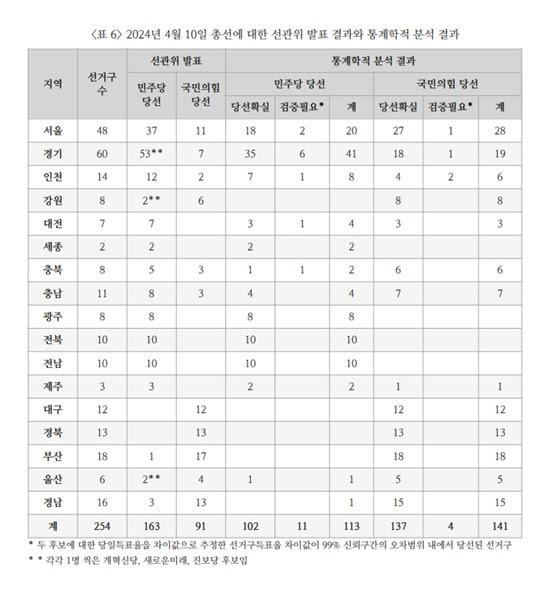
Statistical Analysis Results for the 22nd General Election. The NEC's announced results for the 254 constituencies were 91 seats for the PPP and 163 for the opposition party. The discourse on whether this result was a reasonable and fair election outcome has caused severe division in our society. Interpreting the election results academically using formulas recognized by the entire world and included in high school mathematics textbooks in almost every country results in
. According to these results, it is estimated that of the 254 regional seats, the opposition party obtained 113 seats, and the PPP obtained 141. If the NEC's results were true, we would face a very serious problem that would not only require re-establishing statistical theory but also revising the statistics sections of high school mathematics textbooks globally. I conclude by presenting this as a national task that we must work together to solve.
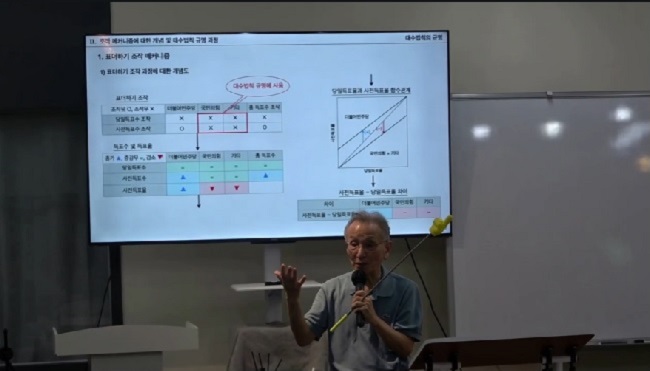
Professor Emeritus Byung-ki Hur lectures on the 'Law of Large Numbers' at a consecutive seminar on election fraud analysis held in June 2026, filled with the fervor of the Olympic Park protests. Professor Hur maintained his previous scholarly view that "the results of South Korean elections, when approached from a probabilistic and statistical standpoint, yield absolutely impossible values."[YouTube Channel How-Mission Video Capture]

 [Analysis] Is a ‘Win-Win’ Possible for the U.S. and Venezuela?
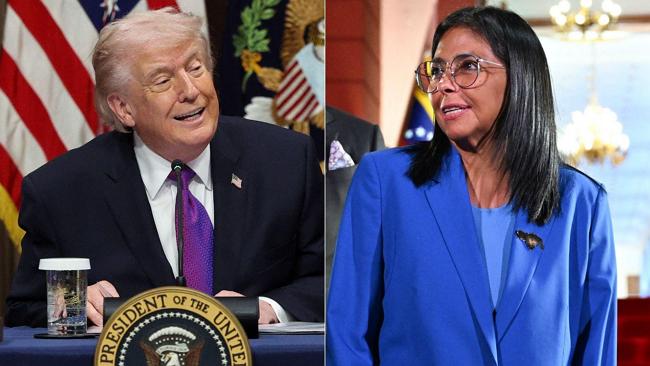
U.S. President Donald Trump and Venezuelan Interim President Delcy Rodríguez. The U.S. government has secured a 35% stake in the parent company of the private oil firm NABEP and the rights to acquire
[Analysis] Is a ‘Win-Win’ Possible for the U.S. and Venezuela?
U.S. President Donald Trump and Venezuelan Interim President Delcy Rodríguez. The U.S. government has secured a 35% stake in the parent company of the private oil firm NABEP and the rights to acquire
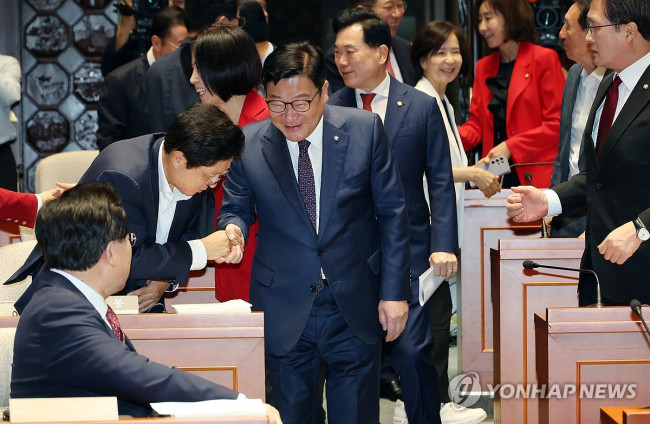 PPP's general meeting fails to adopt 'People's Voting Rights Protection Act' as party platform; agrees to further discussions
Floor Leader Jeong Jeom-sik attending the policy general meeting of lawmakers [Seoul=Yonhap News]On the 3rd, the People Power Party planned to adopt as a party platform a bill to reform the National E
PPP's general meeting fails to adopt 'People's Voting Rights Protection Act' as party platform; agrees to further discussions
Floor Leader Jeong Jeom-sik attending the policy general meeting of lawmakers [Seoul=Yonhap News]On the 3rd, the People Power Party planned to adopt as a party platform a bill to reform the National E
 27 legal professionals from the Seoul National University Law School class of '76: "The Blue House’s demand for the reappointment of Supreme Court Justices is unjust."
The Supreme Court of Korea [Seoul=Yonhap News] Twenty-seven legal professionals from the Seoul National University College of Law's class of '76 issued a joint statement on the 3rd, criticizing P
27 legal professionals from the Seoul National University Law School class of '76: "The Blue House’s demand for the reappointment of Supreme Court Justices is unjust."
The Supreme Court of Korea [Seoul=Yonhap News] Twenty-seven legal professionals from the Seoul National University College of Law's class of '76 issued a joint statement on the 3rd, criticizing P
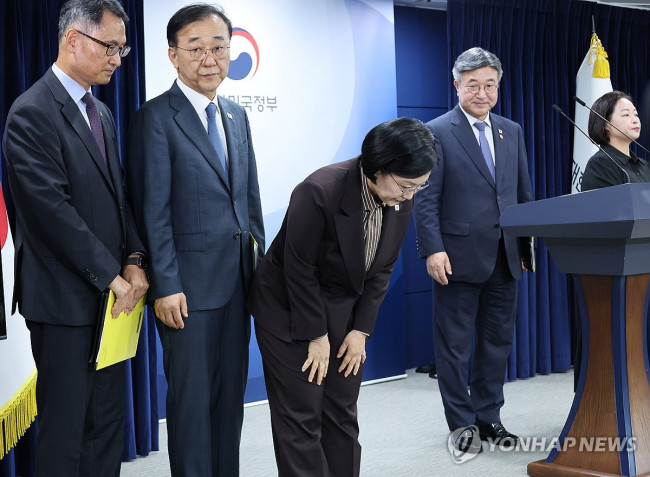 Relocation of Public Institutions to Begin Next Year… "Minimize Retention in Capital Region, Reduce 109 Institutions"
The government will begin the full-scale relocation of administrative and public institutions starting in the first half of next year.It is also launching reforms to reduce the number of public instit
Relocation of Public Institutions to Begin Next Year… "Minimize Retention in Capital Region, Reduce 109 Institutions"
The government will begin the full-scale relocation of administrative and public institutions starting in the first half of next year.It is also launching reforms to reduce the number of public instit
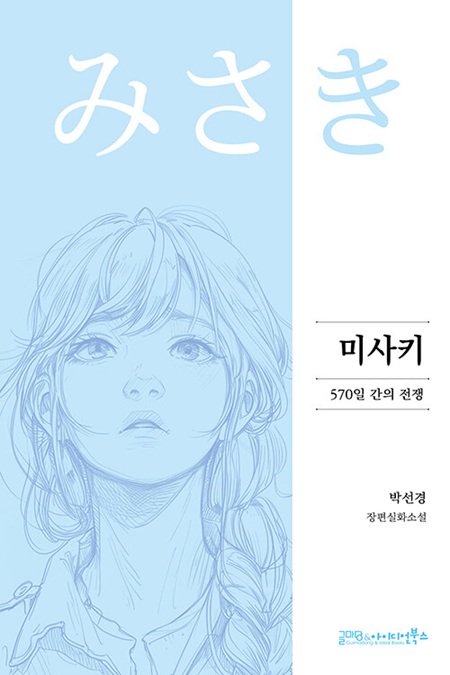 [New Book] The True Face of the Ivory Tower Hidden in the Shadow of Power… Park Sun-kyung’s ‘Misaki’
The university campus, often called a sanctuary of intellect. A new novel has been published that sharply dissects the hypocrisy and absurdity committed within those solid walls of power. &
[New Book] The True Face of the Ivory Tower Hidden in the Shadow of Power… Park Sun-kyung’s ‘Misaki’
The university campus, often called a sanctuary of intellect. A new novel has been published that sharply dissects the hypocrisy and absurdity committed within those solid walls of power. &
 [Photo] “We Oppose the Closing of the Military Academy”… Large-Scale Protest Held in Front of the War Memorial on the 26th
The "National Solidarity for Preventing the Closure of Military Academies" held a rally to protest the closure of military academies at the plaza in front of the War Memorial of Korea in Samgakji, Seo
[Photo] “We Oppose the Closing of the Military Academy”… Large-Scale Protest Held in Front of the War Memorial on the 26th
The "National Solidarity for Preventing the Closure of Military Academies" held a rally to protest the closure of military academies at the plaza in front of the War Memorial of Korea in Samgakji, Seo
 [Trending Destinations] The Leisure of Seoul's Hangang Bus and the Romance of Hong Kong's Star Ferry
Hannam Bridge viewed from the Hangang Bus. [Video = Reporter Lim Yo-hee]With the introduction of the Hangang Bus, Seoul—which previously lacked sufficient water-based public transport—has gained a
[Trending Destinations] The Leisure of Seoul's Hangang Bus and the Romance of Hong Kong's Star Ferry
Hannam Bridge viewed from the Hangang Bus. [Video = Reporter Lim Yo-hee]With the introduction of the Hangang Bus, Seoul—which previously lacked sufficient water-based public transport—has gained a
 [Jung Jae-hak’s From Jeolla-do] Listening to Patti Kim’s ‘Song of September’
Today, as it has been all day long, the heat wave has been sculpting clouds, and the wind has been gathering them. Thus, from the early evening through the night, the sound of rain persists.&nbs
[Jung Jae-hak’s From Jeolla-do] Listening to Patti Kim’s ‘Song of September’
Today, as it has been all day long, the heat wave has been sculpting clouds, and the wind has been gathering them. Thus, from the early evening through the night, the sound of rain persists.&nbs
 [Issue Commentary] 3 Reasons Why the Lee Jae-myung Trial Must Proceed
 [Editorial Cartoon] A Draconian Law That Undermines Freedom of Expression

 List
List