U.S. F-16 fighter jets patrolling in the Middle East [Source: U.S. Central Command X account]
Forty merchant ships carrying 18 million barrels of crude oil passed through the Strait of Hormuz on the 1st (local time) under U.S. military escort, CNN reported on the 2nd, citing U.S. military sources.
CNN noted that this figure is not only close to the pre-war daily average of 20 million barrels but also marks the highest daily volume to pass through the strait since the conflict began.
Gulf oil-producing nations are operating "shuttle tankers" that risk Iranian attacks to load crude in the Persian Gulf, slip through the Strait of Hormuz, and transship the oil to tankers waiting outside the strait.
All 40 ships that passed through the Strait of Hormuz on the 1st sailed with their tracking devices turned off.
These shuttle tankers have become a crucial lifeline for oil exports from these nations, which had been suspended for months due to the blockade of the Strait of Hormuz caused by the war.
U.S. military sources explained that to protect the shuttle tankers, they have deployed air, sea, and space assets to defend against Iranian drones and cruise missiles, while also striking Iranian air bases, radar installations, naval assets, mine-laying capabilities, and communication hubs around the strait.
Sources also reported that the U.S. military neutralized an anti-ship cruise missile launched by Iran during the escort operation on the 1st.
When the U.S. went to war with Iran in February of this year, the stated objective was the elimination of Iran's nuclear program; however, as the war has dragged on, the focus has shifted toward reopening the Strait of Hormuz and imposing a naval blockade on Iran.
A U.S. military source told CNN, "Iran has shown it can rebuild its forces during recent lulls in fighting, so continuous management is necessary," adding, "Ongoing U.S. strikes near the strait can be seen as 'weeding' or 'whack-a-mole' to weaken Iran's ability to threaten merchant vessels."
With the possibility of normalizing transit through the Strait of Hormuz via negotiations becoming increasingly unlikely and Iran maintaining a firm grip on control of the strait, the U.S.'s realistic option is to maximize the neutralization of Iran's capability to attack merchant ships.
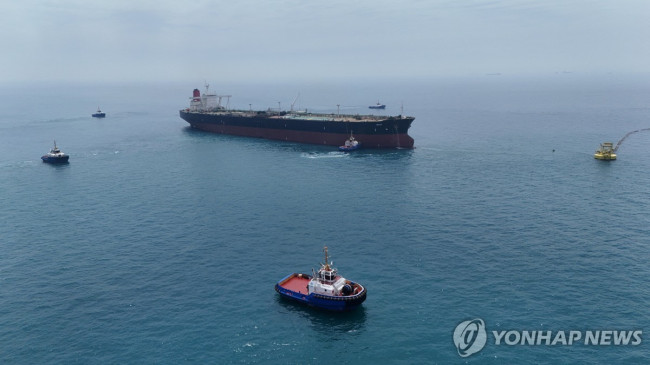 Oil tankers in the Strait of Hormuz (not directly related to the article) [Source: Reuters/Yonhap News file photo]
U.S. President Donald Trump also claimed on the 2nd that recent U.S. airstrikes were aimed at eliminating Iran's ability to track vessels passing through the Strait of Hormuz, asserting that the U.S. now holds control over the strait.
While the blockade of the Strait of Hormuz was once seen as a more powerful lever for Iran than its nuclear weapons, the U.S. is countering that Iran's dominance is no longer what it once was, citing the increase in oil transit volumes.
However, CNN pointed out that despite these intensive U.S. efforts to seize control of the Strait of Hormuz, "total control" has not been proven, and deep skepticism remains among industry experts and analysts.
The report added that while the operation on the 1st was successful, officials are not under the illusion that a resolution is imminent, and energy companies remain wary of the massive risks associated with sending ships through the strait, even with U.S. military escort.
An industry insider told CNN, "It is fair to say that the U.S. government has failed to build trust," adding, "Even if the daily oil transport volume has surged, no one believes that this figure represents a sustainable daily average."
Regardless of crude oil, other energy shipments—such as Liquefied Natural Gas (LNG) carriers, which carry a high risk of explosion if struck—remain extremely reluctant to pass through the Strait of Hormuz.
CNN commented, "Some U.S. officials acknowledge that it will take time and patience to convince the shipping industry that passage is safe," noting that "the U.S. military must also provide such escorts consistently."

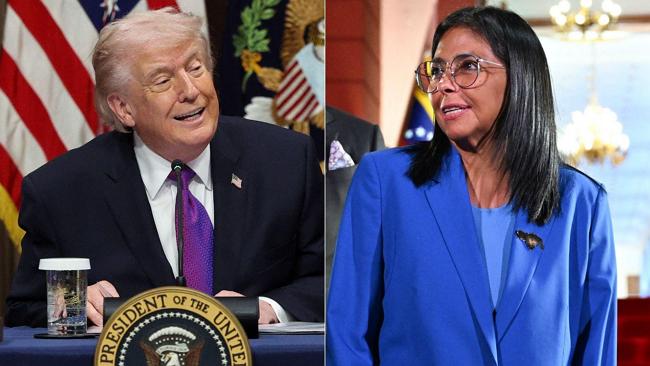 [Analysis] Is a ‘Win-Win’ Possible for the U.S. and Venezuela?
U.S. President Donald Trump and Venezuelan Interim President Delcy Rodríguez. The U.S. government has secured a 35% stake in the parent company of the private oil firm NABEP and the rights to acquire
[Analysis] Is a ‘Win-Win’ Possible for the U.S. and Venezuela?
U.S. President Donald Trump and Venezuelan Interim President Delcy Rodríguez. The U.S. government has secured a 35% stake in the parent company of the private oil firm NABEP and the rights to acquire
 PPP's general meeting fails to adopt 'People's Voting Rights Protection Act' as party platform; agrees to further discussions
Floor Leader Jeong Jeom-sik attending the policy general meeting of lawmakers [Seoul=Yonhap News]On the 3rd, the People Power Party planned to adopt as a party platform a bill to reform the National E
PPP's general meeting fails to adopt 'People's Voting Rights Protection Act' as party platform; agrees to further discussions
Floor Leader Jeong Jeom-sik attending the policy general meeting of lawmakers [Seoul=Yonhap News]On the 3rd, the People Power Party planned to adopt as a party platform a bill to reform the National E
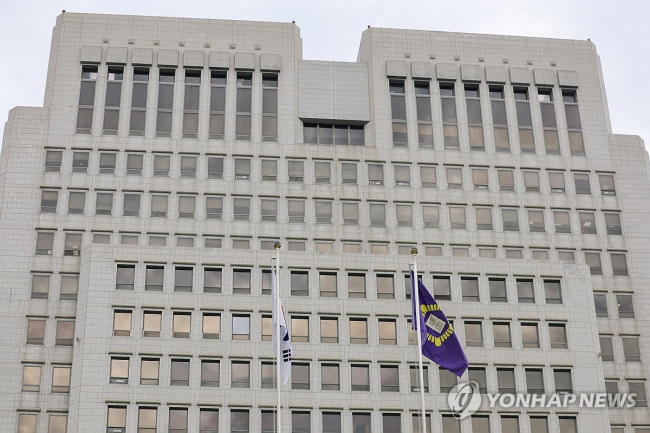 27 legal professionals from the Seoul National University Law School class of '76: "The Blue House’s demand for the reappointment of Supreme Court Justices is unjust."
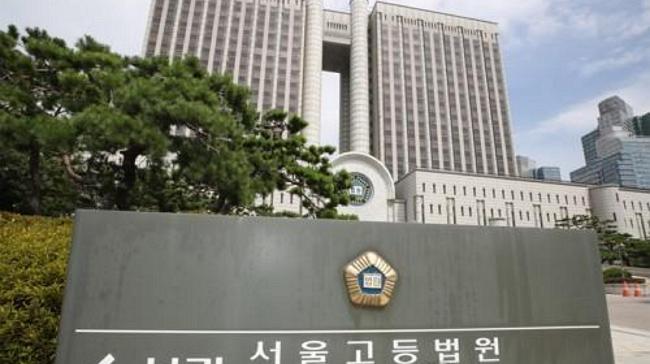
The Supreme Court of Korea [Seoul=Yonhap News] Twenty-seven legal professionals from the Seoul National University College of Law's class of '76 issued a joint statement on the 3rd, criticizing P
27 legal professionals from the Seoul National University Law School class of '76: "The Blue House’s demand for the reappointment of Supreme Court Justices is unjust."
The Supreme Court of Korea [Seoul=Yonhap News] Twenty-seven legal professionals from the Seoul National University College of Law's class of '76 issued a joint statement on the 3rd, criticizing P
 Relocation of Public Institutions to Begin Next Year… "Minimize Retention in Capital Region, Reduce 109 Institutions"
The government will begin the full-scale relocation of administrative and public institutions starting in the first half of next year.It is also launching reforms to reduce the number of public instit
Relocation of Public Institutions to Begin Next Year… "Minimize Retention in Capital Region, Reduce 109 Institutions"
The government will begin the full-scale relocation of administrative and public institutions starting in the first half of next year.It is also launching reforms to reduce the number of public instit
 [New Book] The True Face of the Ivory Tower Hidden in the Shadow of Power… Park Sun-kyung’s ‘Misaki’
The university campus, often called a sanctuary of intellect. A new novel has been published that sharply dissects the hypocrisy and absurdity committed within those solid walls of power. &
[New Book] The True Face of the Ivory Tower Hidden in the Shadow of Power… Park Sun-kyung’s ‘Misaki’
The university campus, often called a sanctuary of intellect. A new novel has been published that sharply dissects the hypocrisy and absurdity committed within those solid walls of power. &
 [Photo] “We Oppose the Closing of the Military Academy”… Large-Scale Protest Held in Front of the War Memorial on the 26th
The "National Solidarity for Preventing the Closure of Military Academies" held a rally to protest the closure of military academies at the plaza in front of the War Memorial of Korea in Samgakji, Seo
[Photo] “We Oppose the Closing of the Military Academy”… Large-Scale Protest Held in Front of the War Memorial on the 26th
The "National Solidarity for Preventing the Closure of Military Academies" held a rally to protest the closure of military academies at the plaza in front of the War Memorial of Korea in Samgakji, Seo
 [Trending Destinations] The Leisure of Seoul's Hangang Bus and the Romance of Hong Kong's Star Ferry
Hannam Bridge viewed from the Hangang Bus. [Video = Reporter Lim Yo-hee]With the introduction of the Hangang Bus, Seoul—which previously lacked sufficient water-based public transport—has gained a
[Trending Destinations] The Leisure of Seoul's Hangang Bus and the Romance of Hong Kong's Star Ferry
Hannam Bridge viewed from the Hangang Bus. [Video = Reporter Lim Yo-hee]With the introduction of the Hangang Bus, Seoul—which previously lacked sufficient water-based public transport—has gained a
 [Jung Jae-hak’s From Jeolla-do] Listening to Patti Kim’s ‘Song of September’
Today, as it has been all day long, the heat wave has been sculpting clouds, and the wind has been gathering them. Thus, from the early evening through the night, the sound of rain persists.&nbs
[Jung Jae-hak’s From Jeolla-do] Listening to Patti Kim’s ‘Song of September’
Today, as it has been all day long, the heat wave has been sculpting clouds, and the wind has been gathering them. Thus, from the early evening through the night, the sound of rain persists.&nbs
 [Issue Commentary] 3 Reasons Why the Lee Jae-myung Trial Must Proceed
 [Editorial Cartoon] A Draconian Law That Undermines Freedom of Expression

 List
List