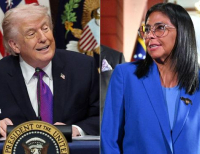
Kim Jong Un [Seoul=Yonhap News]
It has been confirmed through the full text of the Workers' Party of Korea (WPK) Charter that North Korea has removed the term "peaceful unification" from its supreme governing document following its declaration of inter-Korean relations as "two hostile states."
Furthermore, by strengthening the authority and power of the General Secretary while downplaying the achievements of predecessors Kim Il Sung and Kim Jong Il, the regime has further solidified the "one-man leadership system" of Chairman Kim Jong Un.
The Institute for National Security Strategy (INSS) held a press conference on the 3rd at Dalgaebi House in Jung-gu, Seoul, titled "Analysis of the Revised Workers' Party Charter from the 9th Party Congress and Assessment of the Situation in North Korea," where it unveiled the full text of the revised WPK Charter.
While it was previously known through intelligence authorities that North Korea had amended its Party Charter in June 2024 to reflect the "two states" doctrine, this is the first time the full text—including revisions made during this year's February Party Congress—has been made public.
The revised Charter removes passages in the preamble that praised the achievements of the predecessors while discussing "Kimilsungism-Kimjongilism."
Additionally, in line with the "two hostile states" doctrine, expressions related to unification and ethnicity—such as "peaceful reunification of the fatherland," "united front," "South Korea," "great national unity," and "nationwide scale"—have been deleted from the preamble.
By removing entire sections related to unification, the Charter also scrubbed references to the withdrawal of U.S. forces in South Korea, such as "the withdrawal of U.S. imperialist aggression forces" and "U.S. political and military domination over Korea," as well as content concerning the rejection of outside forces in the South, thereby reaffirming that the relationship between the two Koreas has been completely severed.
The INSS explained that the removal of expressions related to unification and ethnicity began with the June 2024 Charter revision, just six months after North Korea first declared the "two states" theory.
Regarding the position of General Secretary held by Chairman Kim Jong Un, the previous Charter only contained a broad provision referring to him as the supreme leader. The revised Charter, however, specifically enumerates the General Secretary's powers, including the right to convene meetings, the right to appoint and dismiss officials, the right to expel party members, and the right to dissolve departments.
This is interpreted as an effort to further consolidate the singular leadership system centered on Chairman Kim by erasing the emphasis on the achievements of his predecessors and by specifically detailing and strengthening the powers of the General Secretary.
The position of "First Secretary of the Party Central Committee," which serves as the "deputy to the General Secretary" and effectively the second-in-command of the Party, was retained.
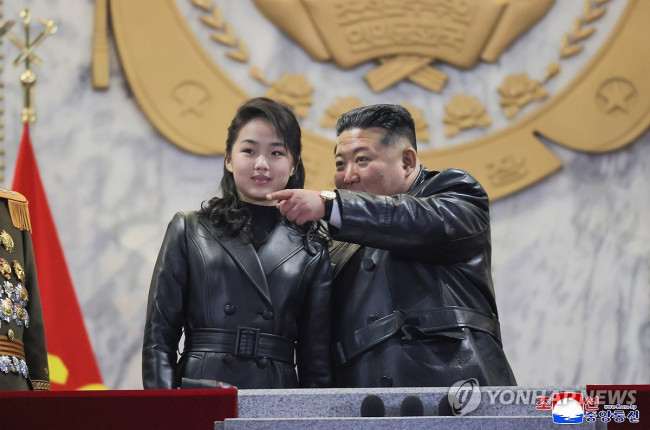 Kim Jong Un and his daughter Ju Ae [Pyongyang, Korean Central News Agency=Yonhap News]
Additionally, new provisions regarding wartime operations were introduced, such as bypassing election procedures during wartime in the process of organizing the Workers' Party.
Along with this, the "five major lines of party building"—specifically, political, organizational, ideological, disciplinary, and stylistic development—were added to the preamble, and the minimum age for joining the Workers' Party was raised from 18 to 20.
The INSS estimated that not only the Party Charter and the Constitution but also the "Ten Principles" have likely been revised and supplemented.
The INSS assessed that "North Korea has finalized the reorganization of its governing norms, consisting of the Party Charter, the Constitution, and the Ten Principles, taking the 9th Party Congress as an opportunity," and that "the governing norms for the 'Kim Jong Un Era 2.0' have been institutionalized."

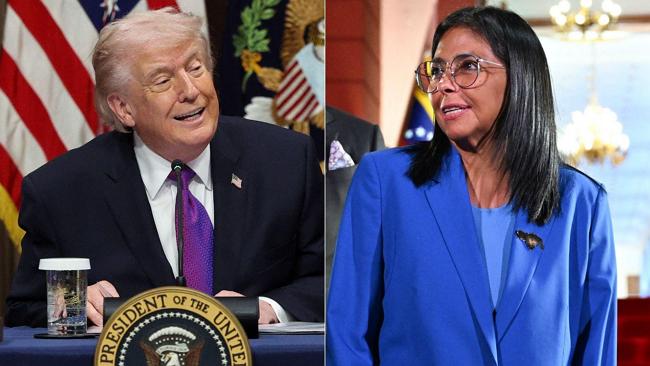 [Analysis] Is a ‘Win-Win’ Possible for the U.S. and Venezuela?
U.S. President Donald Trump and Venezuelan Interim President Delcy Rodríguez. The U.S. government has secured a 35% stake in the parent company of the private oil firm NABEP and the rights to acquire
[Analysis] Is a ‘Win-Win’ Possible for the U.S. and Venezuela?
U.S. President Donald Trump and Venezuelan Interim President Delcy Rodríguez. The U.S. government has secured a 35% stake in the parent company of the private oil firm NABEP and the rights to acquire
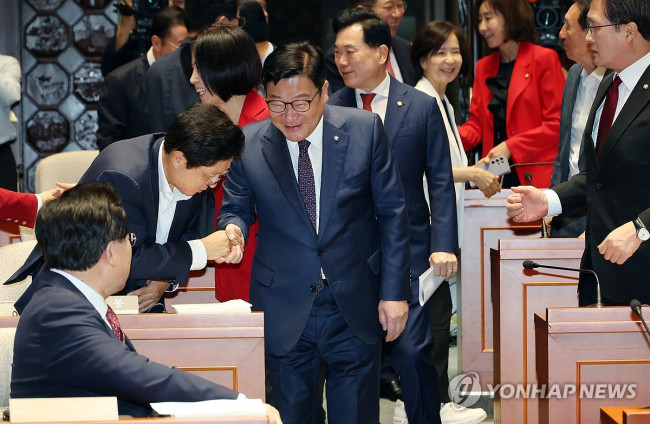 PPP's general meeting fails to adopt 'People's Voting Rights Protection Act' as party platform; agrees to further discussions
Floor Leader Jeong Jeom-sik attending the policy general meeting of lawmakers [Seoul=Yonhap News]On the 3rd, the People Power Party planned to adopt as a party platform a bill to reform the National E
PPP's general meeting fails to adopt 'People's Voting Rights Protection Act' as party platform; agrees to further discussions
Floor Leader Jeong Jeom-sik attending the policy general meeting of lawmakers [Seoul=Yonhap News]On the 3rd, the People Power Party planned to adopt as a party platform a bill to reform the National E
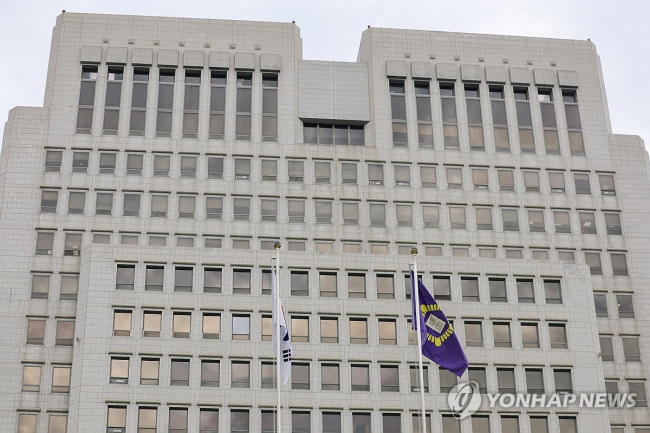 27 legal professionals from the Seoul National University Law School class of '76: "The Blue House’s demand for the reappointment of Supreme Court Justices is unjust."
The Supreme Court of Korea [Seoul=Yonhap News] Twenty-seven legal professionals from the Seoul National University College of Law's class of '76 issued a joint statement on the 3rd, criticizing P
27 legal professionals from the Seoul National University Law School class of '76: "The Blue House’s demand for the reappointment of Supreme Court Justices is unjust."
The Supreme Court of Korea [Seoul=Yonhap News] Twenty-seven legal professionals from the Seoul National University College of Law's class of '76 issued a joint statement on the 3rd, criticizing P
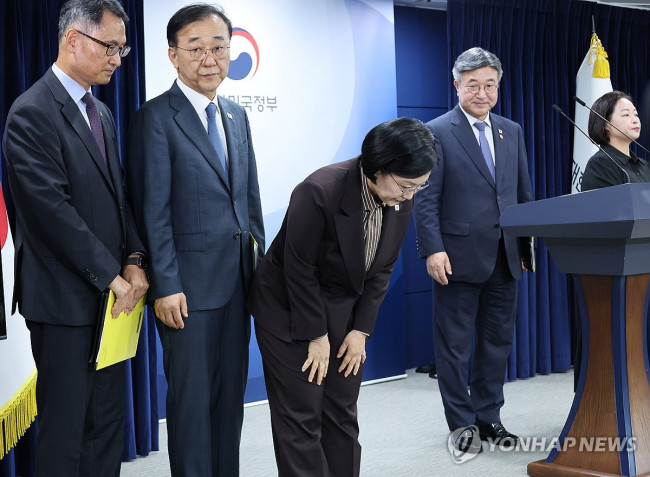 Relocation of Public Institutions to Begin Next Year… "Minimize Retention in Capital Region, Reduce 109 Institutions"
The government will begin the full-scale relocation of administrative and public institutions starting in the first half of next year.It is also launching reforms to reduce the number of public instit
Relocation of Public Institutions to Begin Next Year… "Minimize Retention in Capital Region, Reduce 109 Institutions"
The government will begin the full-scale relocation of administrative and public institutions starting in the first half of next year.It is also launching reforms to reduce the number of public instit
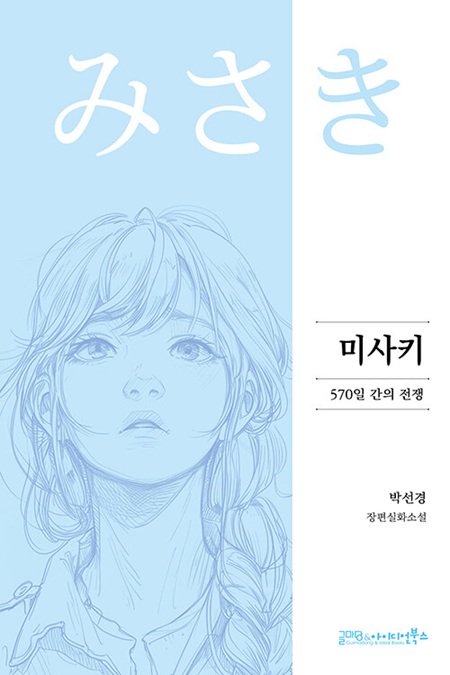 [New Book] The True Face of the Ivory Tower Hidden in the Shadow of Power… Park Sun-kyung’s ‘Misaki’
The university campus, often called a sanctuary of intellect. A new novel has been published that sharply dissects the hypocrisy and absurdity committed within those solid walls of power. &
[New Book] The True Face of the Ivory Tower Hidden in the Shadow of Power… Park Sun-kyung’s ‘Misaki’
The university campus, often called a sanctuary of intellect. A new novel has been published that sharply dissects the hypocrisy and absurdity committed within those solid walls of power. &
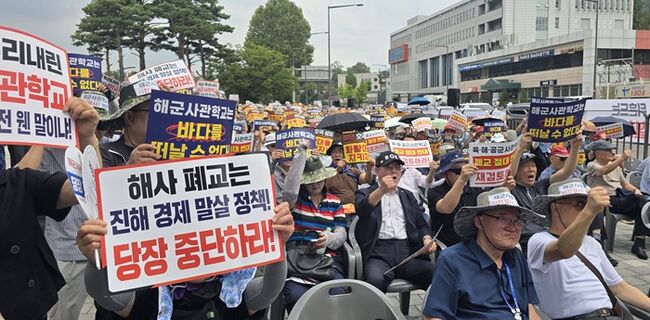 [Photo] “We Oppose the Closing of the Military Academy”… Large-Scale Protest Held in Front of the War Memorial on the 26th
The "National Solidarity for Preventing the Closure of Military Academies" held a rally to protest the closure of military academies at the plaza in front of the War Memorial of Korea in Samgakji, Seo
[Photo] “We Oppose the Closing of the Military Academy”… Large-Scale Protest Held in Front of the War Memorial on the 26th
The "National Solidarity for Preventing the Closure of Military Academies" held a rally to protest the closure of military academies at the plaza in front of the War Memorial of Korea in Samgakji, Seo
 [Trending Destinations] The Leisure of Seoul's Hangang Bus and the Romance of Hong Kong's Star Ferry
Hannam Bridge viewed from the Hangang Bus. [Video = Reporter Lim Yo-hee]With the introduction of the Hangang Bus, Seoul—which previously lacked sufficient water-based public transport—has gained a
[Trending Destinations] The Leisure of Seoul's Hangang Bus and the Romance of Hong Kong's Star Ferry
Hannam Bridge viewed from the Hangang Bus. [Video = Reporter Lim Yo-hee]With the introduction of the Hangang Bus, Seoul—which previously lacked sufficient water-based public transport—has gained a
 [Jung Jae-hak’s From Jeolla-do] Listening to Patti Kim’s ‘Song of September’
Today, as it has been all day long, the heat wave has been sculpting clouds, and the wind has been gathering them. Thus, from the early evening through the night, the sound of rain persists.&nbs
[Jung Jae-hak’s From Jeolla-do] Listening to Patti Kim’s ‘Song of September’
Today, as it has been all day long, the heat wave has been sculpting clouds, and the wind has been gathering them. Thus, from the early evening through the night, the sound of rain persists.&nbs
 [Issue Commentary] 3 Reasons Why the Lee Jae-myung Trial Must Proceed
 [Editorial Cartoon] A Draconian Law That Undermines Freedom of Expression

 List
List